Zhangjiajie
Huanglong Cave (Yellow Dragon Cave), Zhangjiajie
Zhangjiajie's sights point up; its best wet-weather plan goes down. Huanglong Cave (Yellow Dragon Cave), on the eastern edge of the Wulingyuan area near Suoxiyu, is one of the largest karst caves in China: a cool, multi-level limestone world of vast chambers, forests of stalactites and stalagmites, waterfalls and an underground river. When cloud swallows the sandstone pillars outside, the cave does not care, which is exactly why seasoned visitors hold it in reserve.
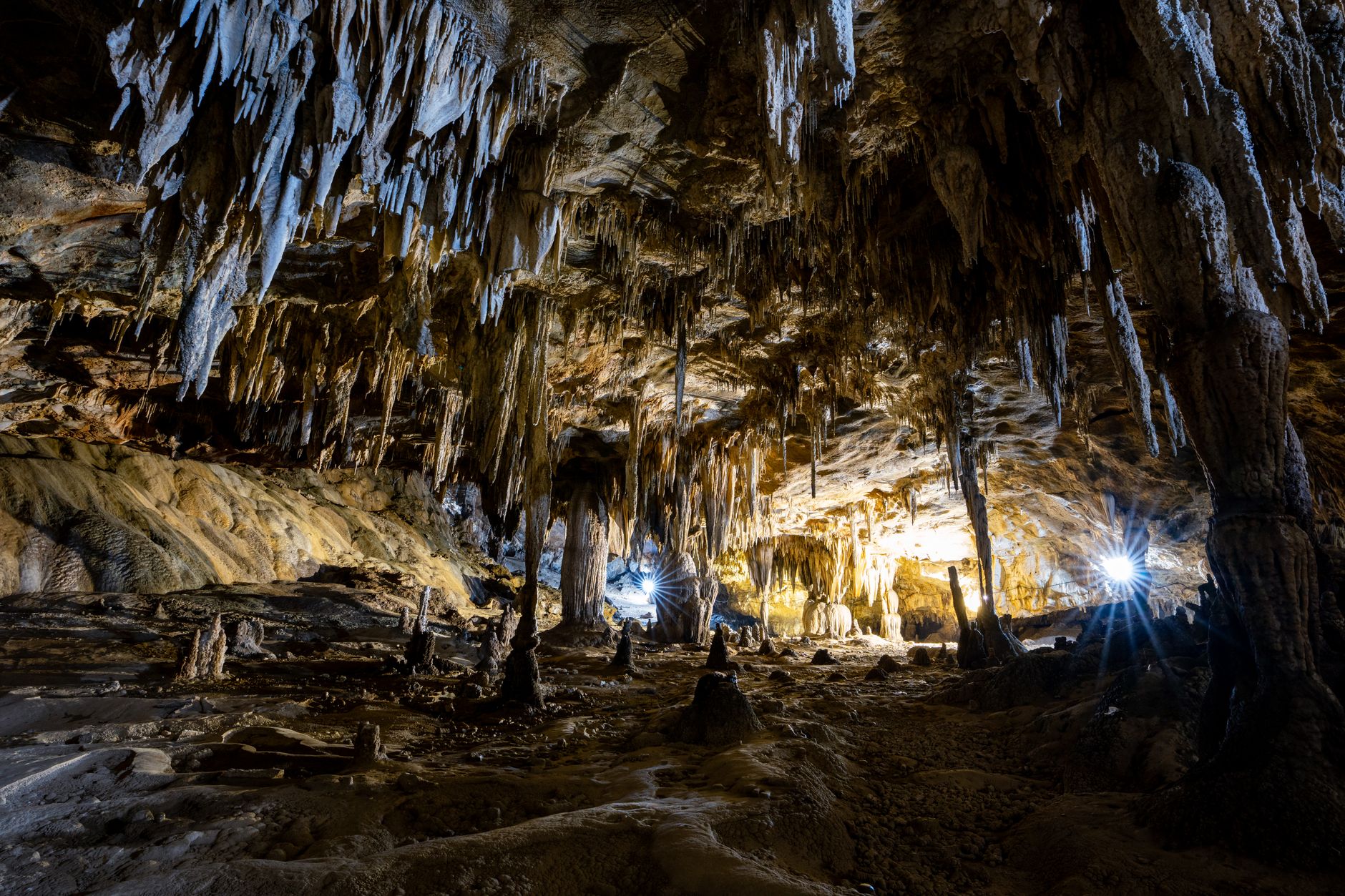
Grand illuminated stalactite chamber inside Huanglong Cave
The route and the boat
The walking circuit threads several named halls across multiple levels, the largest roomy enough to hold a small theatre, all picked out in coloured lighting that turns pillars into dragons and curtains. Partway through, you swap boardwalk for boat: a roughly 800-metre stretch of the underground river, about ten minutes of drifting past formations in the half-dark, is included in the standard route. Count on around two hours end to end at an unhurried pace.
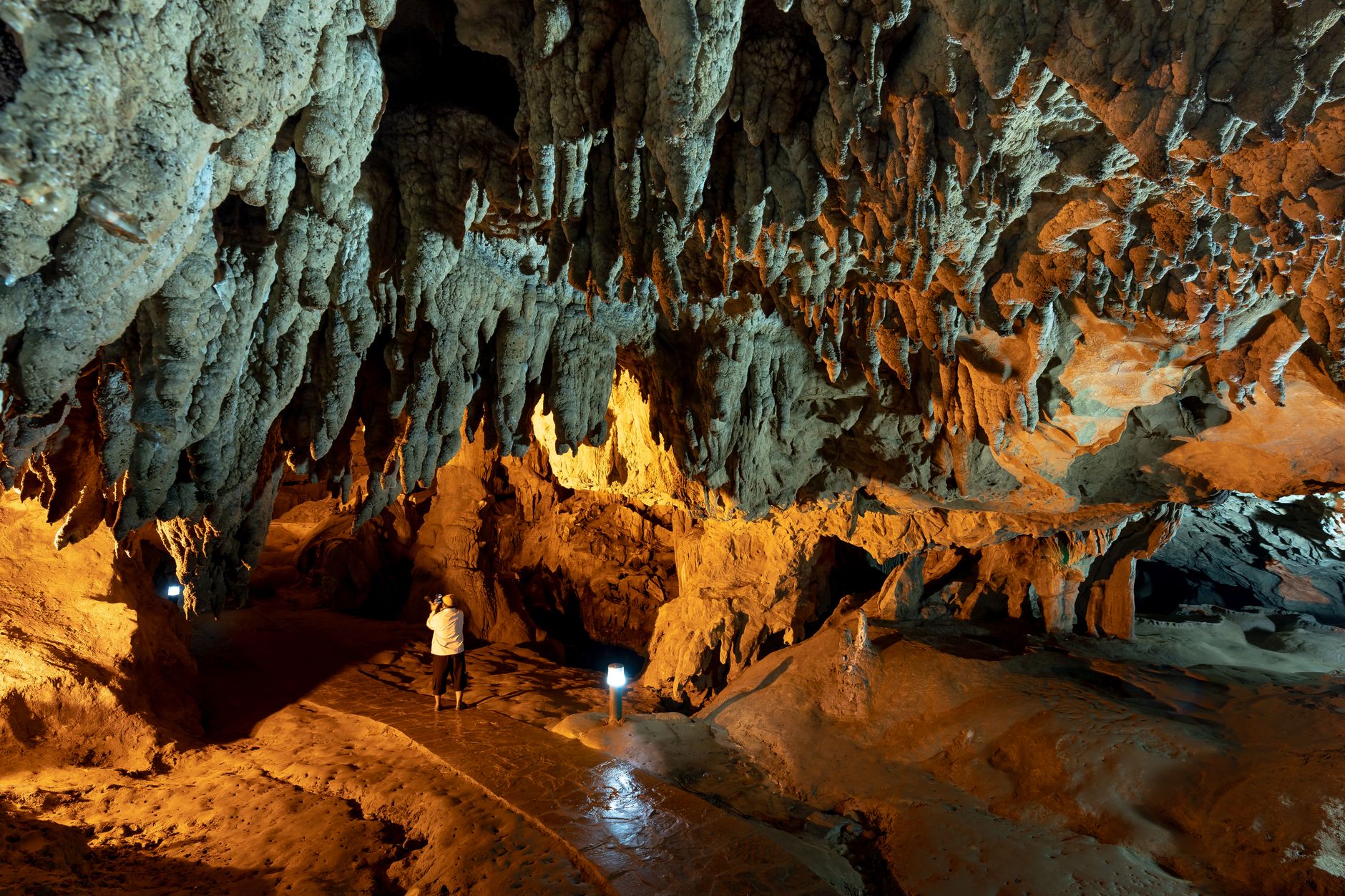
Stalactites and stalagmites along the cave path
The stalagmite with its own insurance policy
The cave's celebrity is the Sea-Suppressing Needle (Dinghai Shenzhen), a slender stalagmite of 19.2 metres that narrows to about ten centimetres at its waist. In 1998 the cave's operators famously insured it for 100 million yuan, a publicity stroke that made it one of the most valuable single stones in China. Guides will tell you it needs roughly another 60,000 years to join the ceiling; the number is folklore-grade, the fragility is not.
Tickets and timing
Entry, boat section included, is ticketed separately from the Wulingyuan park pass, so budget for it even if you already hold the big ticket. Prices move around; check current rates on the official channels or a reseller like Klook before you go. The cave generally opens around 8 in the morning and admits visitors into the late afternoon, with hours tightening off season. Tour groups surge at midday, so the first hours after opening are the calmest.
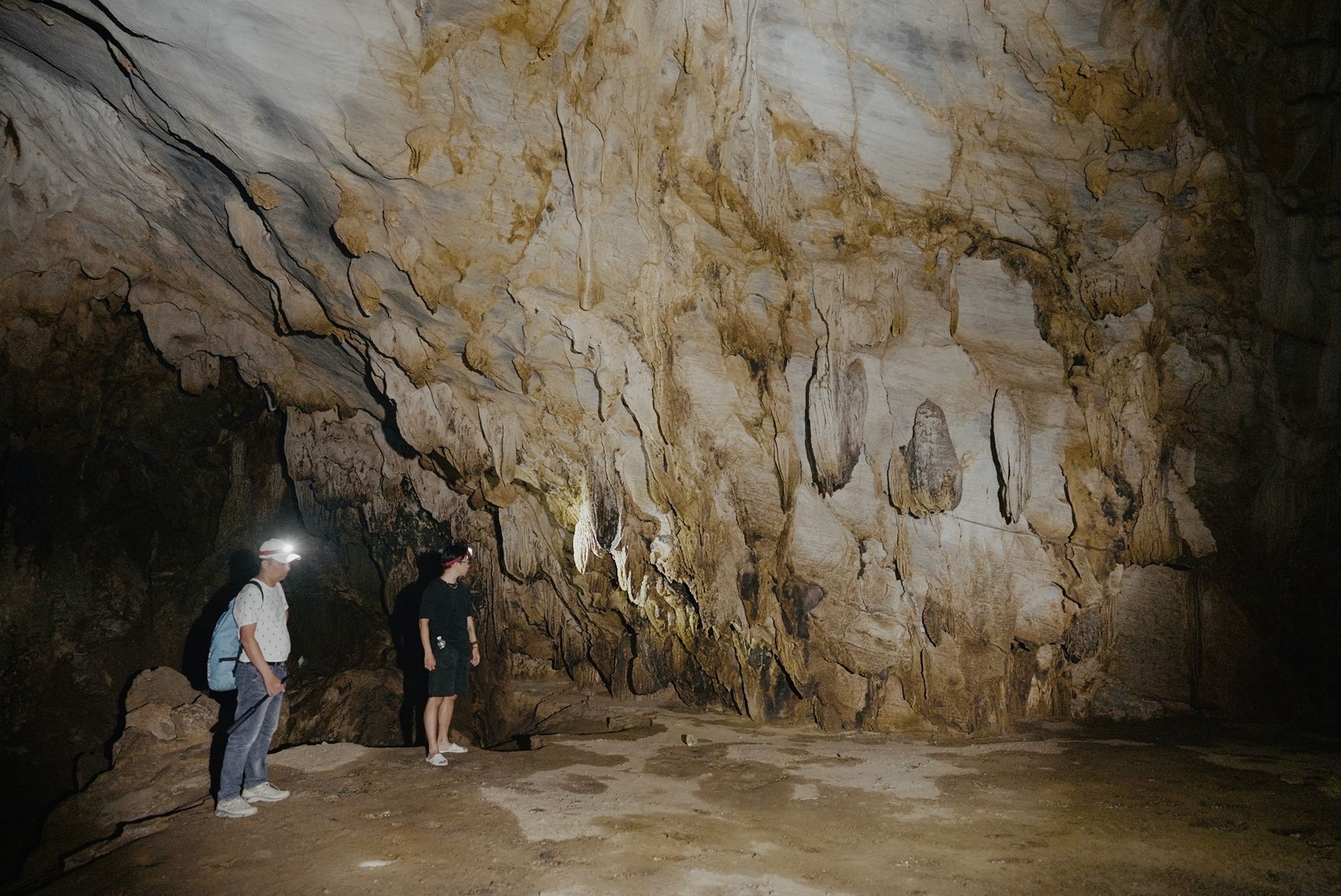
River boat passage through the cavern
Getting there
From Wulingyuan town it is a short ride: local buses run from the Wulingyuan bus terminal to the cave gate, and taxis take 15 to 20 minutes. Coming from Zhangjiajie city, frequent buses from the central bus terminal reach Wulingyuan in about an hour; change there for the cave. Most visitors slot the cave into a Wulingyuan-based day rather than a separate trip from the city.
What to bring
The interior stays cool and damp whatever the season, pleasant on a scorching summer afternoon and clammy if you arrive sweaty. A light layer and shoes with grip for the wet boardwalks cover it. Photography is fine on the main route, though flash and tripods may be restricted in places.
Highlights
- One of China's largest karst caves, with multi-level chambers and halls
- A roughly 800-metre boat ride along the cave's underground river
- The 19.2m Sea-Suppressing Needle stalagmite, insured for 100 million yuan
- Hundreds of thousands of years of stalactites, curtains and pillars
- A cool, weatherproof option ideal for hot or rainy days in Wulingyuan
Travel Tips
Save it for bad weather
When cloud or rain blanks out the peaks, the cave route is unaffected; keep it as your reserve day.
Bring a light layer
The cavern stays cool and damp year-round; a thin jacket and grippy shoes help on wet boardwalks.
Beat the tour buses
Groups peak around midday; the first hours after opening are the quietest.
It is not on the park pass
The cave is ticketed separately from the Wulingyuan entrance ticket, boat ride included.