Lijiang
Baisha Old Town
Baisha Old Town: Lijiang's Quiet Naxi Heartland
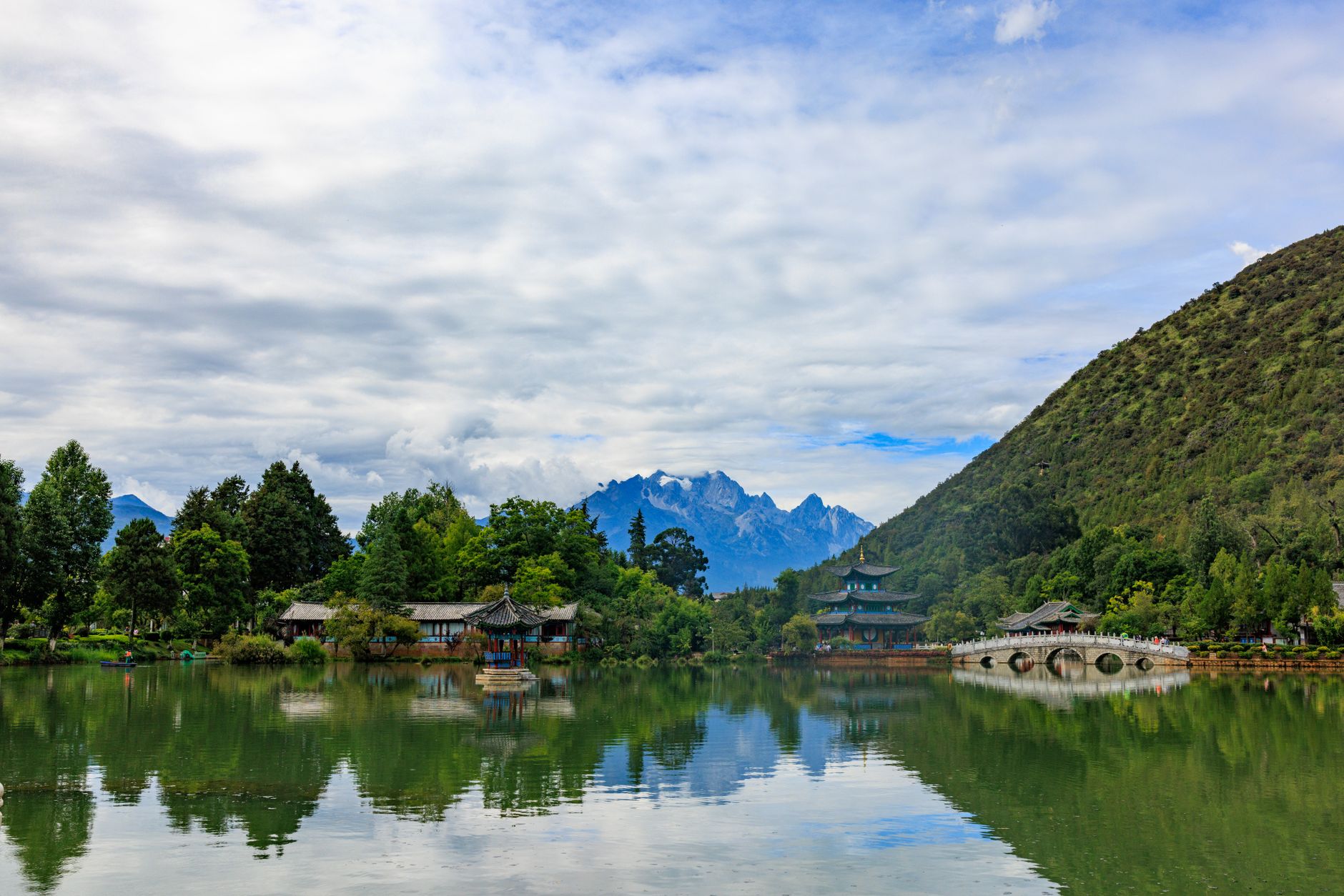
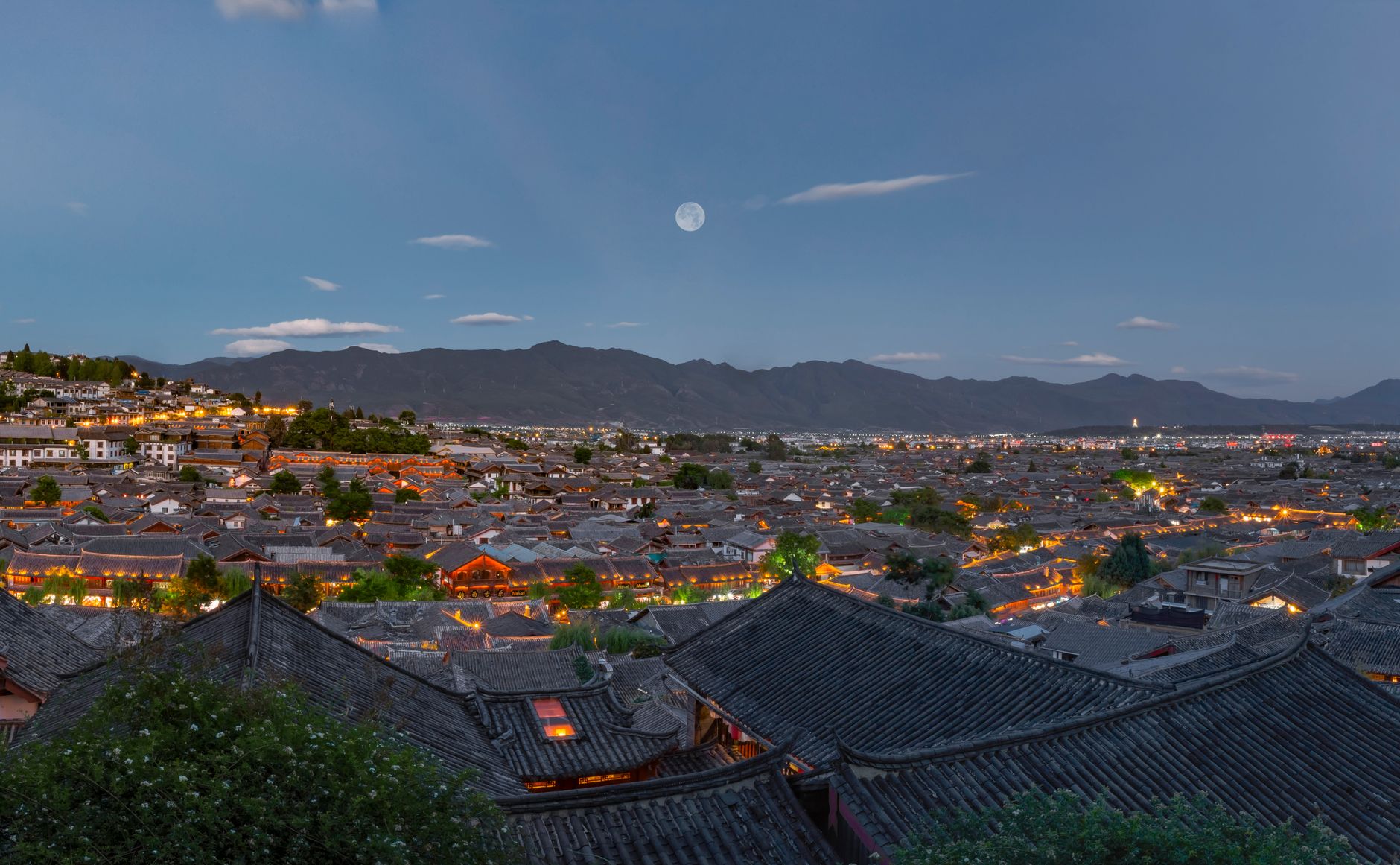
Long before the lantern-lit lanes of Dayan (Lijiang Old Town) filled with travellers, the Naxi people's earliest capital stood here at Baisha, a flagstone village spread across the plain at the foot of Jade Dragon Snow Mountain, a short distance north of central Lijiang (sources give anywhere from about 10 to 20 km depending on the route and starting point). From the 10th to the 13th century Baisha was the political and cultural seat of the Mu family, who ruled the region for centuries as hereditary Naxi chieftains (a status Ming and Qing records call Tusi) before relocating their capital to Lijiang. It remains the most authentic of the three old towns inscribed in the Lijiang UNESCO World Heritage Site. There are no ticket gates at the village entrance, few tour buses, and on most afternoons more Naxi grandmothers than tourists, which is exactly why it rewards an unhurried half-day.

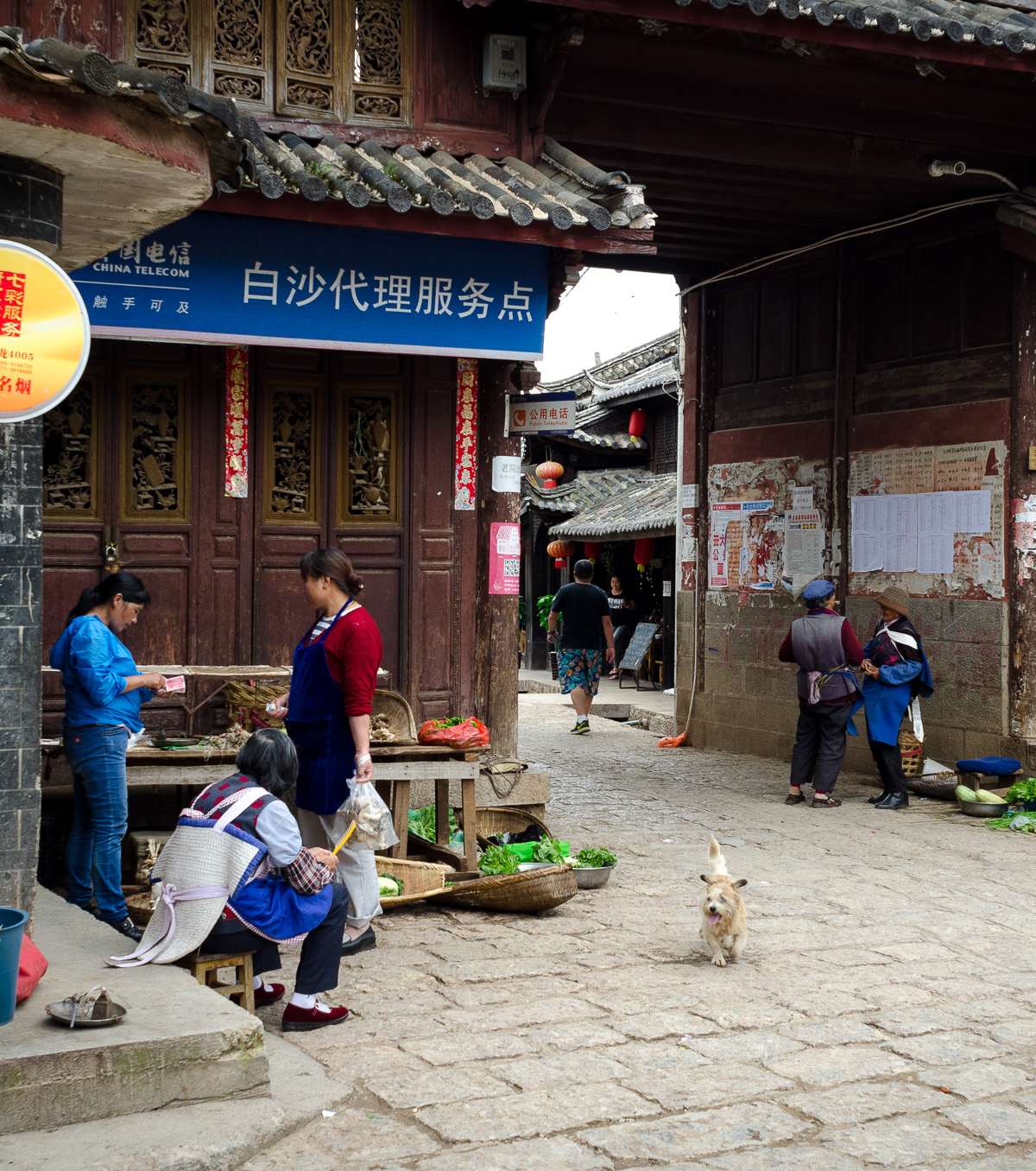
Baisha Old Town main street with a Naxi handicraft stall
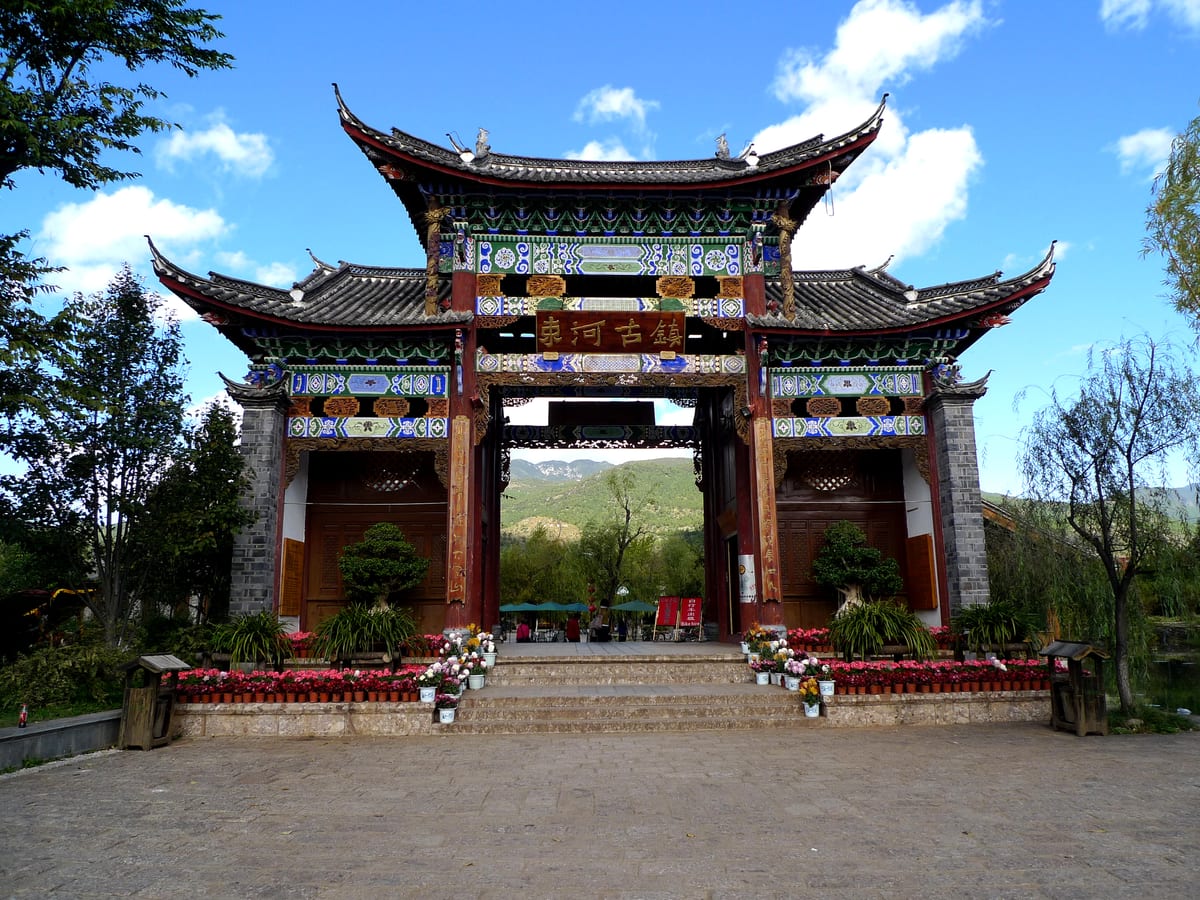
The village's single main street is lined with low Ming- and Qing-era courtyard houses, embroidery workshops and a scatter of small cafés. Naxi women in blue aprons and sheepskin capes still sell vegetables and hand-stitched textiles from the cobbles, and the traditional Chinese medicine clinic once run by the Ho family drew curious visitors here for decades. It is a place to wander slowly, photograph weathered timber eaves against the snow peak, and watch ordinary mountain-town life unfold.
The Baisha Murals: the village's masterpiece
Baisha's treasure is the Baisha Frescoes, a body of religious murals painted over roughly three centuries from the early Ming dynasty into the Qing. Spread across a cluster of small temples, among them Dabaoji Palace and Liuli Hall, the frescoes originally ran to more than 200 panels; only a few dozen survive today in good enough condition to view. They are remarkable for fusing Tibetan Buddhist, Han Daoist and Naxi Dongba imagery in a single frame: Buddhas, Taoist immortals and local deities sharing one wall in a way found nowhere else in China. A separate Naxi Dongba pictograph wall in the village renders everyday verbs and nouns in the world's last living hieroglyphic script.
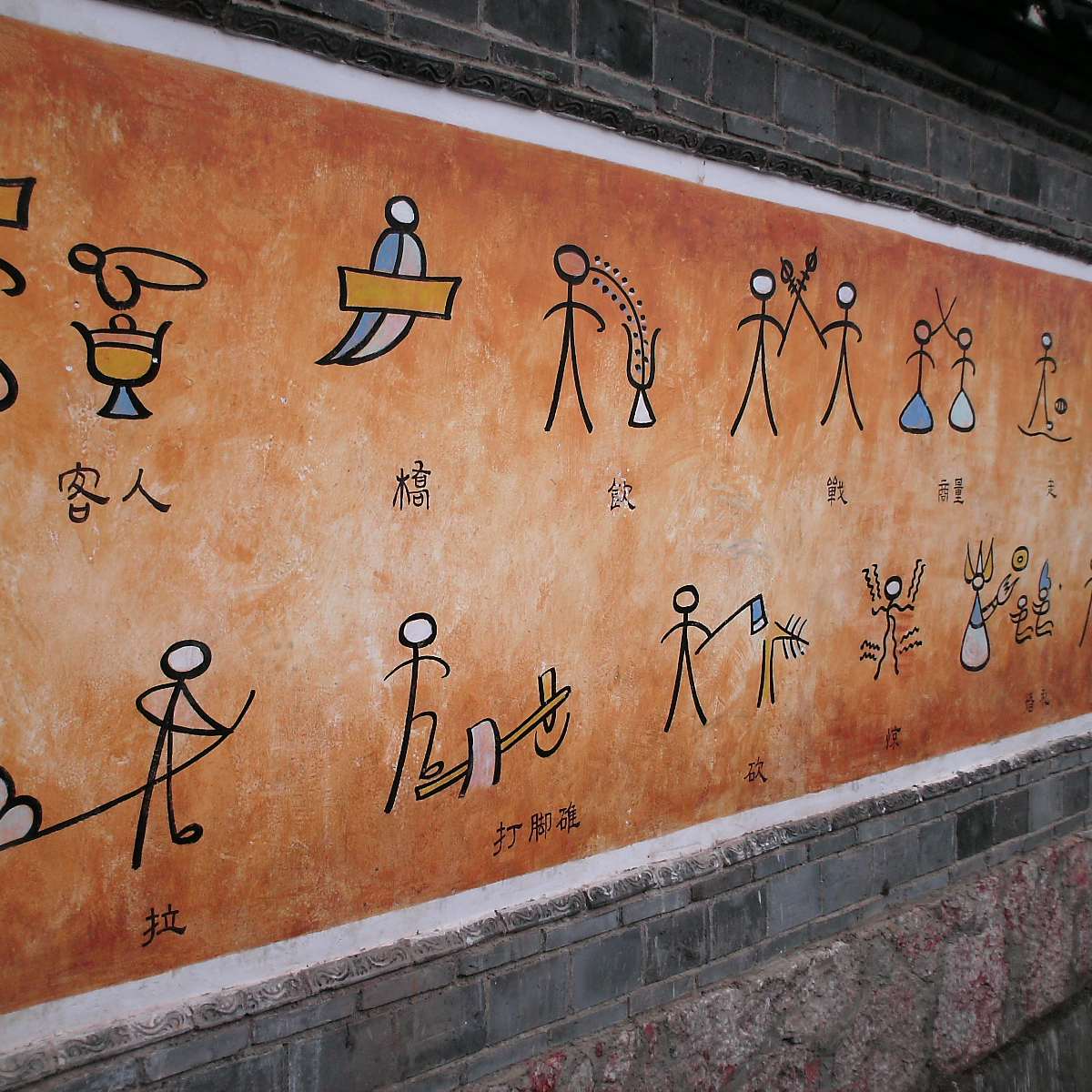
A Naxi Dongba pictograph mural in Baisha
Mu chieftain heritage
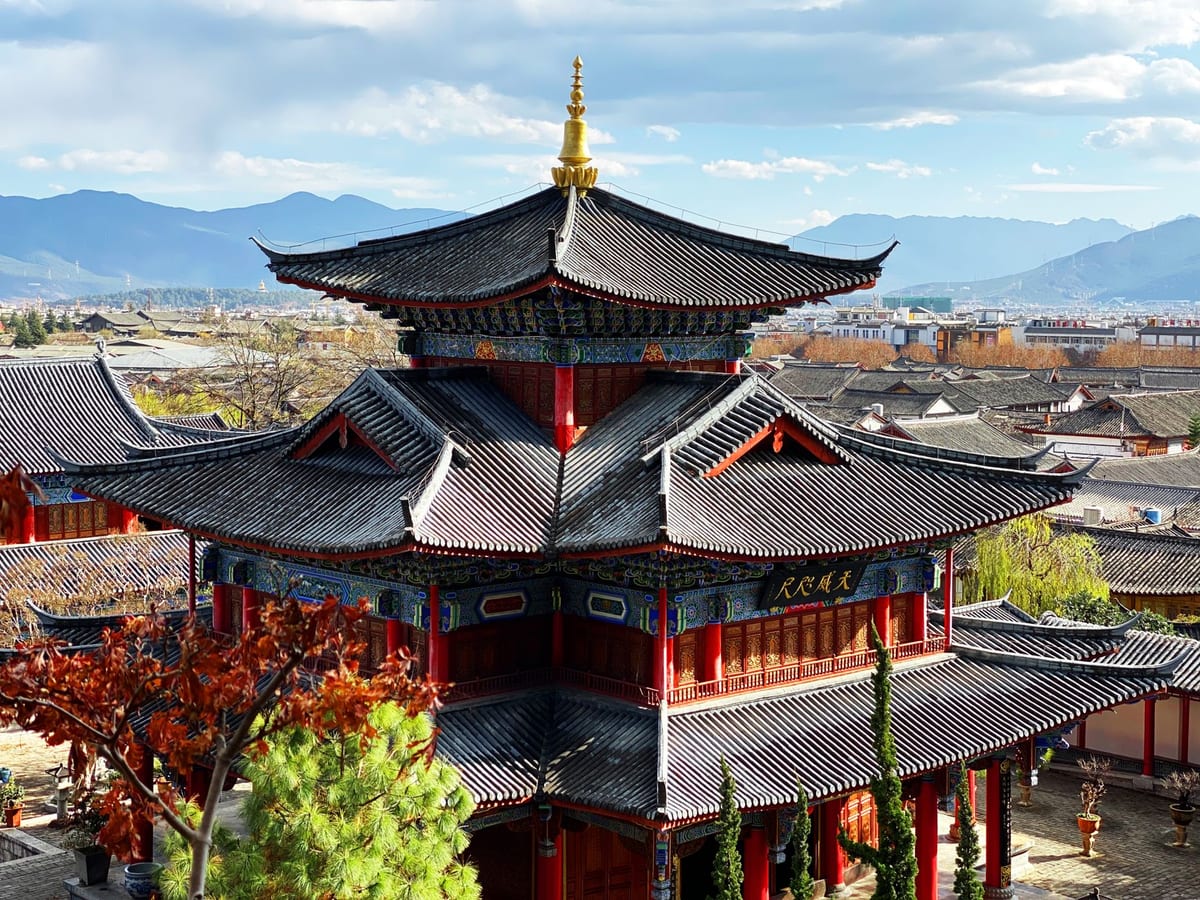
Baisha is also where the Mu dynasty's story begins, and a small cultural hall set in a classic Naxi courtyard tells how the family rose from Baisha, as hereditary Tusi chieftains under the imperial court, to rule the region for centuries before relocating their seat to Lijiang.
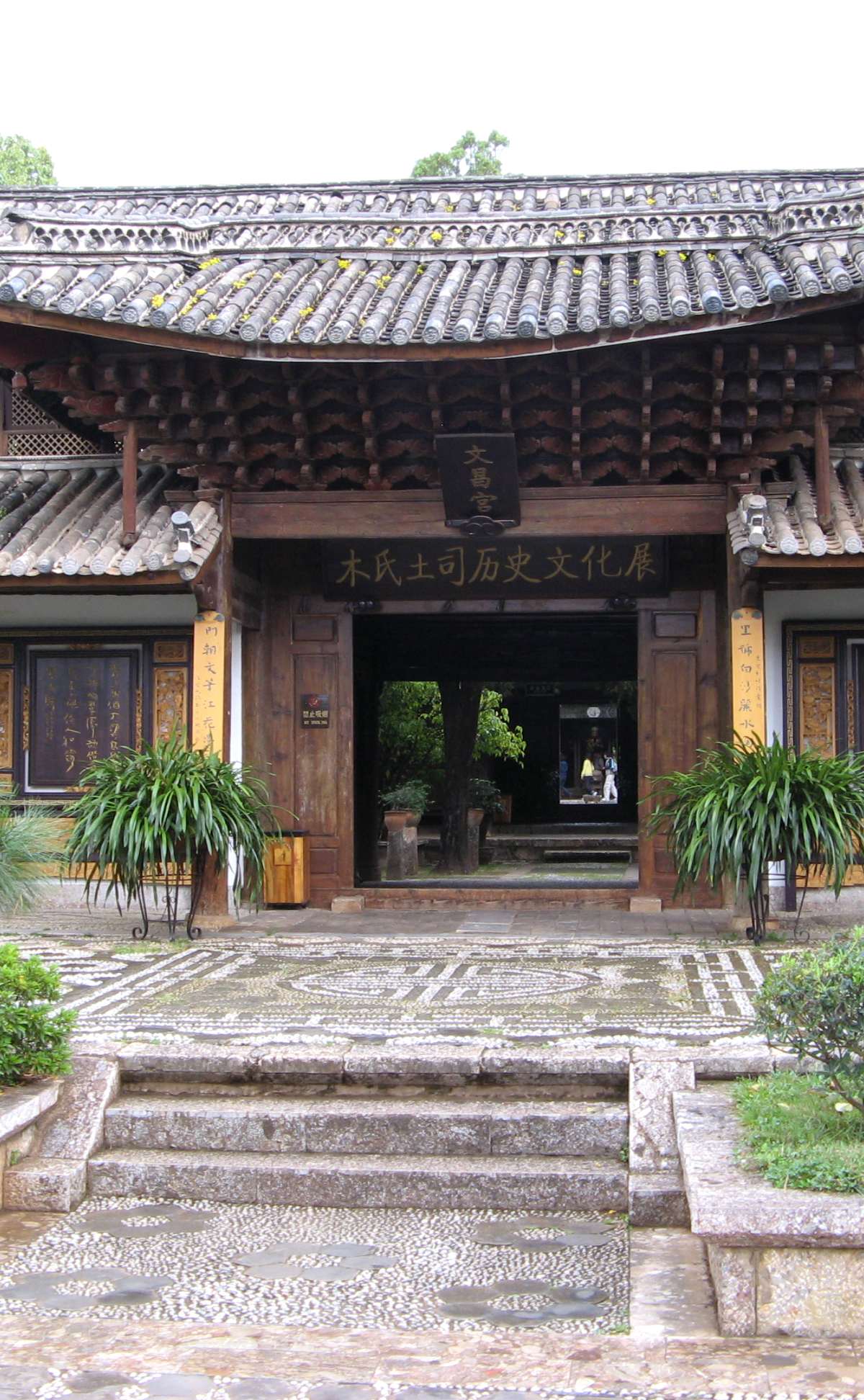
A traditional Naxi courtyard hall in Baisha
Plan your visit
Opening hours. The village itself is open and free around the clock. The Baisha Frescoes and temple halls generally keep daytime hours, roughly 8am to late afternoon; exact times shift a little by season, so confirm locally before a special trip.
Tickets. Walking through Baisha village costs nothing. A modest combined ticket applies to the fresco halls themselves, sometimes bundled with the nearby Mu Family Mansion; coverage and price have both changed over the years, so confirm the current setup on arrival rather than relying on an older figure.
Getting there. Baisha sits a short way north of Lijiang Old Town, commonly quoted at around 30 to 40 minutes by road (published distances vary widely, from about 10 to 20 km, depending on the exact route and starting point). Local bus 6 runs from stops near the old town entrance and Red Sun Square to a stop a short walk from the village centre; a separate Baisha-bound tourist line also links Lijiang Old Town, Shuhe Old Town and Baisha. A taxi or ride-hail is quick and inexpensive for a direct trip. Because Baisha, Shuhe Old Town and Jade Dragon Snow Mountain all sit along the same northern road, many travellers combine two or three in one day, whether by public bus, taxi, rented e-scooter or a guided day tour that handles the pickups and route.
Lijiang day tours combining Jade Dragon Snow Mountain and Baisha
Guided pickup that strings the north-road sights together in one outing
Some links are affiliate links; we may earn a commission at no extra cost to you.
Best season. April to June and September to October bring clear skies and mild days with the snow mountain in full view; winter mornings are crisp and bright but cold, while July and August is the green, rainier high season.
Highlights
- The Baisha Frescoes: Ming-to-Qing murals fusing Tibetan Buddhist, Daoist and Naxi imagery on one wall
- The oldest of the three UNESCO-listed Lijiang old towns and the original Naxi/Mu capital
- A free, low-key flagstone village at the foot of Jade Dragon Snow Mountain
- Living Naxi street life: embroidery workshops, produce stalls and the historic Ho family medicine clinic
- A Naxi Dongba pictograph wall in the world's last living hieroglyphic script
Travel Tips
Combine it along the north road
Baisha, Shuhe Old Town and Jade Dragon Snow Mountain all lie on the same northern road, pair Baisha with one of them in a single day, by bus 6, taxi or rented e-scooter.
Go in the morning
Arrive before the few tour groups and while the fresco halls are open (roughly 8am to late afternoon); mornings also give the clearest views of the snow peak.
Carry small cash
A modest combined ticket covers the fresco halls, and the Naxi vegetable and textile stalls are easiest with small notes; confirm the current price on arrival rather than trusting an old figure.