Lijiang
Mu Palace (Mufu), Lijiang
Xu Xiake, the Ming dynasty's most famous traveller, came through Lijiang and wrote that the splendour of the Mu family's palace rivalled an emperor's. That line stuck: people still call Mufu the "Forbidden City of the South". This was the residence and seat of government of the Mu family, hereditary Naxi chieftains (tusi) who ruled Lijiang for 22 generations, roughly 470 years across the Yuan, Ming and Qing dynasties, and the complex was built to broadcast exactly how secure that arrangement was.
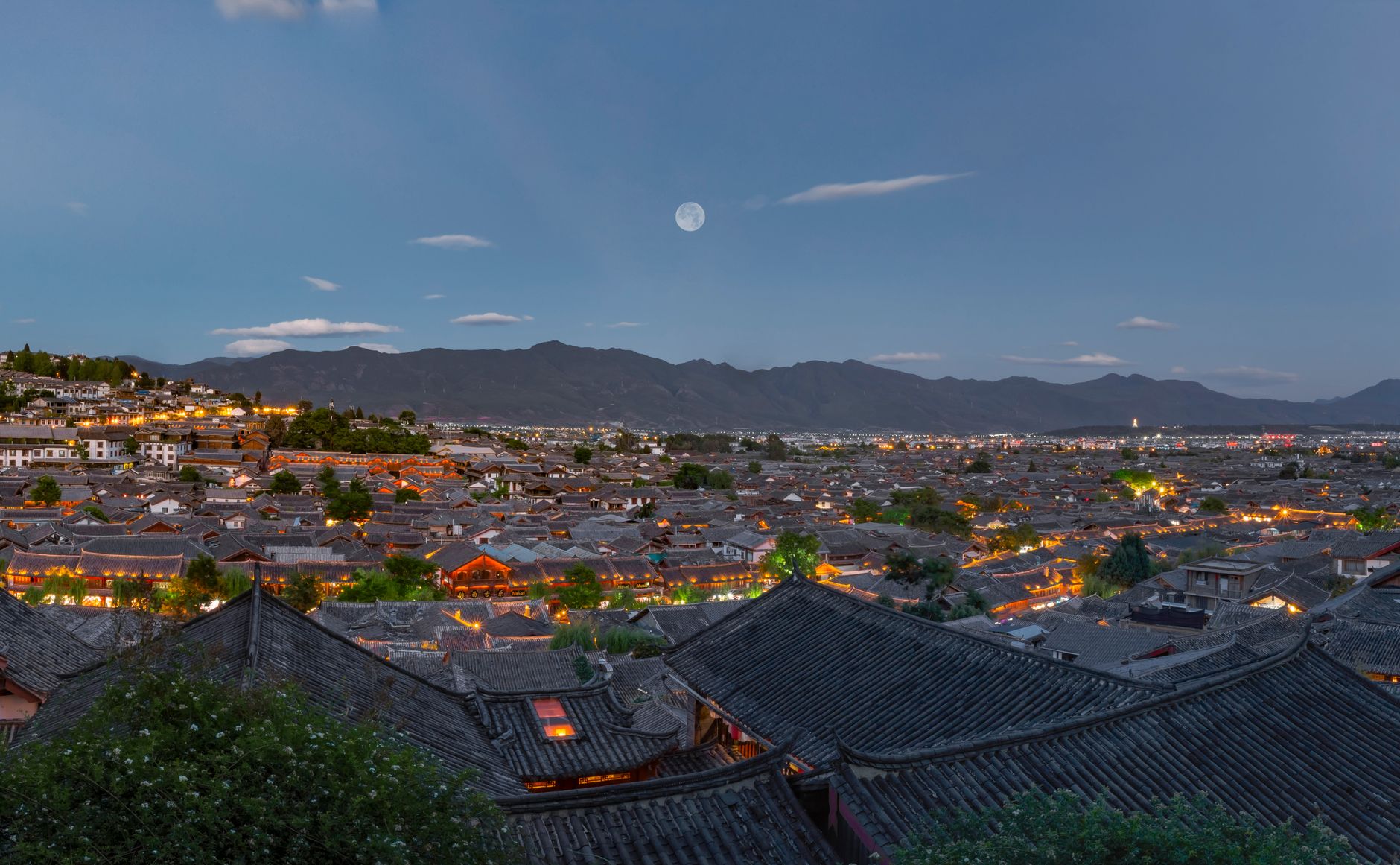
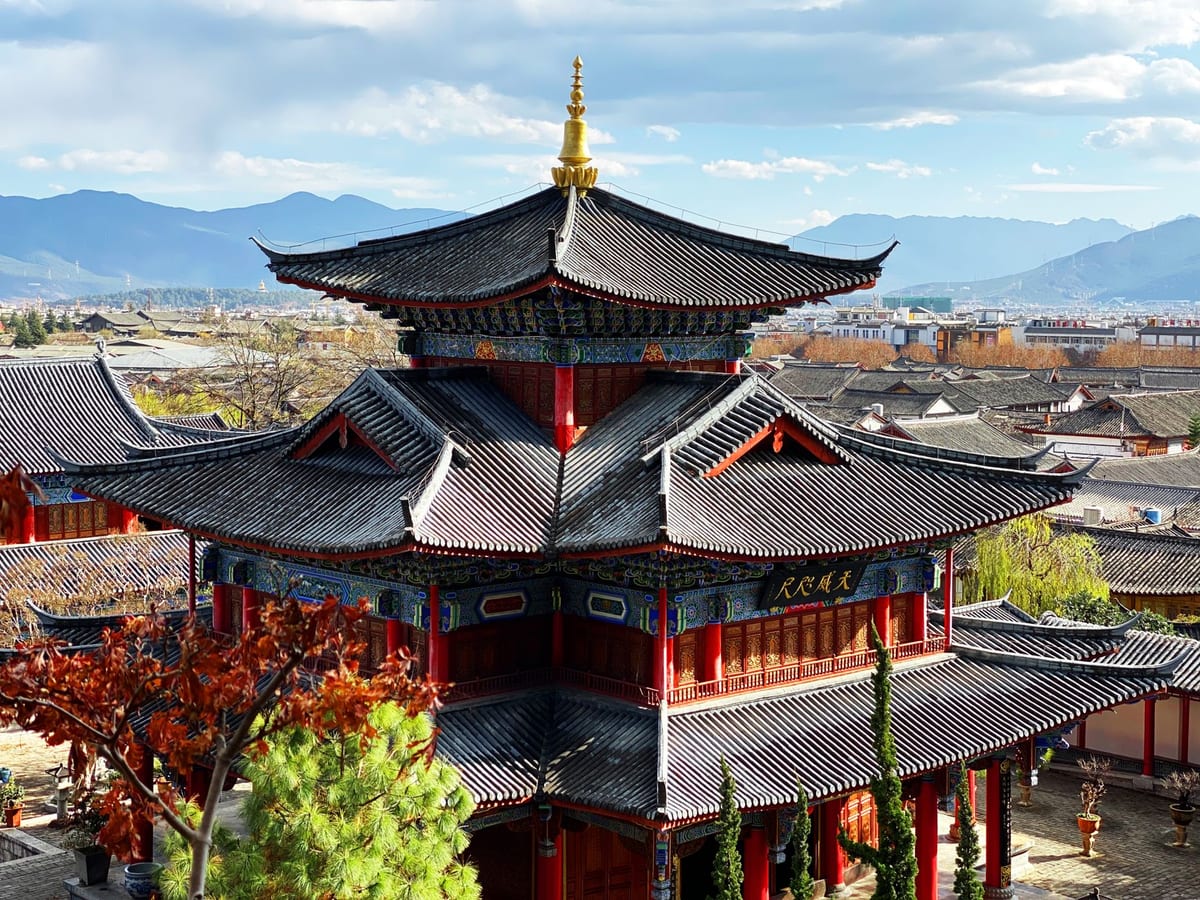
Tiered pavilion of Mu Palace rising above the Old Town
What you're actually looking at
Be clear about one thing going in: most of what stands today is a re-creation. The 1996 Lijiang earthquake destroyed much of the site, and the palace was rebuilt over three years with World Bank support, guided by historical records including Xu Xiake's own account, before reopening in May 1999. Purists sometimes hold that against it. In practice the reconstruction is careful, the setting against Lion Hill is real, and Mufu remains the best single place to grasp that Lijiang was a chieftain's capital, not just a pretty trading town.
Walking the axis
The complex climbs the hillside along a 369-metre axis that faces east toward the sunrise, a Naxi choice that sets it apart from the north-south orientation of imperial palaces. On the lane in front stands a Ming-era wooden archway inscribed Tianyu Liufang, a phrase that doubles as Naxi for "go and read books", which tells you something about how this family wanted to be remembered.
Inside, the buildings come in sequence:
- Yishi Hall, ringed by white marble balustrades, is where the chieftains held court and conducted official business.
- Wanjuan Pavilion behind it served as the family library, holding thousands of scriptures, paintings and works of calligraphy.
- Hufa Hall was the stage for sacrificial rites.
- Keep climbing past the upper pavilions to hilltop Sanqing Hall for the view that justifies the whole ticket: grey tiled rooftops of the Old Town spilling out below.
Look for the mix of Han palace architecture with Tibetan and Naxi decoration in the painted beams and stone carving; the fusion is the point, a small kingdom borrowing from every neighbour it traded with.
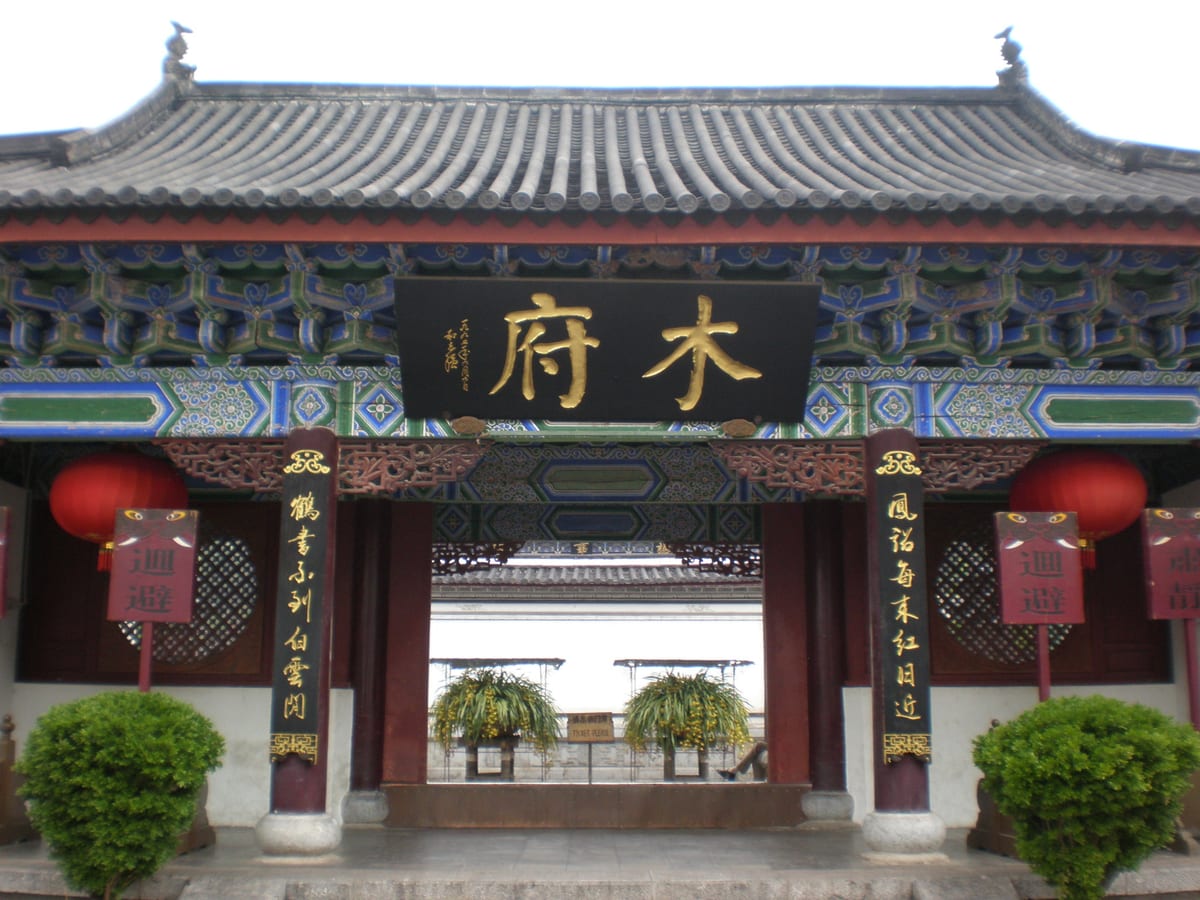
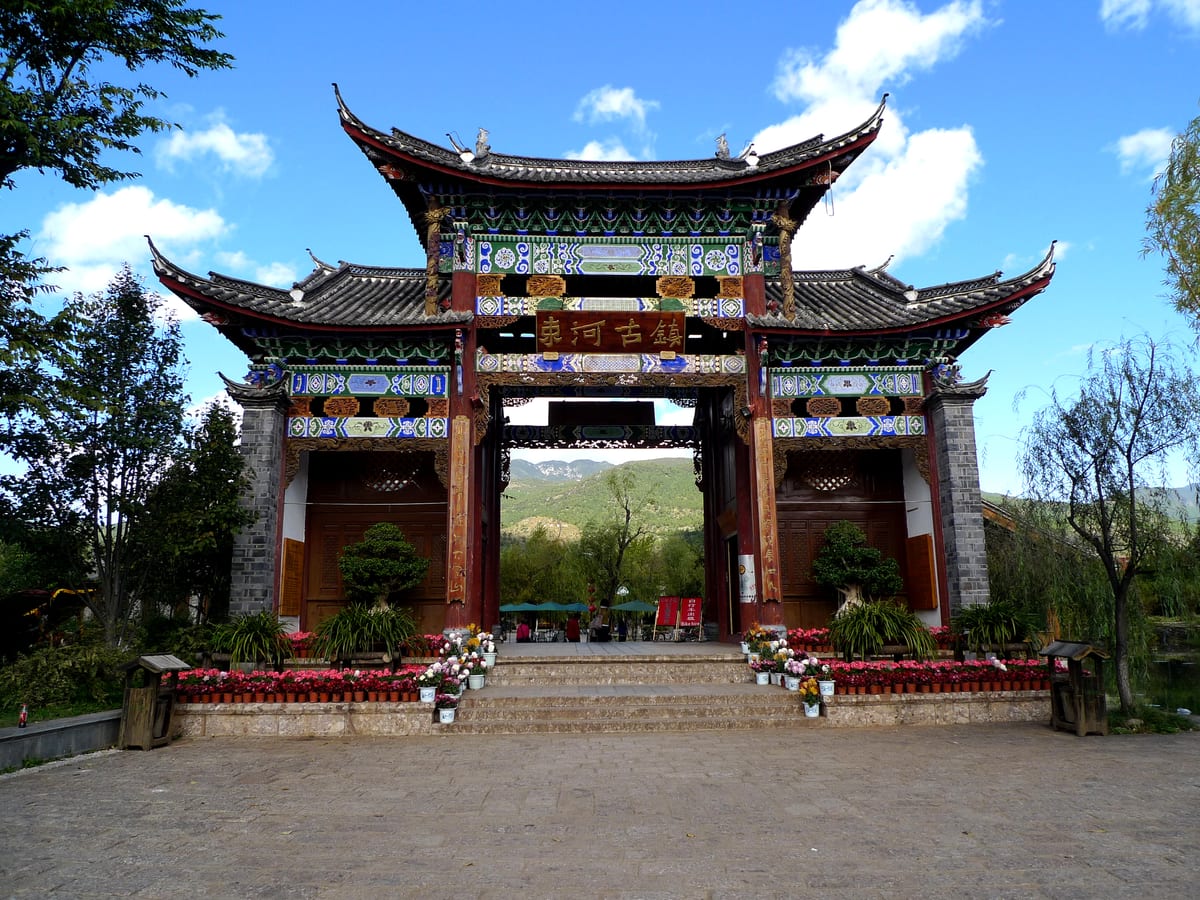
Ornate entrance gate of Mu Palace
Tickets and hours
Mufu charges its own admission, separate from Lijiang's old town maintenance fee; the price is modest, and current rates and skip-the-line options can be checked on Klook or at the gate. Opening hours run roughly 8:30 to late afternoon, with seasonal variation, so confirm locally if you are cutting it fine. Allow an hour to an hour and a half. English signage is thin, and this is one place where an audio guide or a human one changes the visit from "nice buildings" to an actual story.
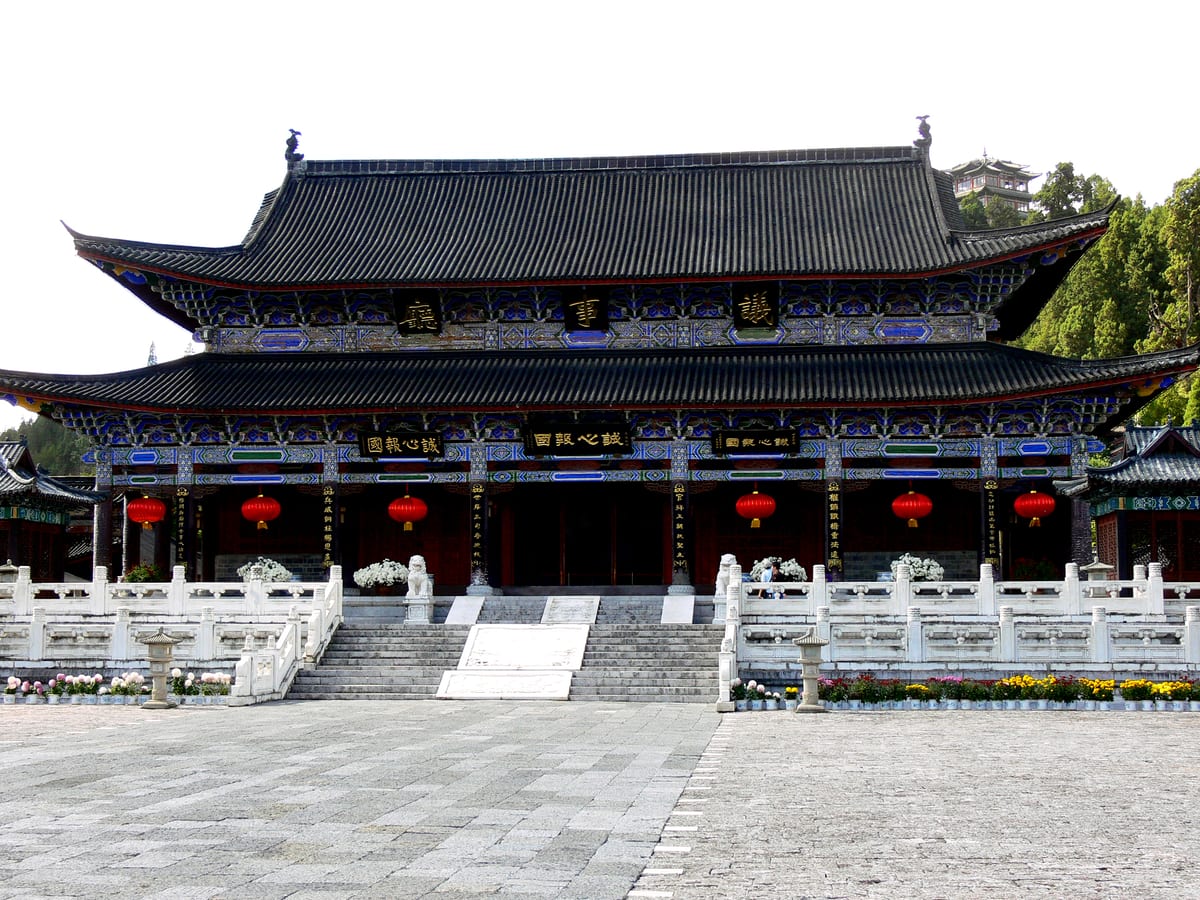
Grand timber council hall of the Mu chieftains
Getting there and when to go
The palace is inside the Old Town, a few minutes' walk southwest of Sifang Street; follow the lanes toward Lion Hill and the Tianyu Liufang archway. Mornings are quieter and cooler for the climb, with clean light over the rooftops for photos. It pairs naturally with Wangu Tower on Lion Hill directly behind, which stacks an even higher panorama on top of Sanqing Hall's.
Highlights
- Seat of the Mu chieftains, 22 generations over roughly 470 years
- Grand timber halls dubbed the Forbidden City of the South
- A 369-metre axis facing east, with the Tianyu Liufang archway out front
- Hilltop Sanqing Hall view over the Old Town rooftops
- Han-Tibetan-Naxi fusion architecture, rebuilt after the 1996 earthquake
Travel Tips
Budget for its own ticket
Mufu charges separate admission on top of the old town maintenance fee; check current rates when you book or at the gate.
Climb to the top
Push on past Wanjuan Pavilion to Sanqing Hall for the best rooftop panorama of the Old Town.
Take a guide or audio guide
English signage is thin; the Naxi chieftain story is what makes the halls worth it.