Huangshan
Chengkan Ancient Village
Hongcun and Xidi get the tour buses; Chengkan gets the feng-shui scholars. This Huizhou village, settled some 1,800 years ago and reshaped by the Luo clan into a working diagram of the Bagua (the Eight Trigrams of the Book of Changes), sees a fraction of their crowds while holding some of the most intact Ming architecture in China. The Longxi River was bent into an S-curve to trace the line between yin and yang, the eight surrounding ridges stand in for the eight trigrams, and the lanes were laid out to double as a maze. Over 130 Ming and Qing buildings still stand inside it.
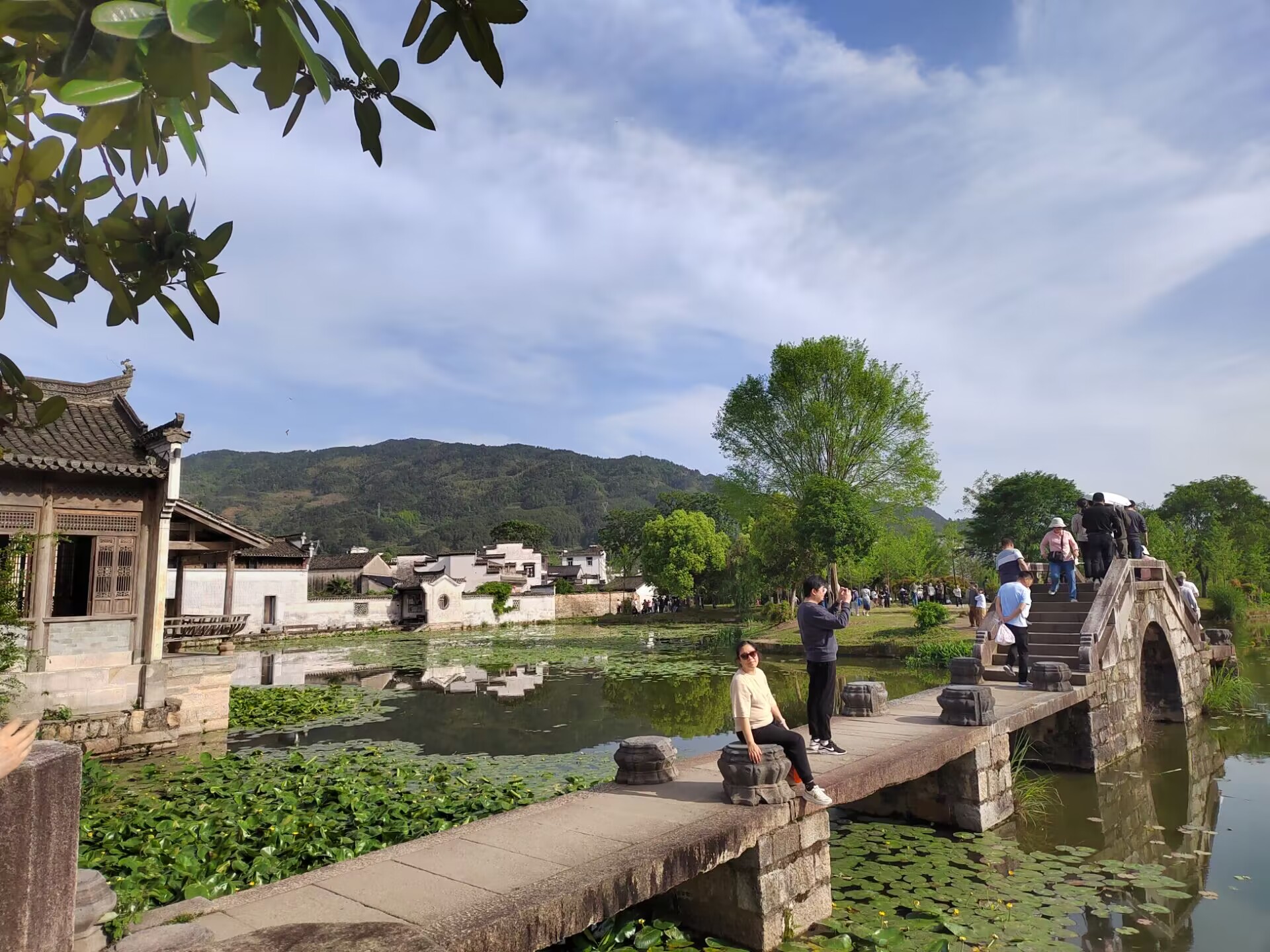
Chengkan village pond, bridge and Huizhou houses below the hills
What to see
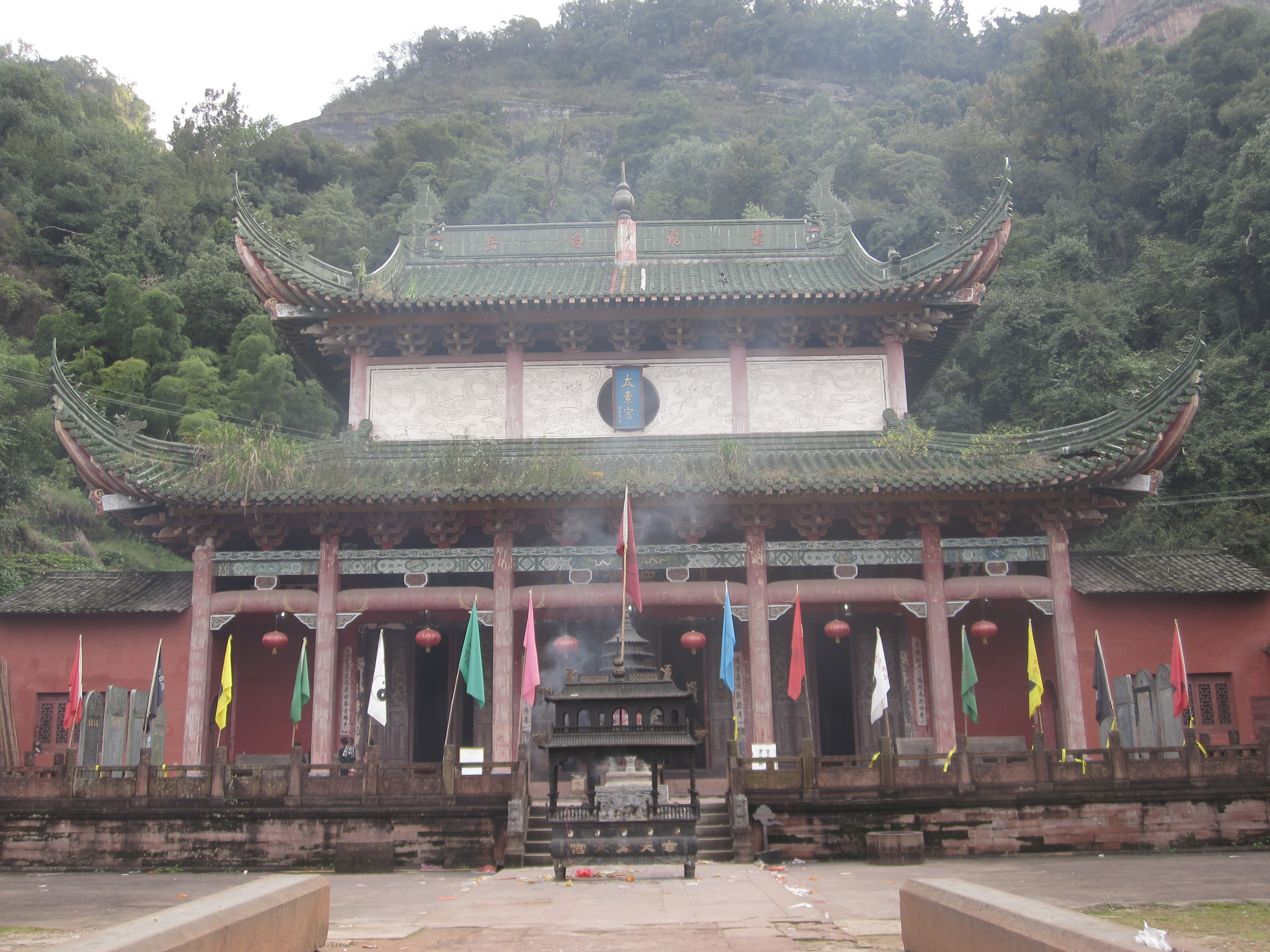
The set piece is the Baolun Pavilion inside the Luo Dongshu Ancestral Hall, a Ming clan hall widely rated the finest folk ancestral hall in China and nicknamed the "first ancestral hall east of the Yangtze." Its great roof is carried on pillars of golden nanmu (Phoebe zhennan), a rare hardwood, and the carved beams and brackets are what earn it national-treasure status. Beyond it, wander the Bagua plan past stone bridges, the river bend and dozens of Ming and Qing homes built around sky-well courtyards (tianjing), the small open light-wells that pull daylight and rain into the centre of each house. Getting turned around is the point: the village runs on three main streets and ninety-nine lanes, many of them dead ends.
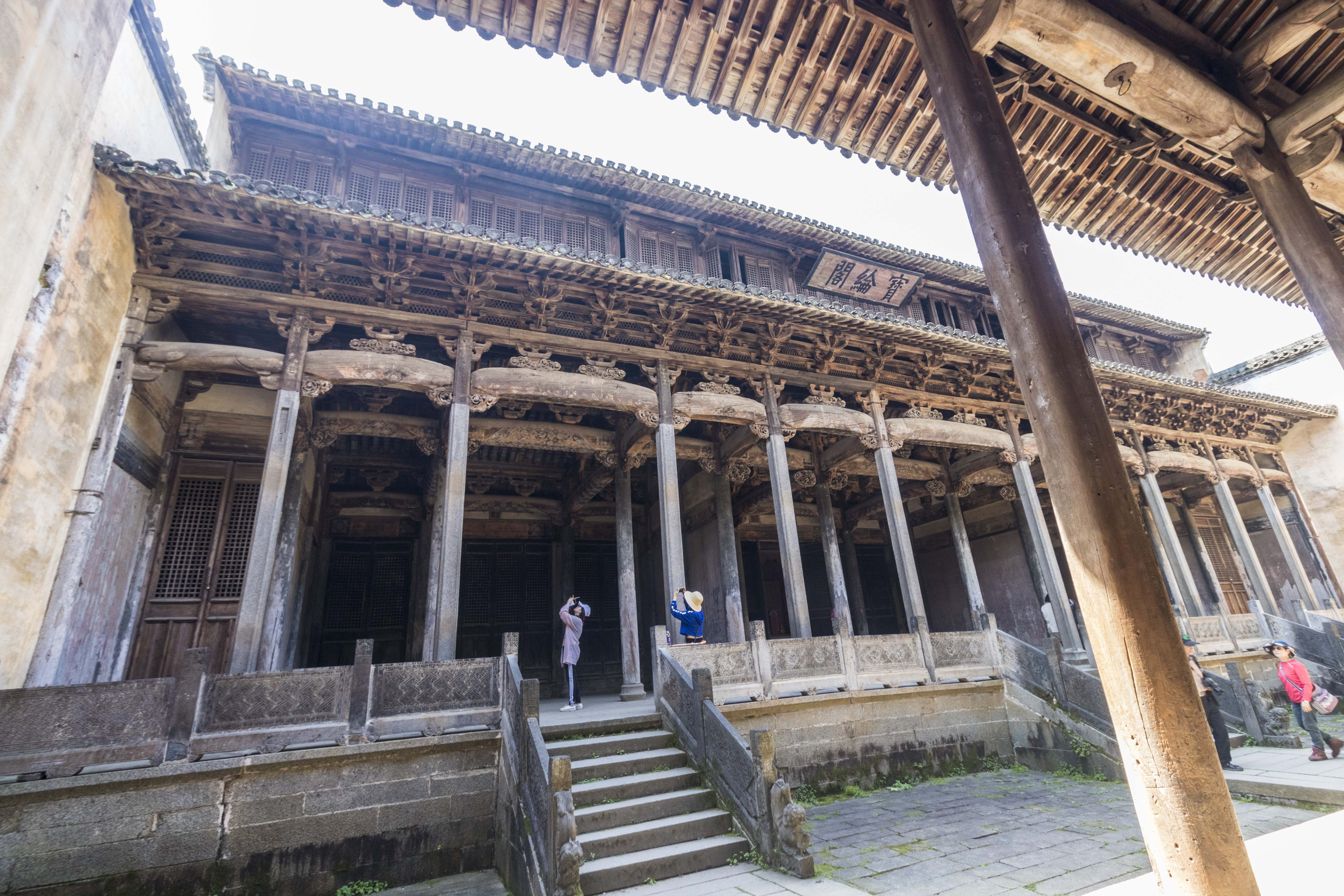
The grand Baolun Pavilion of the Luo Dongshu Ancestral Temple in Chengkan
Hours and tickets
Chengkan opens daily, roughly 8am to 5pm (the outer village stays open longer than the ticketed halls). A single entrance ticket covers the site, and it stays valid for up to three days if you spend the night in the village, otherwise for the day. A local guide is worth it here more than at most villages: the layout is genuinely confusing, and much of the carving detail goes unexplained without one.
Getting there
Chengkan sits in Huizhou District, about 30 km north of Tunxi (Huangshan City), which still makes it the closest of the big ancient villages to town. A tourist bus (route 3) runs from Tunxi's coach station several times through the day and takes around 40 minutes; a taxi is quicker if you are short on time. It slots easily into a half day alongside another Huizhou sight.
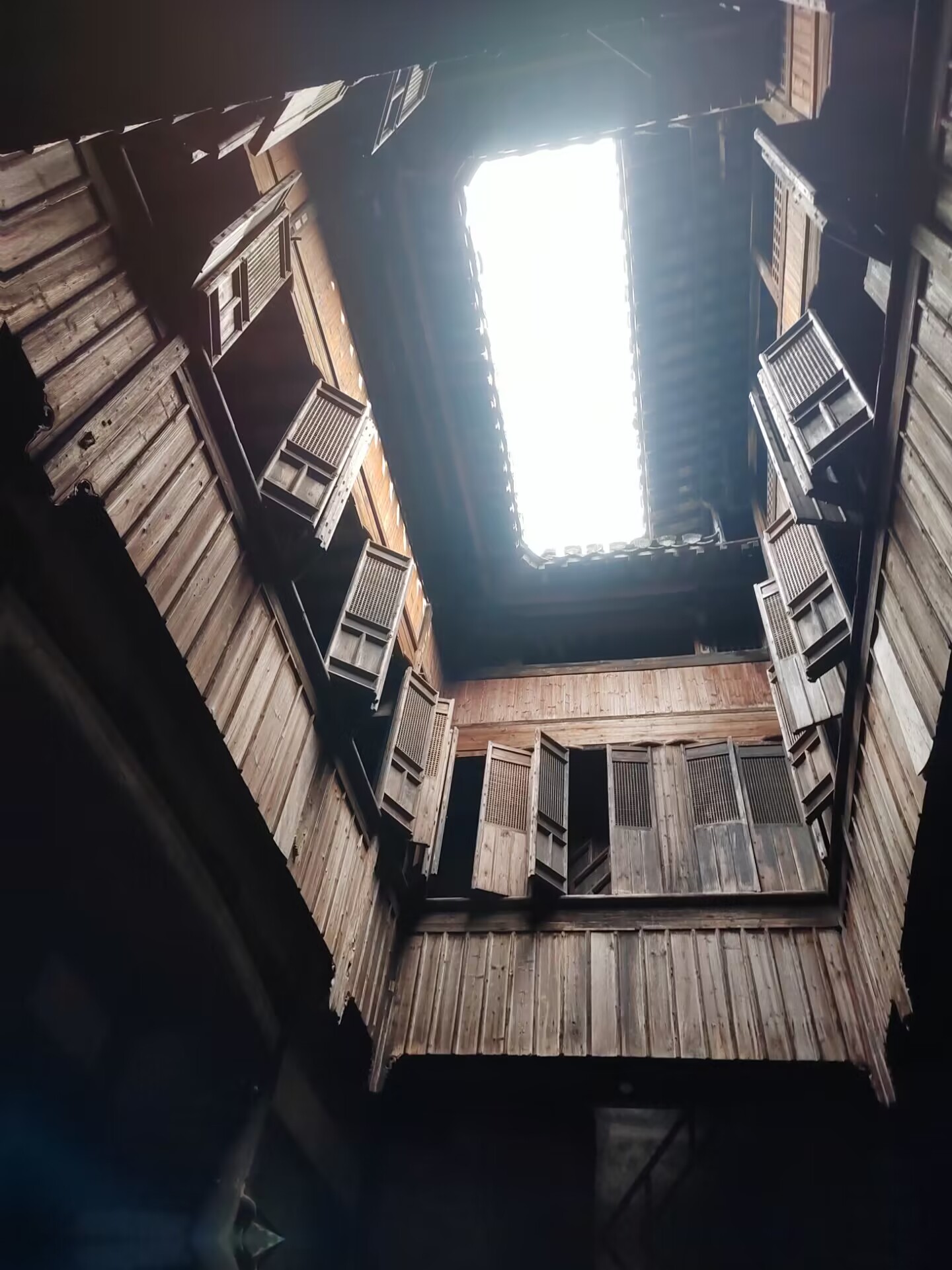
Looking up at a wooden sky-well courtyard in a Chengkan house
When to go
Spring and autumn are the sweet spots; spring adds rapeseed blossom in the fields around the walls. Because Chengkan draws few tour groups, it stays pleasant even at midday, but come early for the cleanest reflections in the entrance pond and the quietest lanes. Give yourself two to three hours to see the temple and the main streets without rushing.
A little history
Chengkan traces its roots to the Three Kingdoms era, but the village you walk today was shaped by the Luo clan after they arrived in the Tang dynasty. Reading the valley as a giant Bagua, they curved the Longxi into its yin-yang bend, set the streets against the surrounding peaks, and built the network of three streets and ninety-nine lanes said to confuse invaders and steady the flow of qi. The Luo Dongshu Ancestral Hall, begun in the Ming, took decades to finish and remains one of the best-preserved clan halls in the country.
Combine your visit
Being the nearest ancient village to Huangshan City makes Chengkan easy to pair: slot it beside the Tangmo or Qiankou old houses, or use it as a slow afternoon after a busier morning elsewhere. With so few groups around, it rewards unhurried wandering. Get deliberately lost in the lanes, step into the open halls, and look up for the carved brackets, sky-wells and stone door frames. A guide or a printed map earns its keep, and a couple of hours is enough to take in the temple and the main streets.
Highlights
- An 1,800-year-old village laid out on the Bagua (Eight Trigrams) feng-shui plan
- The Baolun Pavilion, 'first ancestral hall east of the Yangtze,' a national treasure
- The S-curved Longxi River echoing the yin-yang symbol
- Some of China's finest surviving Ming-dynasty architecture, over 130 old buildings
- A maze of three streets and ninety-nine lanes with sky-well (tianjing) courtyards
- Far fewer crowds than Hongcun or Xidi, and closest to Huangshan City
Travel Tips
Take a guide or map
The Bagua maze is designed to disorient, and a guide unlocks both the layout and the temple carvings.
Closest village to the city
About 30 km and 40 minutes from Tunxi by tourist bus, ideal to pair with another half-day sight.
Shoot the entrance pond
The pond and stone bridge give the postcard view; look up indoors for the sky-well courtyards.