Huangshan
Huizhou Ancient City
Huizhou Ancient City
Most of Shexian's old walled town is free to walk into. You pay only to step inside the enclosed heritage buildings, so you can spend a whole afternoon in the stone lanes without a ticket and still feel you have seen the place. This was the seat of the old Huizhou prefecture, home of the Huizhou merchants who built white-walled, black-tiled mansions across the region, and the birthplace of "Hui studies" (Huixue), the body of learning around Huizhou architecture, woodcarving, ink-making and opera. It sits about an hour from downtown Huangshan (Tunxi), which makes it the clearest way to understand the culture behind the show villages of Hongcun and Xidi.
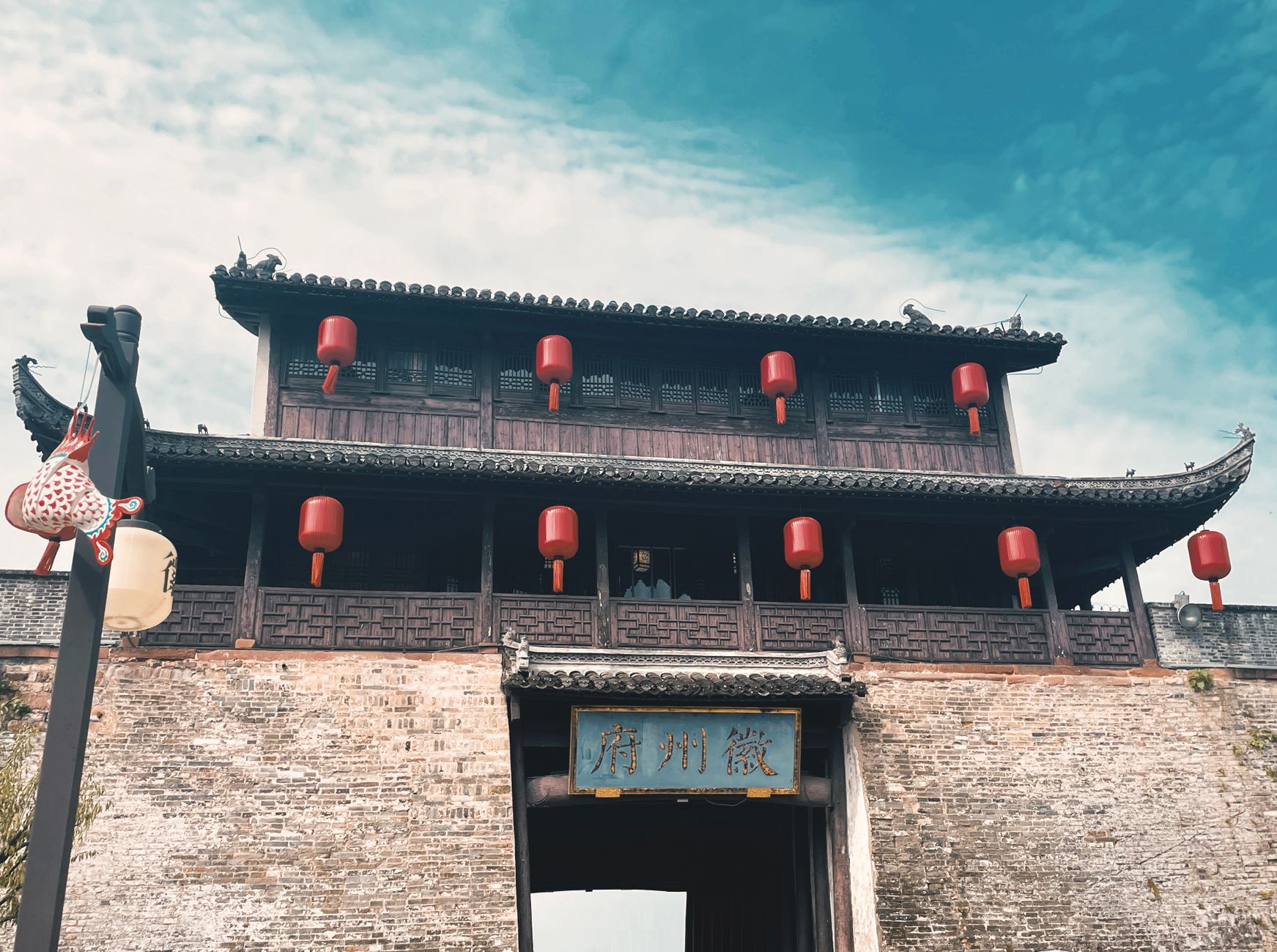
Huizhou prefecture gate tower with red lanterns
A city built inside a city
Shexian has been a prefecture seat since the Tang dynasty, and its layout still shows the old "city within a city" plan: an outer prefecture wall wrapped around an inner county town. It is counted as one of China's four best-preserved ancient cities, alongside Pingyao in Shanxi, Lijiang in Yunnan and Langzhong in Sichuan. Unlike those, Huizhou stayed a working county town rather than a tourist stage set, so ordinary shops and homes still fill the lanes between the monuments.
What the ticket actually covers
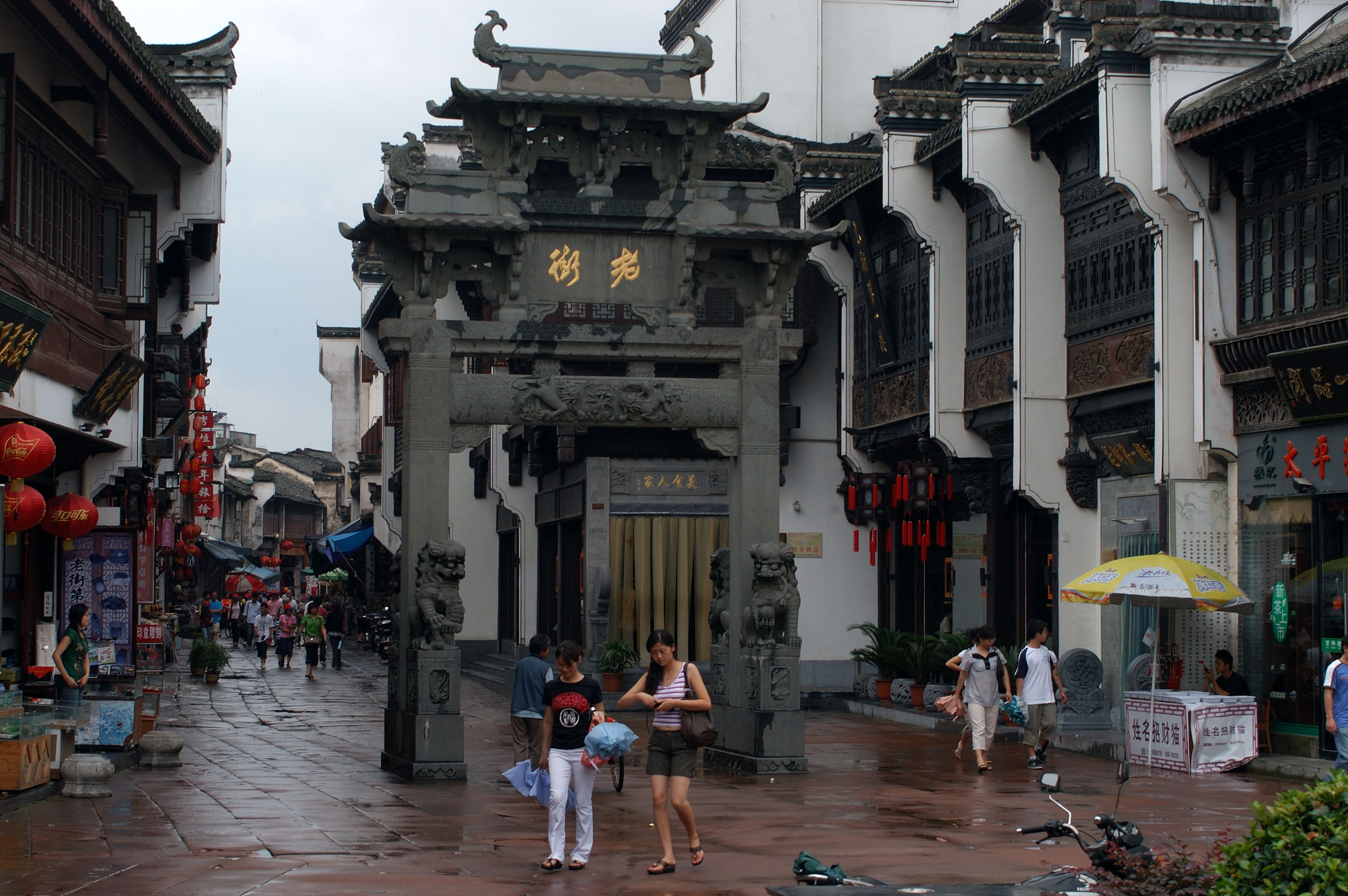
The landmark you came for stands on a public street: the Xu Guo Stone Archway, raised in 1584 for a Ming grand secretary and the only surviving freestanding stone archway in China with four legs and eight pillars. You can photograph it without paying. The through-ticket is for the enclosed sights: the reconstructed Huizhou Prefecture Yamen (the old government seat), the Hui Garden, the Xin'an Stele Garden, Taibai Tower by the river and the Tao Xingzhi Memorial for the reformer educator born here. Doushan Street, a lane of Ming and Qing merchant mansions and carved brick gateways, threads through the ticketed zone, though much of it can be seen from the open street.
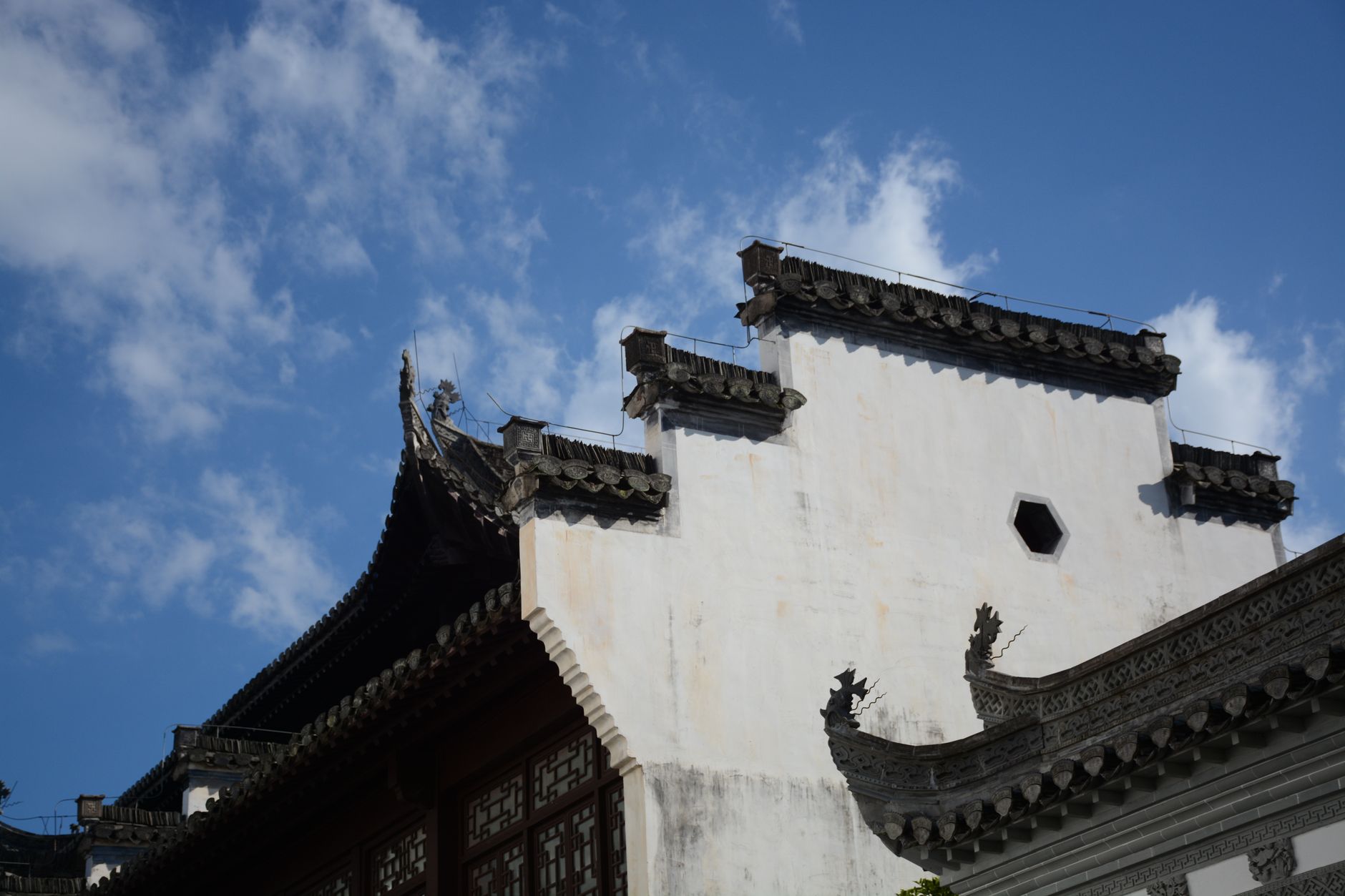
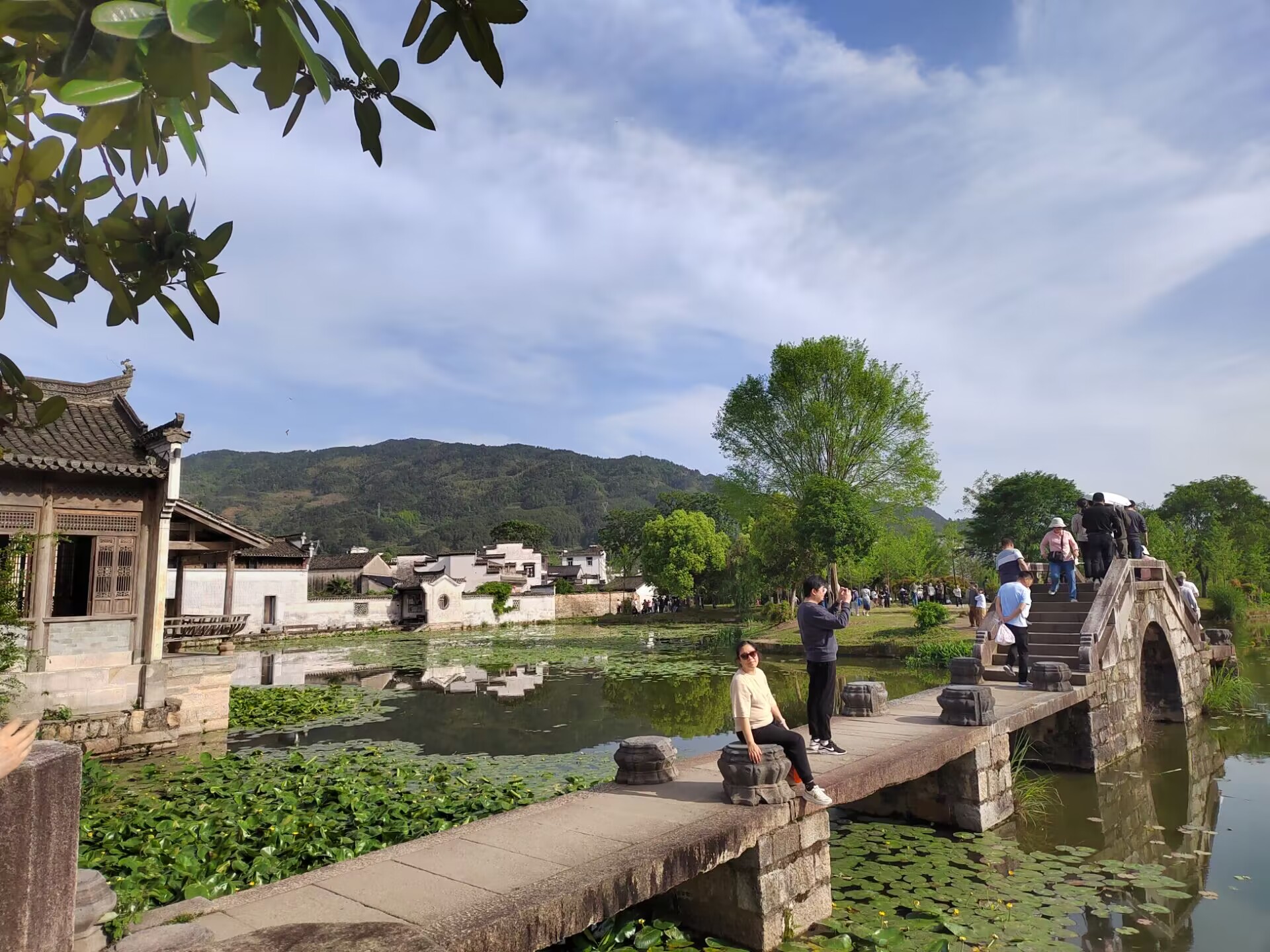
Hui-style horse-head gables of white wall and black tile
Timing your visit
The town itself is open all day. The ticketed sites keep shorter hours, roughly 8:00 to 17:00, and stretch a little longer over big national holidays like National Day and Spring Festival, when crowds also peak. Half a day covers the core; come early for the archway and the firewall gables of Doushan Street before the tour coaches arrive. Spring and autumn give the clearest light on the white walls, and the surrounding hills turn yellow with rapeseed flowers in early spring.
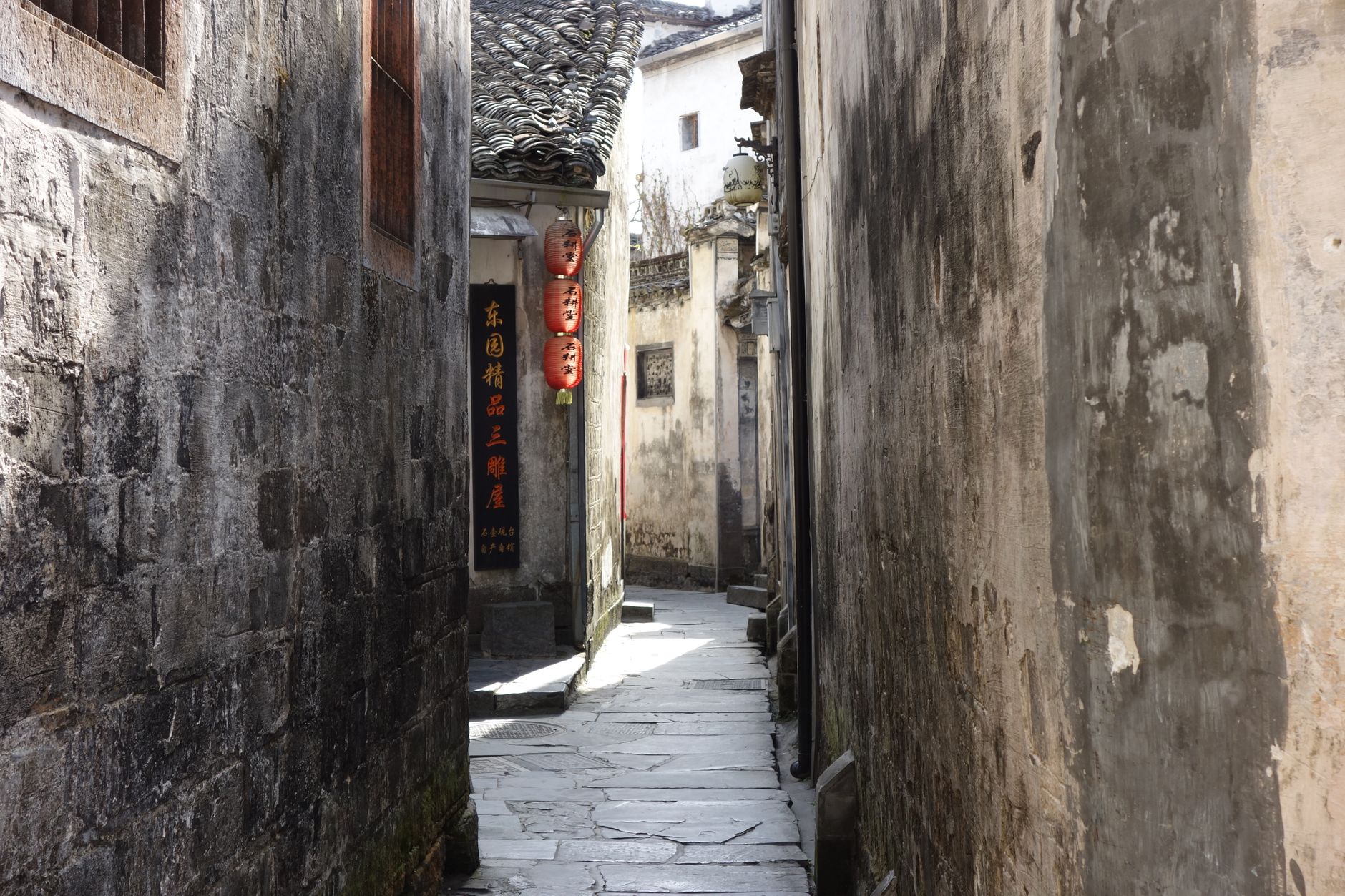
Narrow stone alley lined with old Hui houses
Getting there
Shexian sits about 25 to 30 km from Tunxi (downtown Huangshan). The quickest way is the Hangzhou–Huangshan high-speed line to Shexian North Station, then a 10 to 15 minute taxi to the old city, or local Bus 1 with a transfer to Bus 3 or 4 if you would rather not take a cab. By road it is about an hour's drive from Tunxi, with regular intercity buses. In peak season the Huangshan-bound high-speed trains sell out, so reserve a few days ahead: it is free on the official 12306 app, or through Trip.com if you want an English-language booking flow.
Making the most of it
Beyond the monuments, the reward is the back-lane workshops still cutting inkstones and pressing ink sticks, and the tea houses tucked into courtyards. Bring your passport for ticket concessions, and give yourself time to wander off the main lane.
Highlights
- Xu Guo Stone Archway (1584), the only surviving freestanding stone archway in China with four legs and eight pillars
- Most of the old town is free to walk; you pay only to enter the enclosed heritage buildings
- Doushan Street, a lane of Ming and Qing merchant mansions and carved brick gateways
- Reconstructed Huizhou Prefecture Yamen, seat of the old regional government
- One of China's four best-preserved ancient cities, with a rare 'city within a city' layout
- About an hour from Huangshan (Tunxi), the key to the Hui culture behind Hongcun and Xidi
- Back-lane workshops still making Hui ink sticks and inkstones
Travel Tips
Walk first, pay for the interiors
You can wander the lanes and photograph the Xu Guo Archway from the street for free; buy the combined through-ticket only if you want to enter the enclosed sights. Carry your passport for concession and free-entry categories.
Come by high-speed rail
Take the Hangzhou–Huangshan HSR to Shexian North Station, then a 10 to 15 minute taxi, or Bus 1 with a transfer to Bus 3 or 4.
Beat the tour groups
Shoot the Xu Guo Archway in early morning light and the firewall gables of Doushan Street before the day-trip coaches arrive from Huangshan.
Allow half a day
The core sights are compact but reward slow wandering; pair with the riverside Yuliang Dam if you have time.