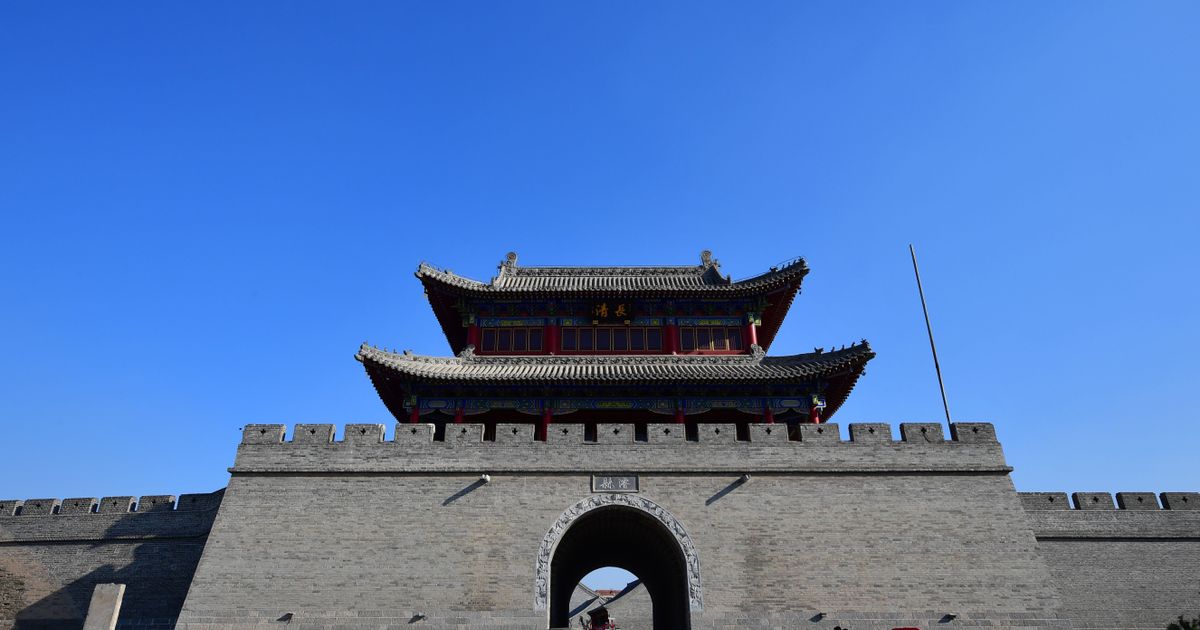
Pingyao
Ming-Qing Street (Pingyao)
The lantern-lit spine of the old town
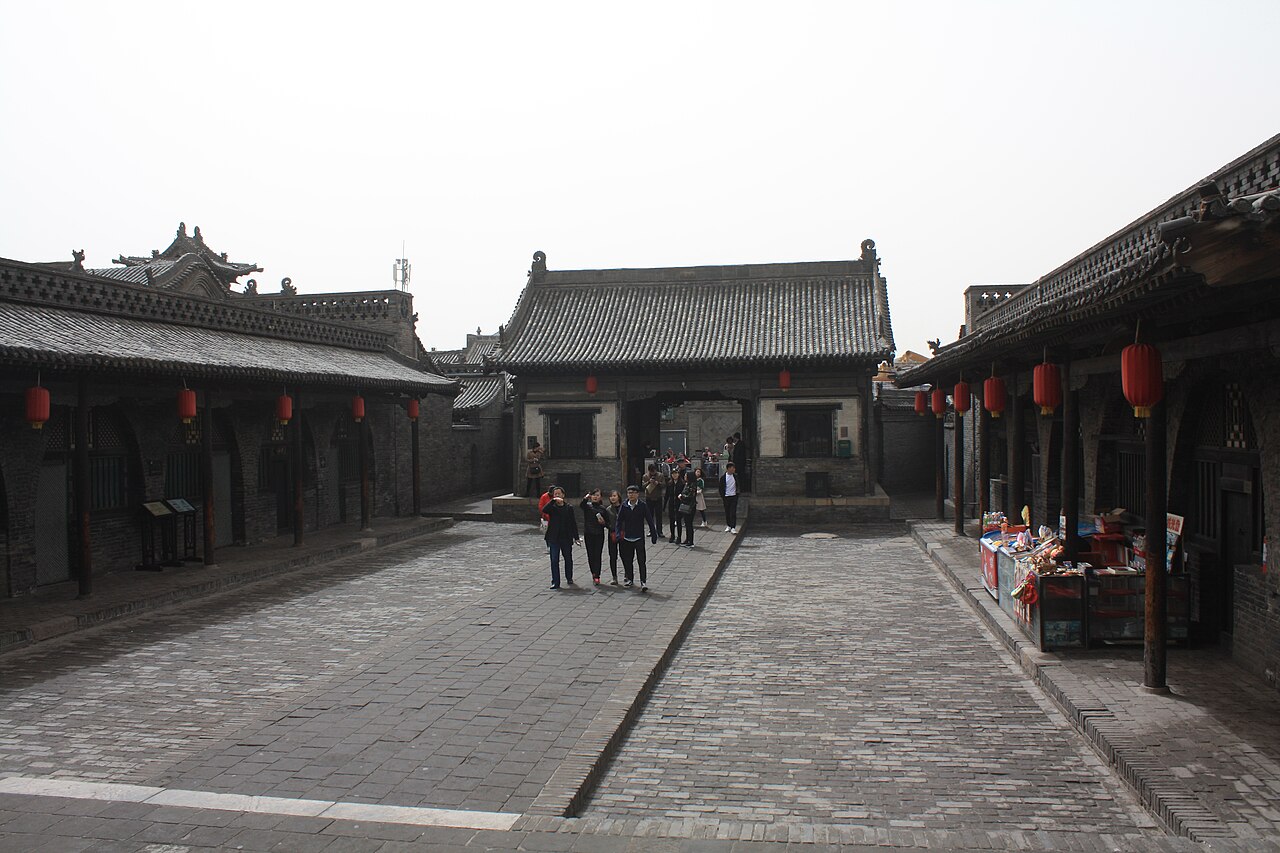
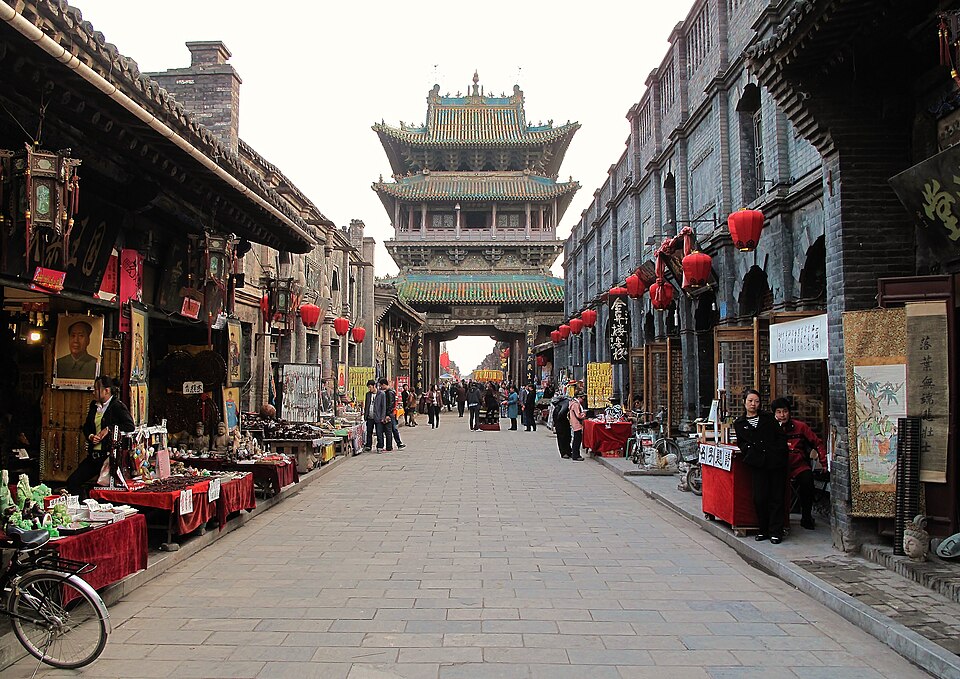
Ming-Qing Street is the straight commercial axis running through the middle of Pingyao, several hundred meters of grey-brick shopfronts, dark timber lattice and upturned tiled eaves, hung after dusk with rows of red lanterns. It is the town's busiest and most photographed lane, and the one where the trades that made Pingyao rich, draft banks, escort agencies, pharmacies and silk merchants, once stood shoulder to shoulder. Straddling it near the midpoint is the Market Tower, the tallest thing inside the walls and the landmark every visitor navigates by. Walking this street is the quickest way to understand why the whole town carries UNESCO World Heritage status as the Ancient City of Ping Yao.
Pingyao's Market Tower straddling the lantern-hung Ming-Qing Street
The Market Tower
The Market Tower (Shilou, also called the City Tower) is a triple-eaved wooden pavilion about 18.5 meters high that spans the street from side to side. It is the tallest structure within the walls and was long the symbolic center of Pingyao's merchant life. Look up at the roof: the green and yellow glazed tiles are laid to spell out the characters for happiness and longevity, an auspicious touch on a building first renovated back in 1688. When the upper floors are open, you can climb it for a view straight down the dead-level axis of the street and out across a sea of grey-tiled roofs.
What lined the street
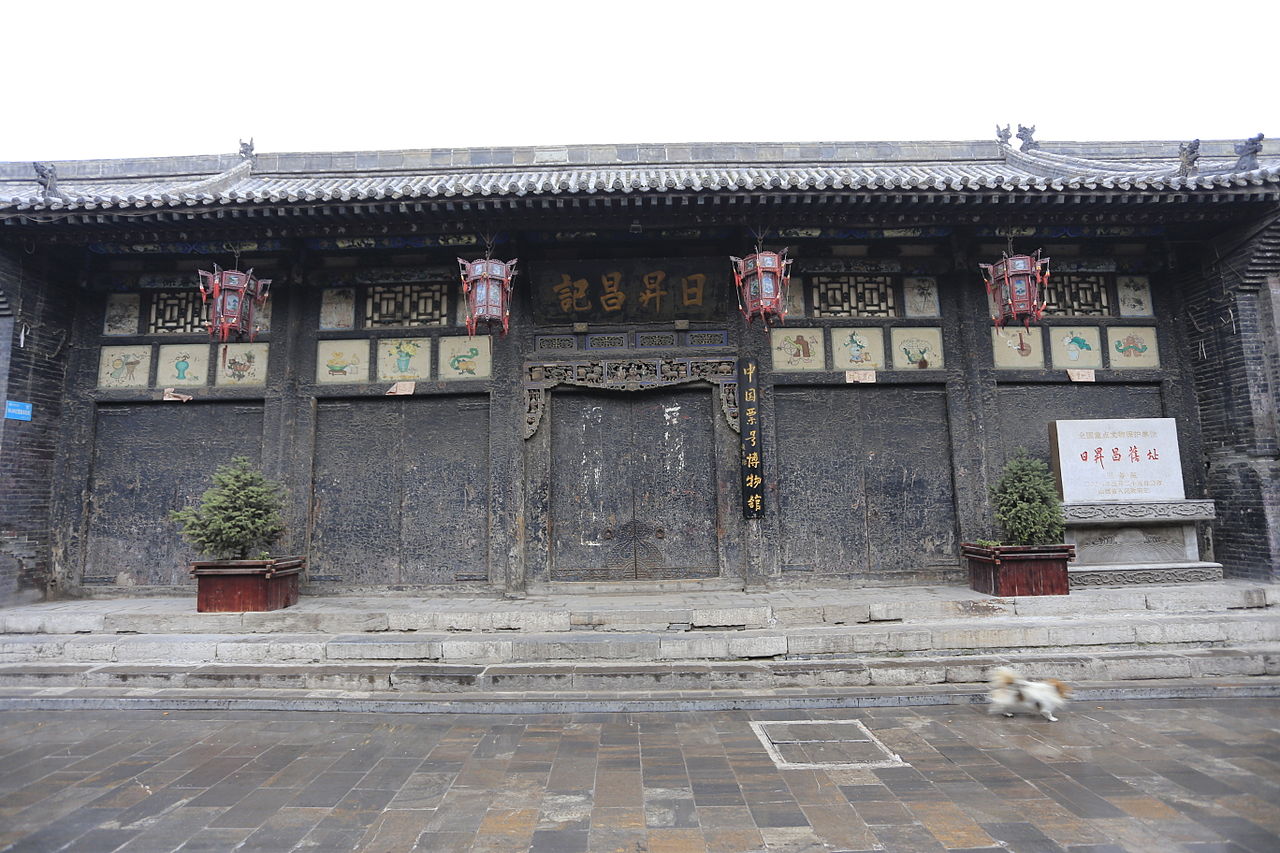
These shopfronts were once the engine room of Qing-dynasty Chinese finance. Pingyao is where China's early draft banks (piaohao) began, and along here you can still pick out old banks, the escort and security firms that guarded silver shipments on the road, pharmacies and silk merchants. Most have been adapted into shops, teahouses, courtyard inns and snack stalls, but the carved signboards, gilt couplets and timber facades are intact. Duck into the side lanes branching off the main axis and you find quieter courtyards and craft workshops away from the flow.
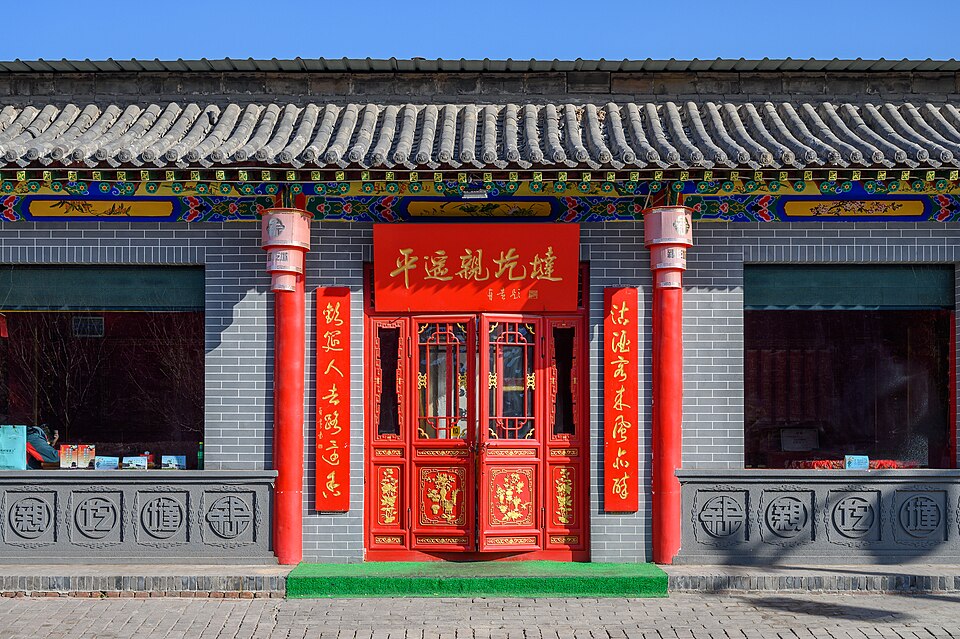
A restored grey-brick Qing-dynasty shopfront with red doors and couplets on Ming-Qing Street
What to eat as you walk
The street doubles as Pingyao's open-air food court. The two things to try are Pingyao beef (pingyao niurou), a salt-cured local specialty sold sliced or vacuum-packed, and wantuo, a chilled buckwheat jelly cut into strips and dressed with vinegar, garlic and chilli oil. Around them you will find sesame cakes, candied fruit on sticks and the aged Shanxi vinegar the province is known for. The beef travels well as an edible souvenir, though check the vacuum packing if you are flying home.
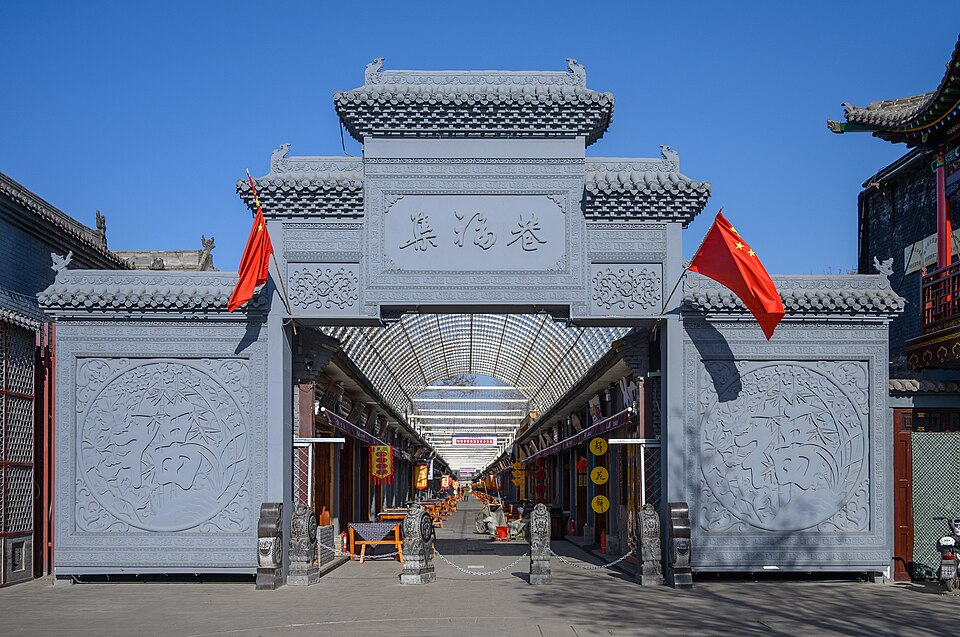
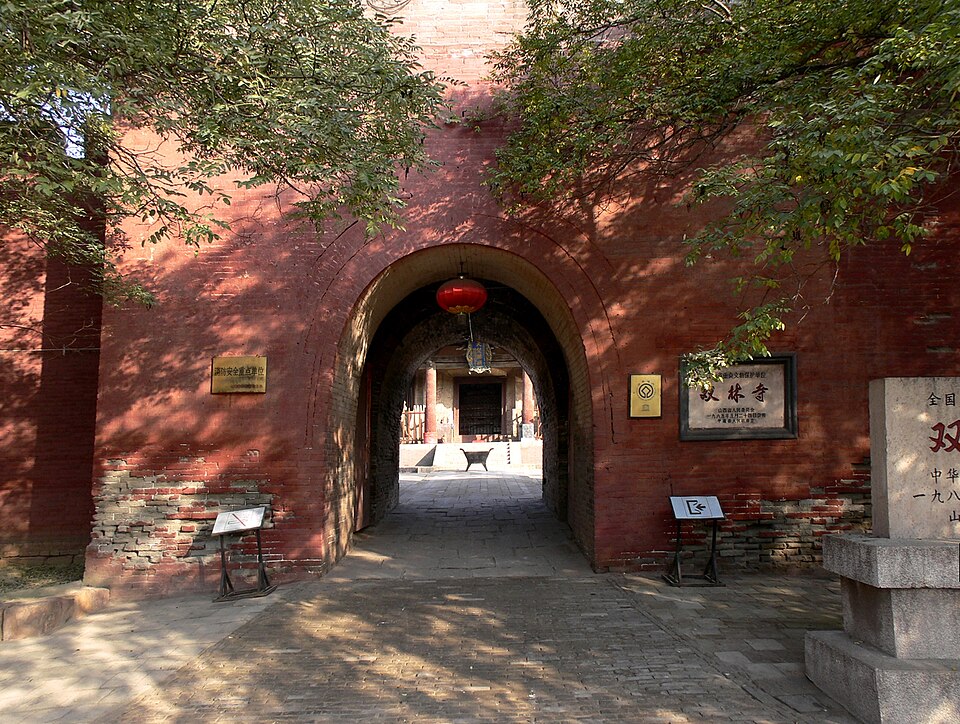
A decorative grey-brick gateway leading into a covered side lane off the main street
Free to walk, pass to go inside
Walking Ming-Qing Street costs nothing, and the street stays open at any hour, day or night. Stepping inside the ticketed sites along it, the Market Tower, the museums and the former banks, needs the Pingyao Ancient City pass, a single multi-day ticket covering roughly twenty sites across the old town, each entered once, valid for three days from first use. Students and older visitors with valid ID pay a reduced rate. There is no stand-alone ticket just for the tower; it is folded into the pass, which you can buy at the gate offices or reserve online before you arrive. The ticketed sites keep their own hours, generally around 08:00 to 18:00 and shorter in winter, so climb the tower in daylight.
Getting there
Ming-Qing Street sits at the dead center of the walled town, so any gate leaves you a short walk away. High-speed trains stop at Pingyao Gucheng station and slower conventional trains at the older Pingyao station; from either it is a few minutes by taxi or electric cart to a city gate. Private cars cannot enter the old town, so you arrive on foot, and the street itself is best taken slowly rather than by cart.
When to come
Spring and autumn bring the most comfortable weather. A weekday morning gives you the architecture without the crowds; an evening return gives you the lanterns. Try to avoid the middle of the major Chinese public holidays, when the lane can turn shoulder to shoulder.
Highlights
- The Market Tower (Shilou), a triple-eaved wooden pavilion about 18.5 m tall, the tallest building inside the walls
- Its green-and-yellow glazed roof tiles are laid to spell the characters for happiness and longevity
- Several hundred meters of restored Ming- and Qing-dynasty grey-brick shopfronts
- Former draft banks, escort agencies and pharmacies now turned into shops and courtyard inns
- Local snacks: salt-cured Pingyao beef and chilled wantuo buckwheat jelly with vinegar, garlic and chilli
- Hundreds of red lanterns glowing after dark
- Part of the UNESCO Ancient City of Ping Yao
Travel Tips
Climb the tower when it's open
When its upper floors are open, the Market Tower gives the classic view straight down the sweep of the street. Go in daylight for the best of it.
Free to walk, pass to enter
The street itself is a free public thoroughfare. Going inside the Market Tower, the museums and the former banks needs the multi-day Pingyao Ancient City pass.
Come twice
Walk it on a weekday morning for the architecture without the crush, then come back after dark for the lantern-lit atmosphere.
Good shoes, some cash
The original stone paving is uneven. Carry a little cash or have mobile payment ready, as many small stalls prefer it.