Pingyao
Zhenguo Temple (Pingyao)
Zhenguo Temple: a thousand-year-old wooden hall outside Pingyao
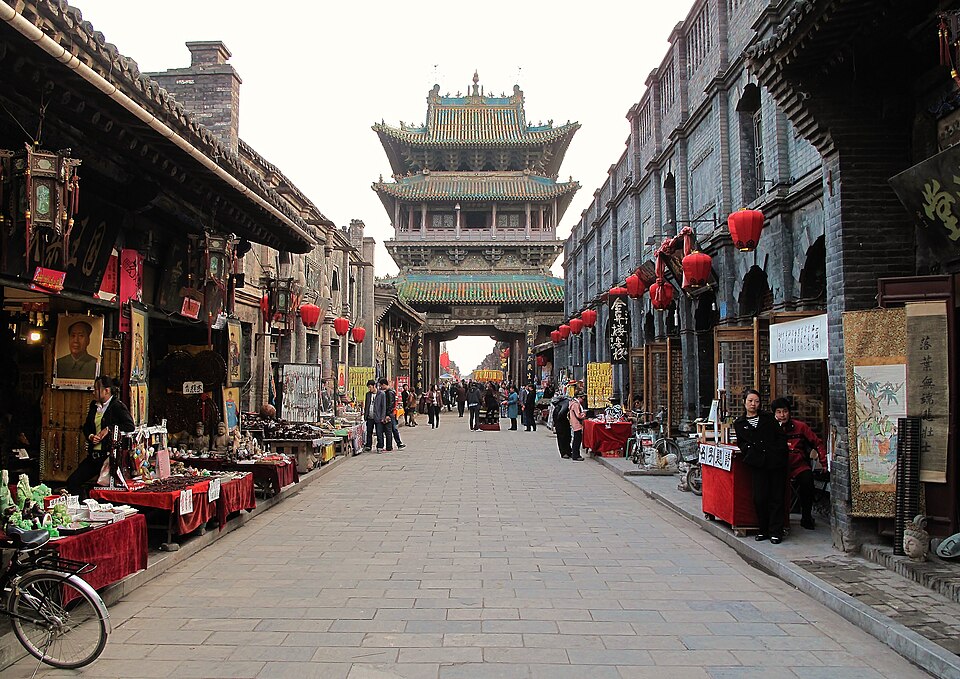
Tucked away in Haodong village, about 12 km northeast of Pingyao's famous walled old town, Zhenguo Temple is one of the quietest yet most extraordinary sights in all of Shanxi. While most visitors crowd the lanes and courtyard mansions inside the Ancient City of Ping Yao, far fewer make the short trip out to this small country monastery, and that is exactly its charm. As an outlying component of the UNESCO World Heritage "Ancient City of Ping Yao," Zhenguo Temple shelters a building of genuine global importance: the Wanfo Hall, raised in the year 963 AD, during the brief Northern Han kingdom of the Five Dynasties period. It is among the oldest surviving timber buildings anywhere in China.
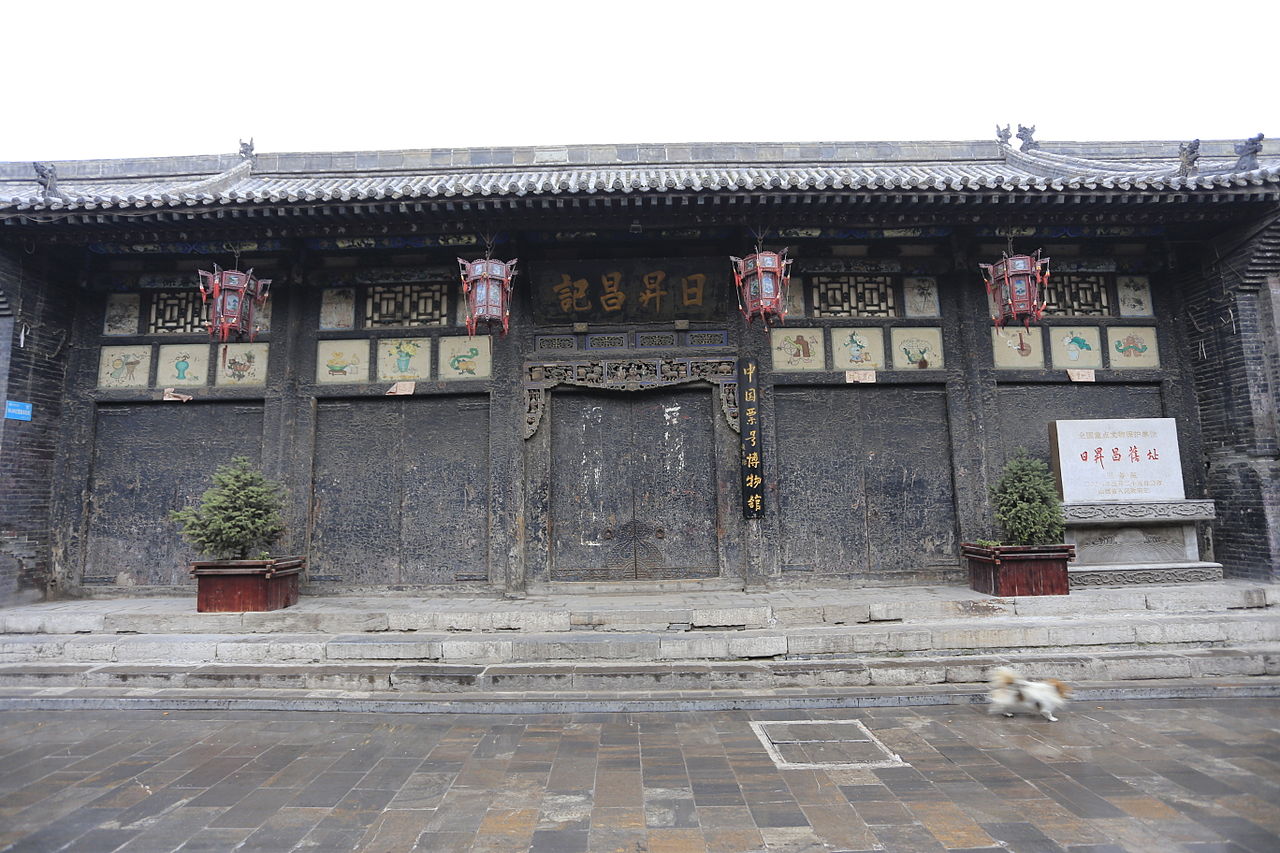
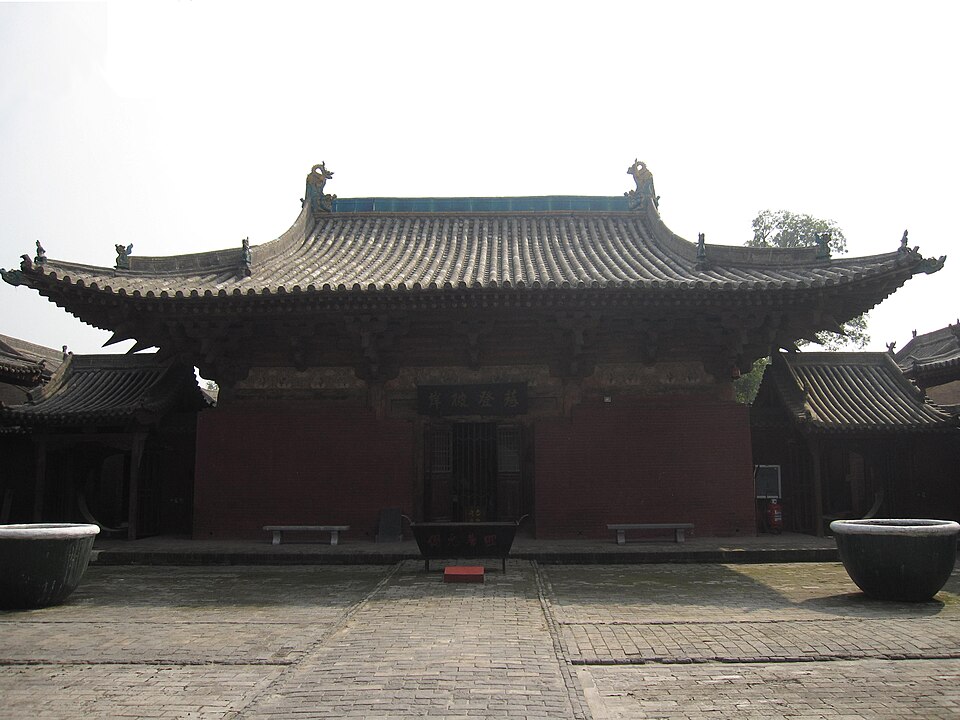
Front elevation of the Wanfo Hall at Zhenguo Temple, Pingyao
The Wanfo Hall and its timber frame
The Wanfo Hall, or Hall of Ten Thousand Buddhas, is the reason architects and historians make the pilgrimage here. Built entirely of wood and assembled without nails, it is held together by an intricate system of interlocking bracket-sets known as dougong. These brackets fan out beneath the deep, sweeping eaves like layered wooden flowers, transferring the weight of the heavy tiled roof down onto a handful of stout pillars. The proportions are bold and the joints astonishingly sturdy: the hall has stood for more than a thousand years through earthquakes and wars.
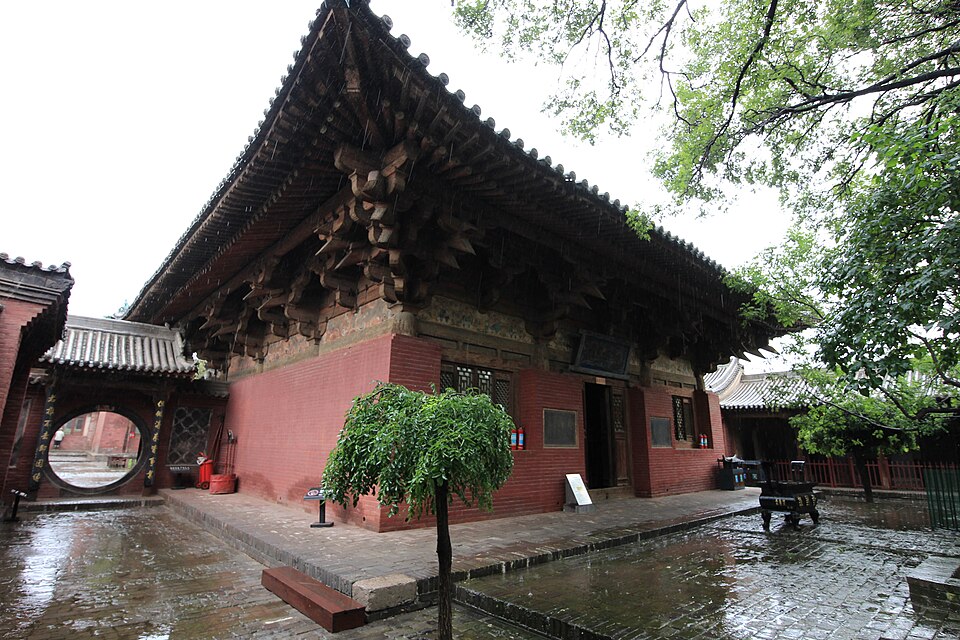
Dramatic dougong bracket-sets beneath the eaves of the Wanfo Hall
What makes the structure so precious is its date. Very few wooden buildings from the Five Dynasties era survive, and the Wanfo Hall is a textbook example of the transitional carpentry between the Tang and Song dynasties. Standing beneath the eaves and looking up at the cascading brackets, you are seeing engineering that predates almost every cathedral in Europe.
The Five Dynasties painted sculptures
Inside the hall waits an even rarer treasure: a group of eleven painted clay sculptures, also dating to the Five Dynasties. A serene gilded Buddha sits at the centre on a decorated dais, flanked by attendant bodhisattvas, disciples and guardians, their robes still bearing traces of mineral pigment after ten centuries. Specialists regard this ensemble as the finest surviving group of Five Dynasties temple statuary in China outside the Mogao Caves at Dunhuang. Faded murals and painted friezes ribbon the beams and walls, adding colour to the dim, incense-scented interior.
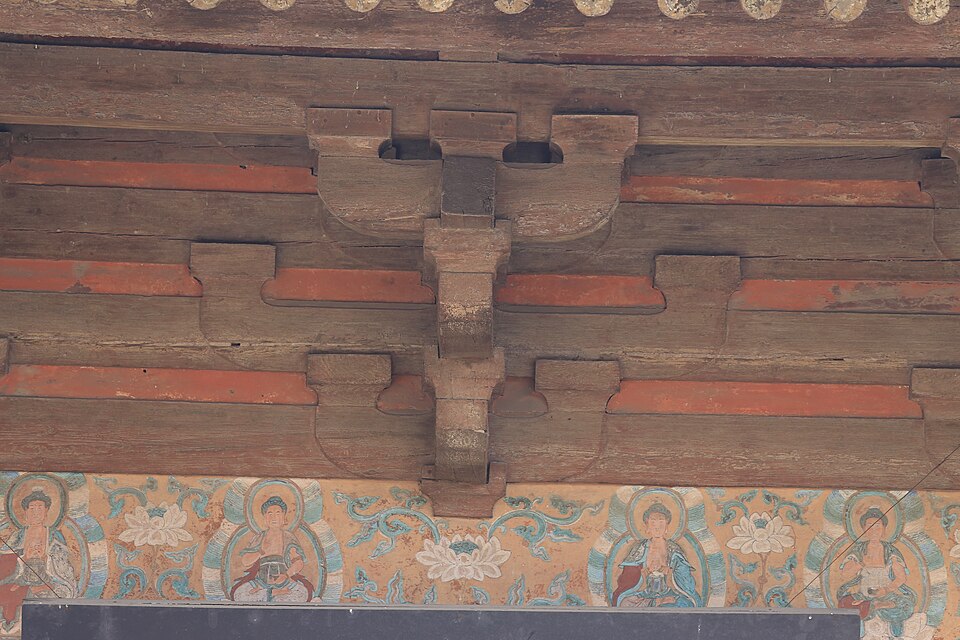
Painted Buddhist frieze beneath the carved timber brackets of the Wanfo Hall
Opening hours
Zhenguo Temple is generally open daily from around 08:00 to 18:00, with slightly shorter hours in the cold months (often closing about 17:30 in winter) and a last entry roughly 30 minutes before closing. Hours can shift with the season and the weather, so confirm locally before setting out, especially if you are visiting late in the day.
Tickets
The temple charges a separate, modestly priced admission fee, with discounts for students and seniors, and the exact rate can change from year to year. Note that Zhenguo Temple is usually NOT included in the main through-ticket for the walled old town, so budget for it independently. Tickets are bought at the gate; bring cash or a Chinese mobile-payment app as a backup.
Getting there from Pingyao
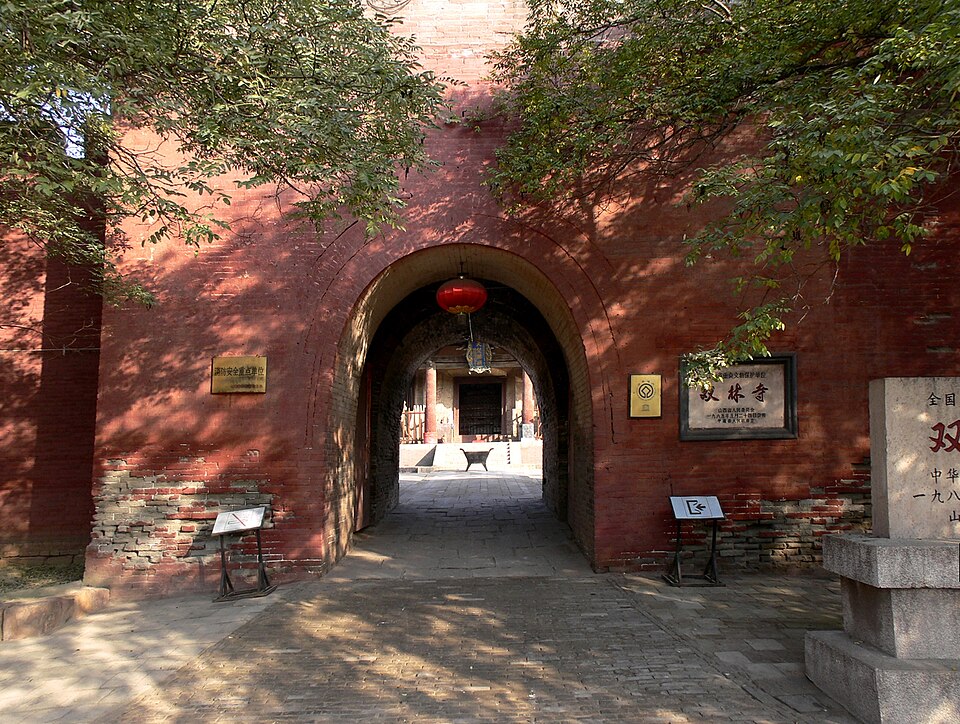
The temple lies about 12 km northeast of the old city, near Haodong village. The simplest options are a chartered taxi or ride-hailing car (a 20–30 minute drive each way), or hiring a driver for a half-day that also takes in the nearby Shuanglin Temple, famous for its painted statues. Some local tour packages combine both temples, which makes the trip far more efficient. Public buses are limited and infrequent, so independent travellers usually prefer a car.
Best time to visit
Spring and autumn bring the most comfortable weather and clear light that flatters the timber and tiled roof. Mornings are quietest, before any tour groups arrive, and the low sun rakes beautifully across the bracket-sets. Summer can be hot and dusty, while winter is cold but atmospheric and almost empty. Whenever you come, allow at least 45 minutes to an hour to take in the hall and its sculptures without rushing.
Tips
Photography of the interior sculptures is often restricted to protect the fragile pigments, so look more and shoot less, and never use flash. Pair Zhenguo Temple with Shuanglin Temple for a rewarding half-day of ancient Buddhist art away from the crowds, and bring water and sun protection, as there is little shade in the courtyards.
Highlights
- Wanfo Hall, a wooden building dating to 963 AD
- Intricate dougong bracket-set timber frame
- Eleven rare Five Dynasties painted clay sculptures
- Part of the UNESCO Ancient City of Ping Yao
- Peaceful rural setting away from the crowds
Travel Tips
Photograph respectfully
Interior sculpture photography is often restricted to protect fragile pigments; never use flash.
Pair with Shuanglin Temple
Combine Zhenguo with nearby Shuanglin Temple for a half-day of ancient Buddhist art.
Buy a separate ticket
Admission is not included in the Pingyao old-town through-ticket, so budget for it independently.