Pingyao
Shuanglin Temple (Pingyao)
Shuanglin Temple: Pingyao's Museum of Painted Sculpture
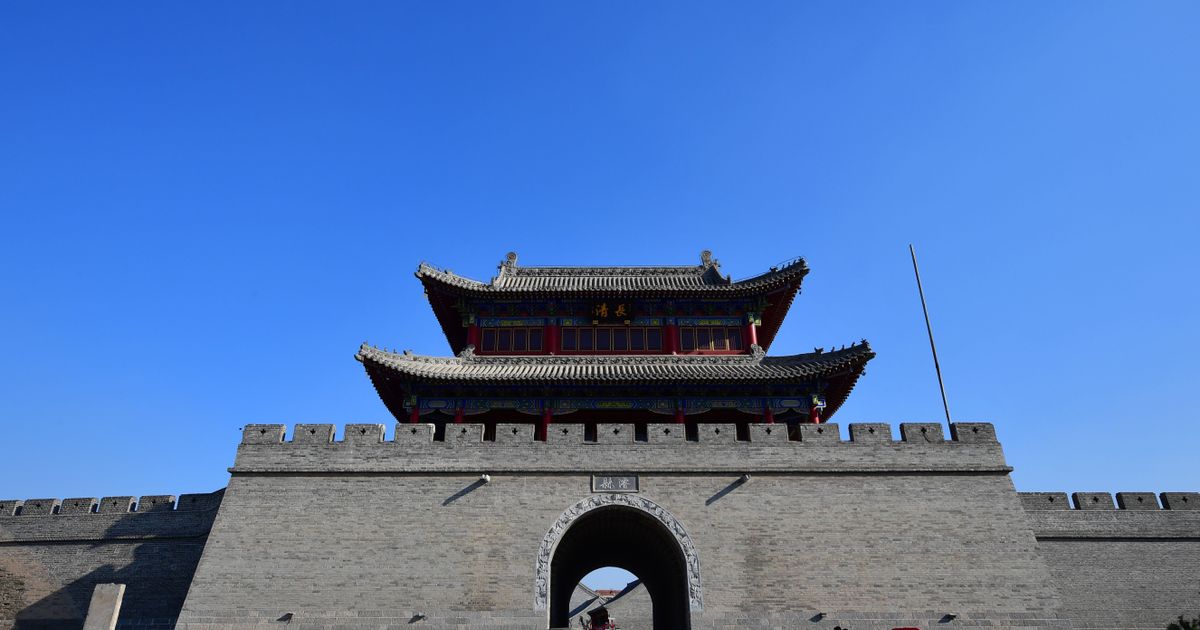
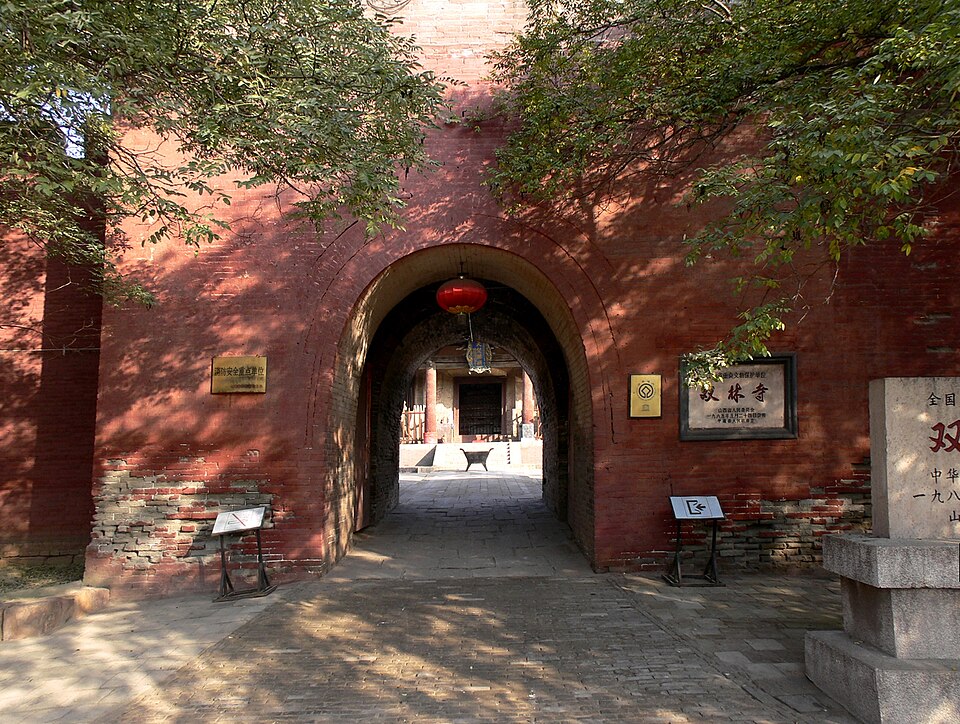
Six kilometres southwest of Pingyao's walled Old Town, in the village of Qiaotou, Shuanglin Temple keeps a quiet that the crowded merchant streets of the Ancient City never do. A Song-dynasty stele records its reconstruction in 571 AD under the Northern Qi, when the site was known as Zhongdu Temple; it took its present name later in the Song, from the Buddhist story of Sakyamuni reaching nirvana beneath twin forests ("shuang lin"). What stands today is mostly Ming and Qing rebuilding, and the temple is a recognised component of the UNESCO World Heritage Site "Ancient City of Pingyao," inscribed in 1997.
Red-brick arched gateway of Shuanglin Temple in Pingyao
The real reason to make the trip is the sculpture. Across ten halls stand more than 2,000 painted clay statues, made and repaired between the Song and Ming dynasties, earning Shuanglin its nickname as a museum of Chinese polychrome sculpture. Guardian kings tower with rippling muscles; bodhisattvas sit in robes that seem to move in a breeze that stopped centuries ago.
The Painted Sculptures
In the Arhat Hall, a long row of luohan leans, gestures and converses with such individuality that each face reads like a portrait of a real person. The Hall of a Thousand Buddhas is crowded with hundreds of small gilded figures climbing the walls, while a well-known free-standing statue of the thousand-armed Guanyin sits at the centre of it all. Look closely and the original mineral pigments, earth reds, malachite greens, gold leaf, still cling to clay that has survived for centuries.
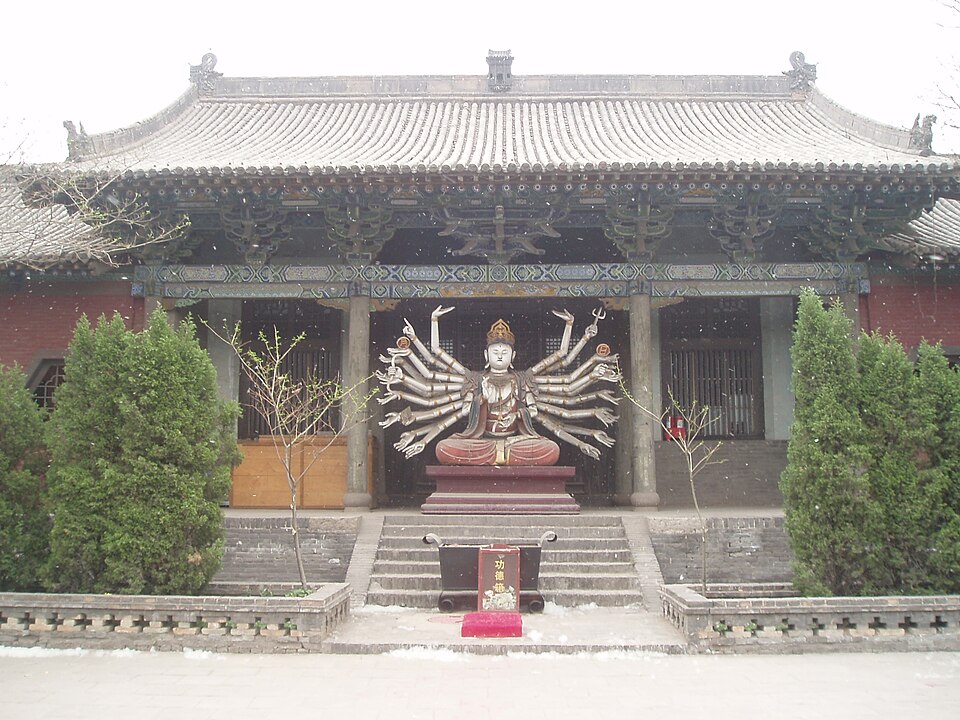
Hall enshrining the thousand-armed Guanyin statue at Shuanglin Temple
Other halls reward slow looking too. The Bodhisattva Hall (Pusa Dian) preserves elegant attendant figures, and the so-called Indian Hall presents guardian generals flanking the doorway, their armour modelled in vivid relief. Lighting is dim and rules on photography vary hall to hall (some allow no-flash photos, others none at all), so give your eyes time to adjust and look for signage before raising a camera.
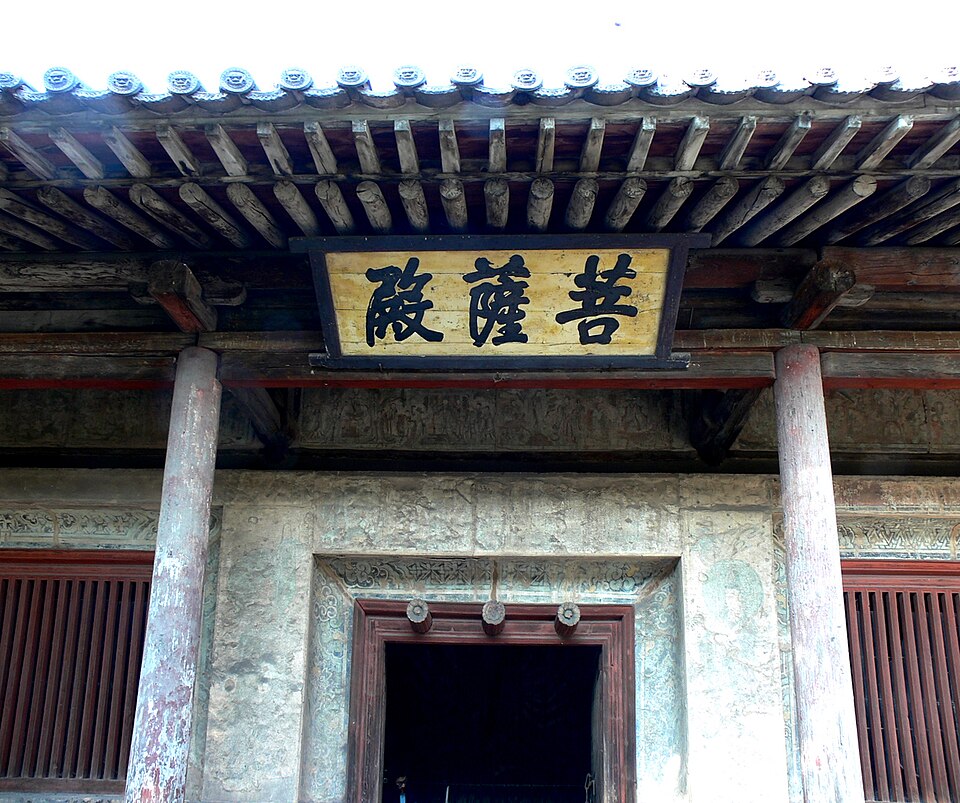
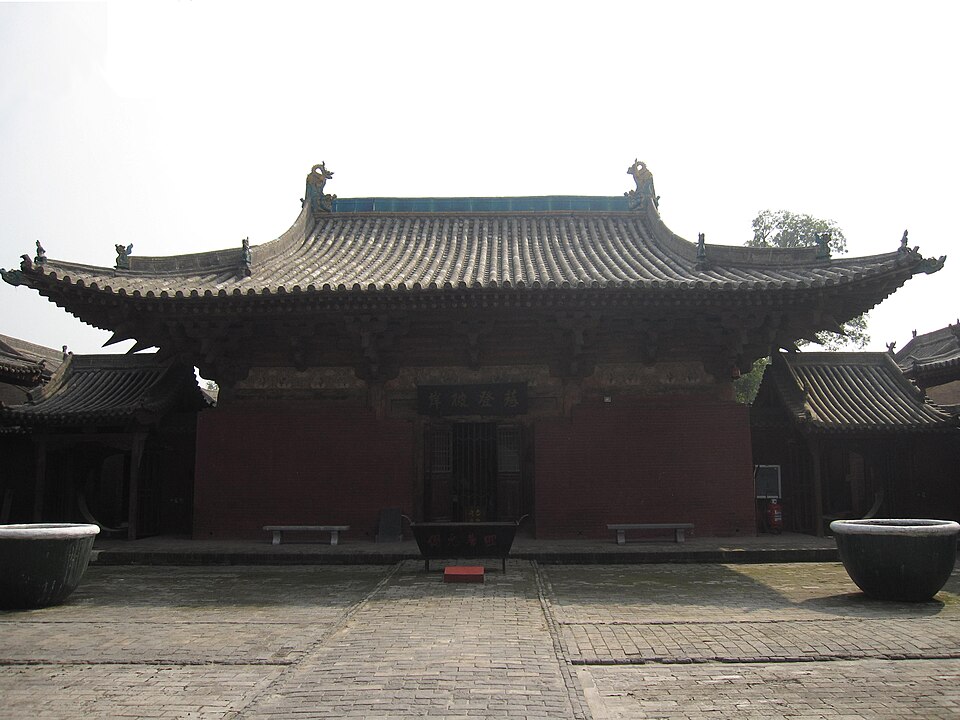
Facade of the Bodhisattva Hall at Shuanglin Temple
Opening Hours
Shuanglin generally opens daily around 08:00. In peak season (roughly April to early October) it stays open until about 18:00 to 18:30; in the colder off-season it tends to close earlier, around 17:30 to 18:00. Ticket checking usually stops about 15 minutes before closing, so arrive at least an hour ahead of the listed closing time. Hours can shift with season and local policy, so it's worth confirming on the day if you're visiting near opening or closing.
Tickets
Shuanglin needs its own ticket, separate from the Ancient City through-ticket that covers the main Old Town sights, since the temple sits outside the city walls and usually isn't part of that package. Expect a modest entrance fee with a discounted rate for students and free or reduced entry for seniors; fees are adjusted from time to time, so check the current price at the gate or an official booking channel before you go rather than relying on an old figure. Two to three hours is enough for most visitors to see the sculptures properly.
Getting There From Pingyao
The temple lies about 6 km southwest of the old town. The simplest options are a taxi or ride-hailing car, which takes only ten to fifteen minutes, or a chartered car combined with other out-of-town sights. A few sightseeing buses and tour packages from Pingyao also call here, but public transport is otherwise limited and infrequent, so many independent travellers find a return taxi the least stressful choice, asking the driver to wait or arranging a pickup time.
Best Time to Visit
Late spring and autumn bring the most comfortable weather and good light for photography. Arrive soon after opening: the morning sun warms the brick walls, the air is cool, and the halls are often nearly empty before tour groups arrive. Winter is bitterly cold but atmospheric and hushed, while midsummer can be hot and dusty.
Tips
Wear comfortable shoes for the uneven stone courtyards, bring a small torch or use your phone light to study statues in the shadows, and respect any no-flash or no-photography signs to protect the fragile pigments. Combining Shuanglin with the nearby Zhenguo Temple, also part of the same UNESCO listing, makes for an efficient half-day outside the city walls.
Highlights
- Over 2,000 painted clay statues from the Song-Ming dynasties across ten halls
- Famous thousand-armed Guanyin and lifelike Arhat Hall figures
- Recognised component of the UNESCO World Heritage Site "Ancient City of Pingyao"
- Reconstruction traced to 571 AD under the Northern Qi, renamed Shuanglin in the Song
- Quiet escape just 6 km southwest of the old town, easily paired with Zhenguo Temple
Travel Tips
Buy the right ticket
Shuanglin needs its own ticket, separate from the Pingyao Ancient City through-ticket, so budget and plan for it separately and confirm the current price at the gate.
Arrive early
Come soon after the 08:00 opening to enjoy the halls in soft morning light before tour groups arrive.
Protect the pigments
Respect no-flash and no-photography signs; the centuries-old mineral colours are fragile.