Suzhou
Shantang Street
When the poet Bai Juyi arrived as governor of Suzhou in 825 AD, his lasting public work was a canal: a straight cut from Changmen Gate, then the city's commercial front door, out to Tiger Hill. The towpath beside it became Shantang Street, and the two still run side by side for about 3.6 kilometres, the "seven li of Shantang" of the old rhyme. Locals have called it the First Street of Old Suzhou for centuries, and it remains the city's best living example of the water-and-land parallel layout: one river, one street, whitewashed Ming and Qing houses opening onto both.
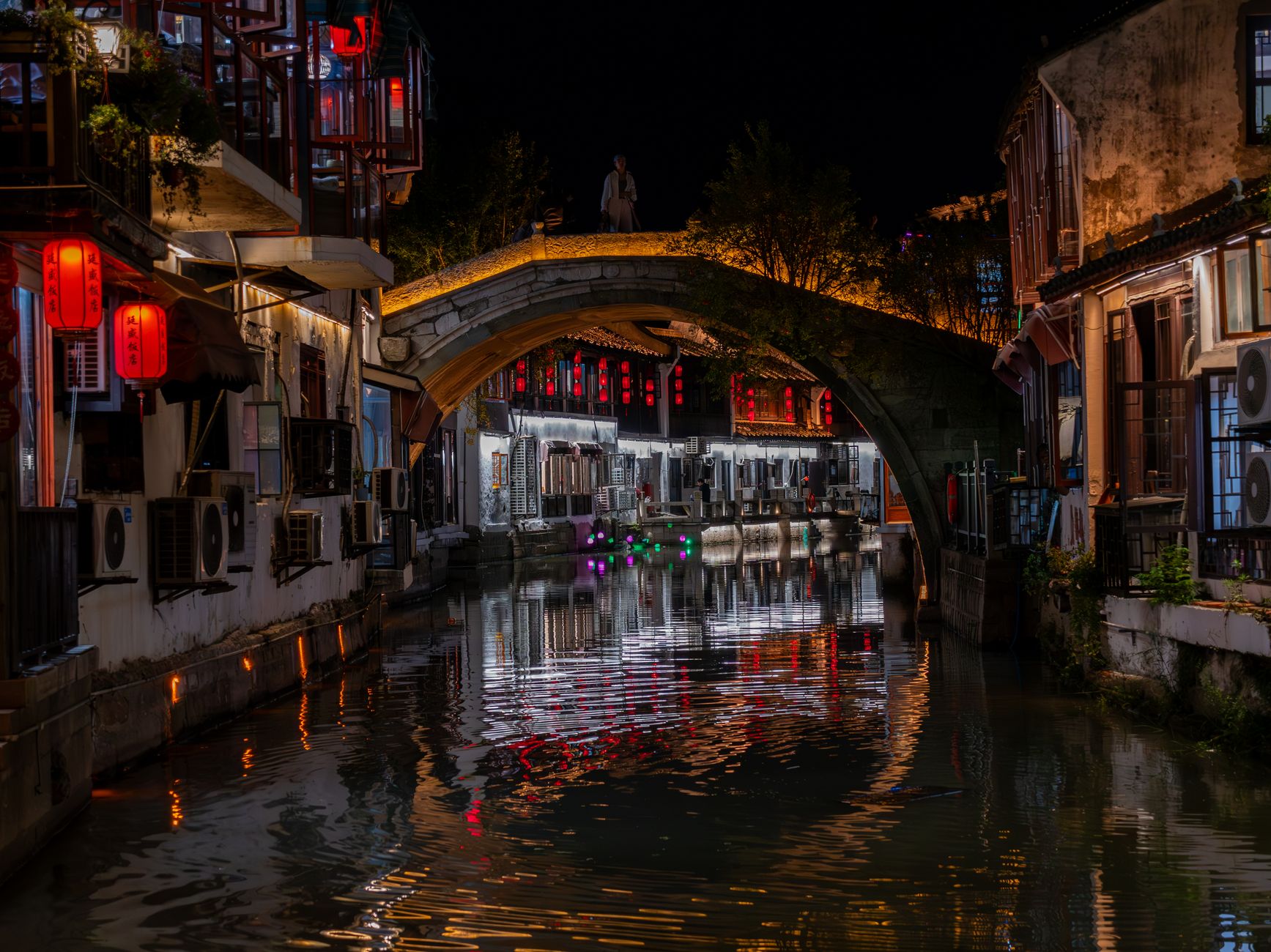
Lantern-lit Shantang canal at night
Walking the seven li
Most visitors only ever see the eastern few hundred metres near Changmen, the polished stretch of teahouses, silk and snack shops under red lanterns. It is lively and photogenic, but it is also the most commercial part. Keep walking west past Xingqiao and the crowds thin fast; the middle and western reaches stay residential, with laundry over the canal, small shrines and old men playing cards, until the street ends near the gates of Tiger Hill. Walking the full length takes about an hour without stops, and the quiet half is where the street feels its age.
Boats, bridges and the night view
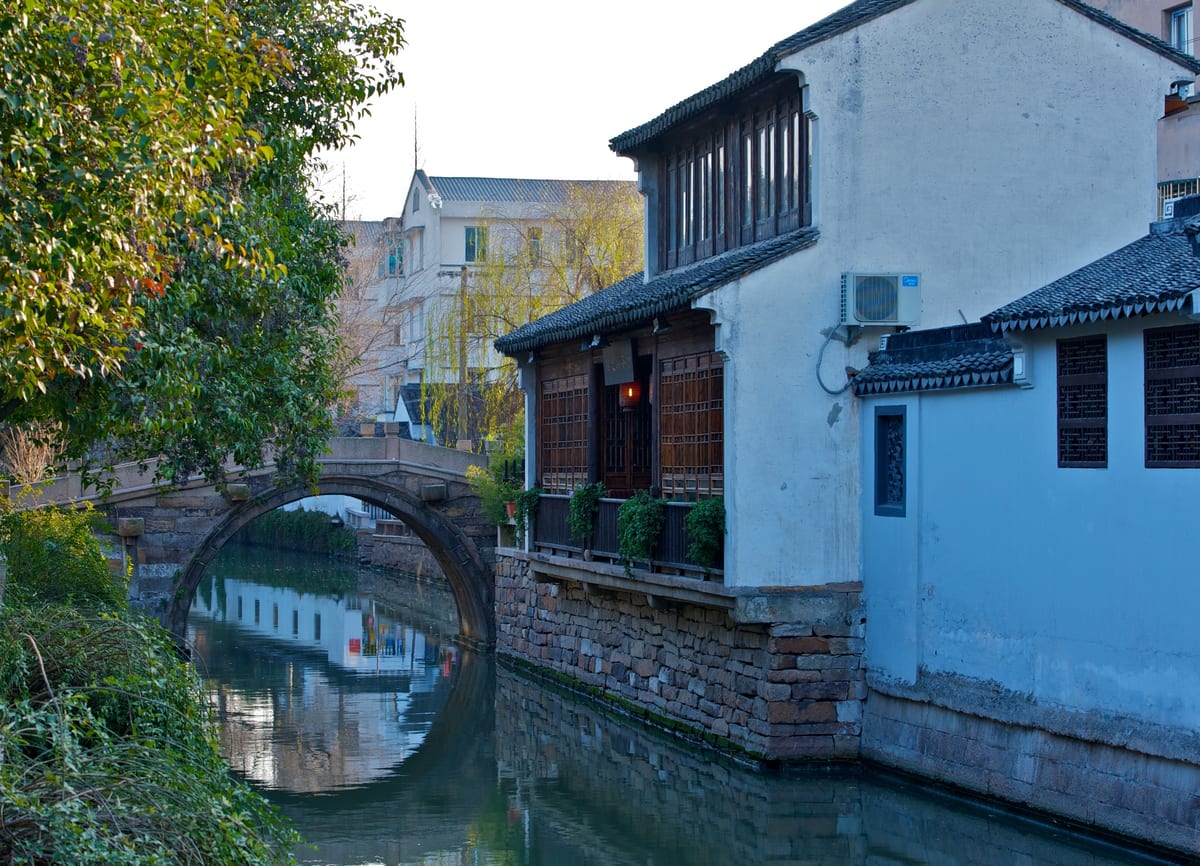
Wooden boats run along the Shantang River, and drifting under the stone arches as the lanterns come on is the classic way to see the street. The bridge to look for is Tonggui Bridge, a Ming dynasty single-arch span whose reflection closes into a full circle on still evenings; photographers stake it out at dusk. After dark the eastern section turns into a wall of red lanterns doubled in the water, which is exactly the crowd magnet it sounds like, so boats and bridge viewpoints are busiest in the first two hours after sunset.
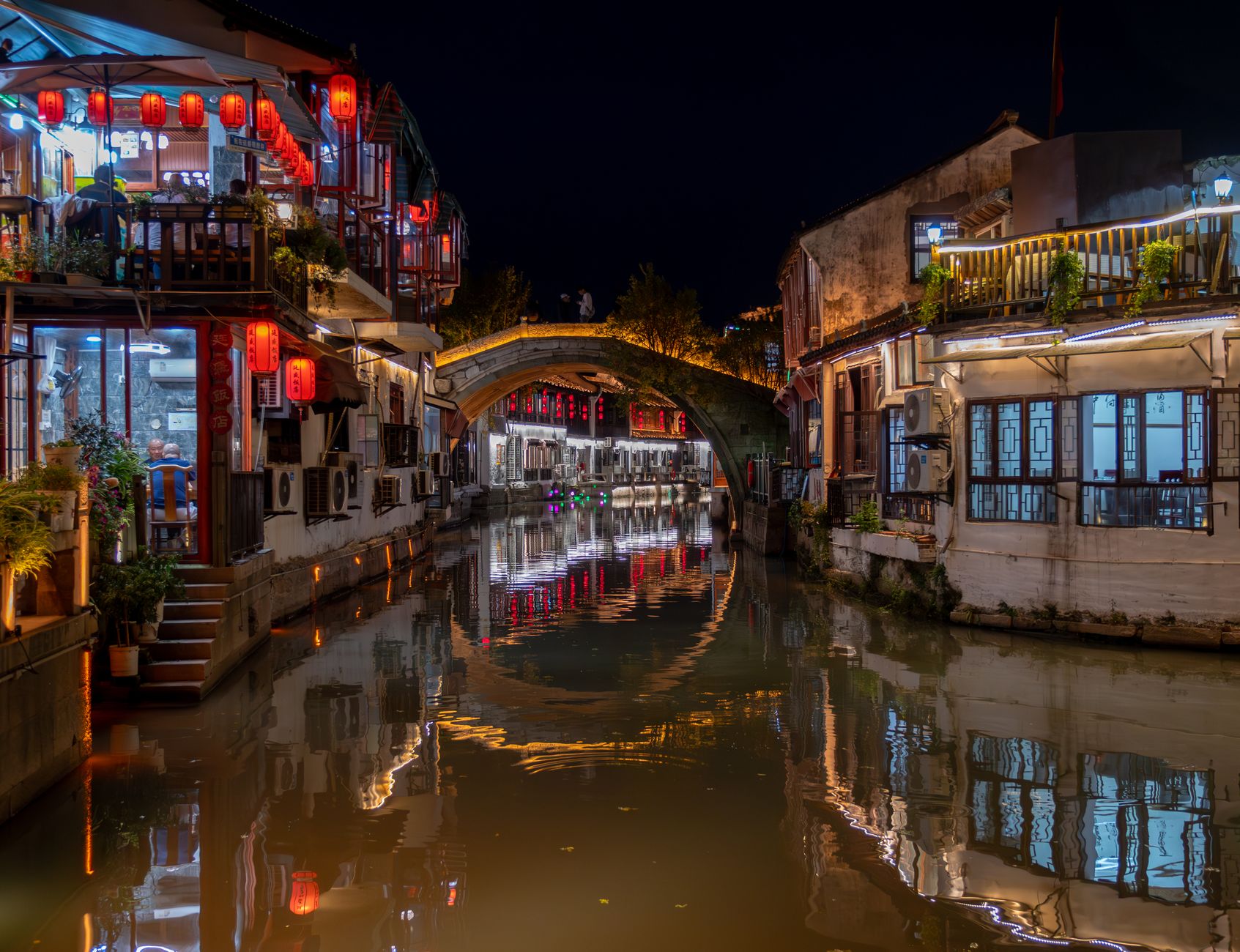
Arched bridge and red lanterns over the canal
Yuhan Hall and the old stage
Two stops give the street historical depth. Yuhan Hall (Yuhan Tang) is the restored Ming mansion of Wu Yipeng, a minister of personnel in the imperial bureaucracy, and the largest surviving Ming residence in this part of Suzhou; its back garden hosts regular Pingtan performances, the local storytelling-and-ballad art sung to a plucked lute. Mid-street, the old opera stage (Gu Xitai) puts on short daily sessions of Pingtan and Kunqu. Neither needs a reservation; check the posted schedule as you pass and time your walk around one.
Costs and booking
The street itself is open around the clock and free to walk. You pay only for extras: boat rides, a few ticketed historic halls, performances with seating, tea and whatever the snack stalls talk you into. Boat tickets are sold at the piers along the eastern stretch, and platforms such as Trip.com list the same cruises in English if you prefer to book ahead; evening slots sell out first on weekends and holidays.
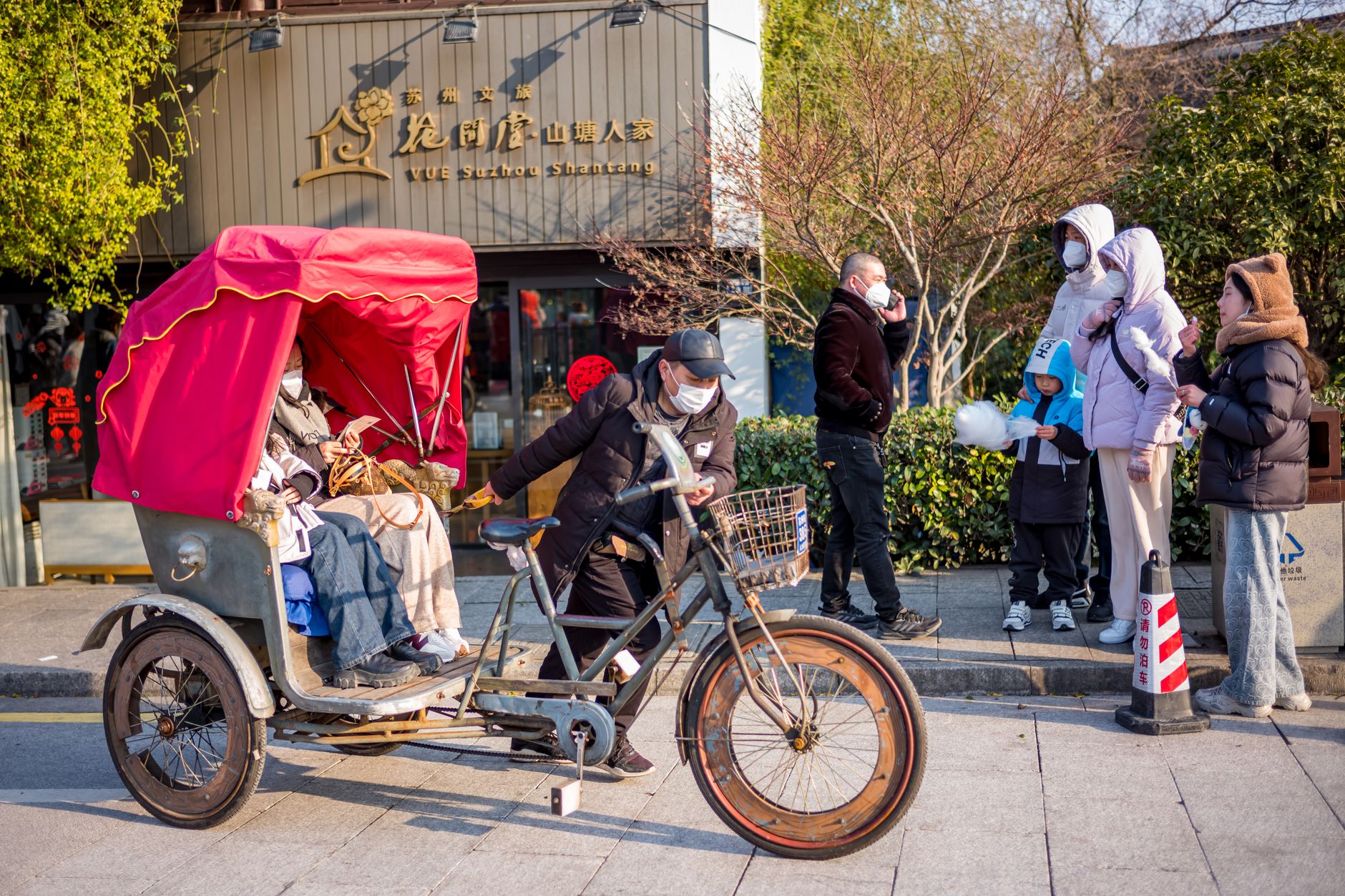
Lively shopfronts and street life on Shantang
Getting there
Take Suzhou Metro Line 2 to Shantang Street station: exit 3 puts you about 300 metres from the eastern entrance. The street also chains naturally with its neighbours, a short walk from Changmen Gate and the Lingering Garden, with Tiger Hill waiting at the far end, so many people walk Shantang as the scenic route to the hill rather than as a separate stop.
When to go
Come in the late afternoon, walk the quiet western half first, then double back to the eastern section as the lanterns switch on. Spring and autumn have the kindest weather; summer evenings are warm but lively. Weekends and public holidays pack the eastern stretch shoulder to shoulder, so aim for a weekday if the trip allows it.
Highlights
- A 1,200-year-old canal street dug under the poet-governor Bai Juyi in 825 AD
- About 3.6 km of Ming and Qing houses, bridges and guild halls beside the water
- Ming-era Tonggui Bridge, whose arch closes into a full circle in the evening reflection
- Wooden boat rides drifting beneath the stone bridges as the lanterns come on
- Pingtan and Kunqu performances at Yuhan Hall and the mid-street old opera stage
Travel Tips
Come at night, leave the crowds
The lantern-lit eastern stretch is the famous view, busiest in the first two hours after sunset. Walk the quiet western half first, then double back for the lights.
Take the boat
A short evening cruise under the lanterns is the classic Shantang experience; buy at the eastern piers or book an English-language slot ahead on busy weekends.
Use it as the route to Tiger Hill
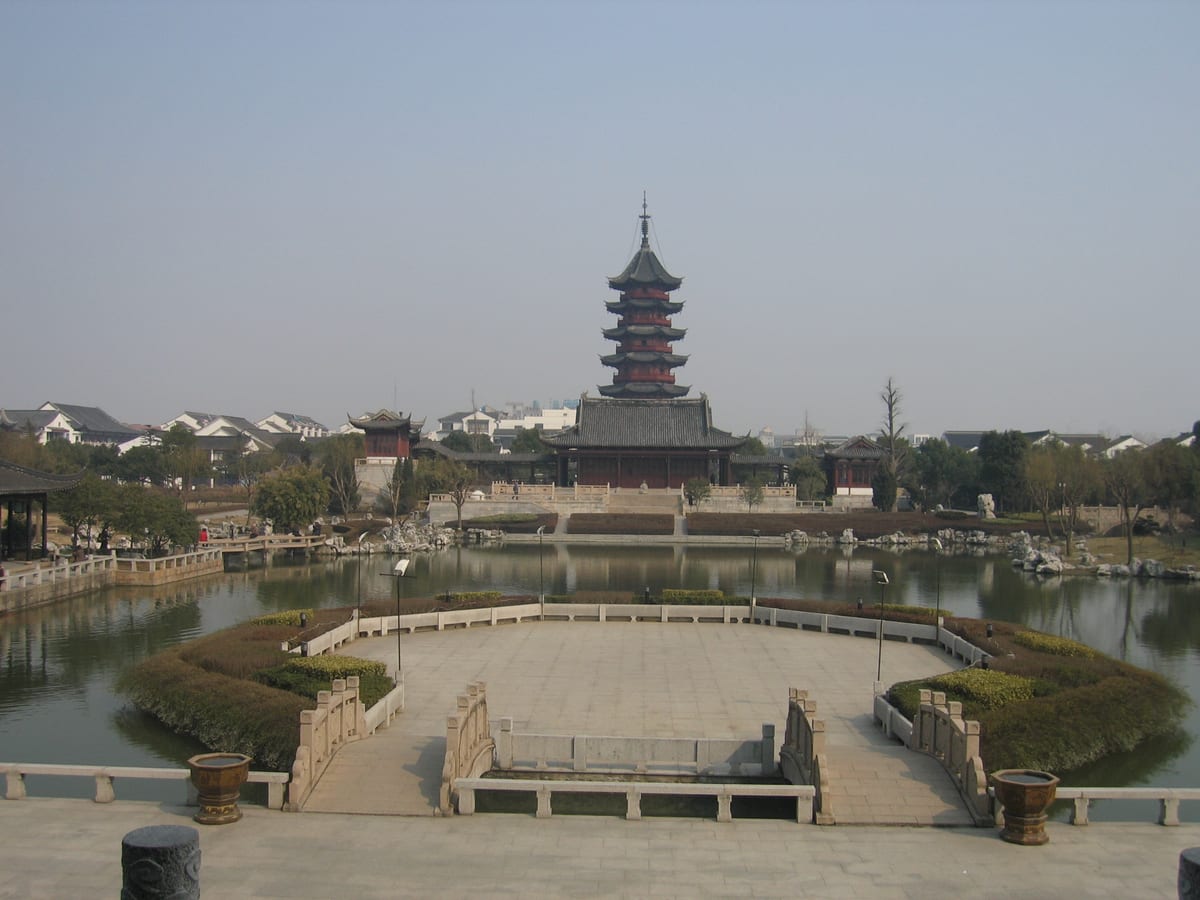
The street ends near Tiger Hill's gates, so walking the full seven li doubles as the scenic approach to the pagoda instead of a separate stop.