Suzhou
Humble Administrator's Garden
The name is a 500-year-old joke at the owner's expense. When the censor Wang Xianchen left imperial politics under a cloud and came home to Suzhou in 1509, he built a garden and named it after a line by the poet Pan Yue: watering a garden and selling vegetables is also a form of government, for the humble man. The Humble Administrator's Garden (Zhuozheng Yuan) took over twenty years to finish, and the Ming painter Wen Zhengming is traditionally credited with helping shape its design. Today it is the largest of Suzhou's classical gardens at about 5.2 hectares, and one of the first four inscribed by UNESCO in 1997.
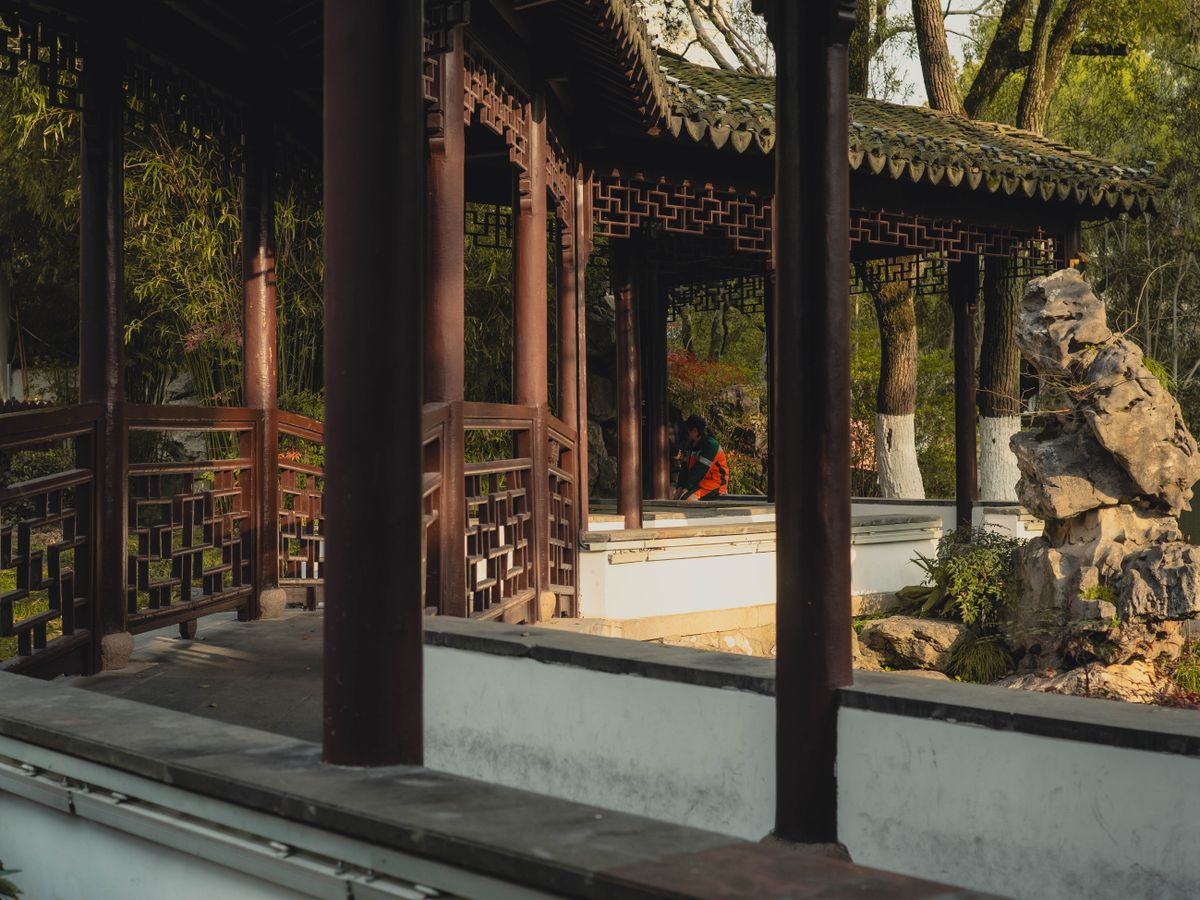
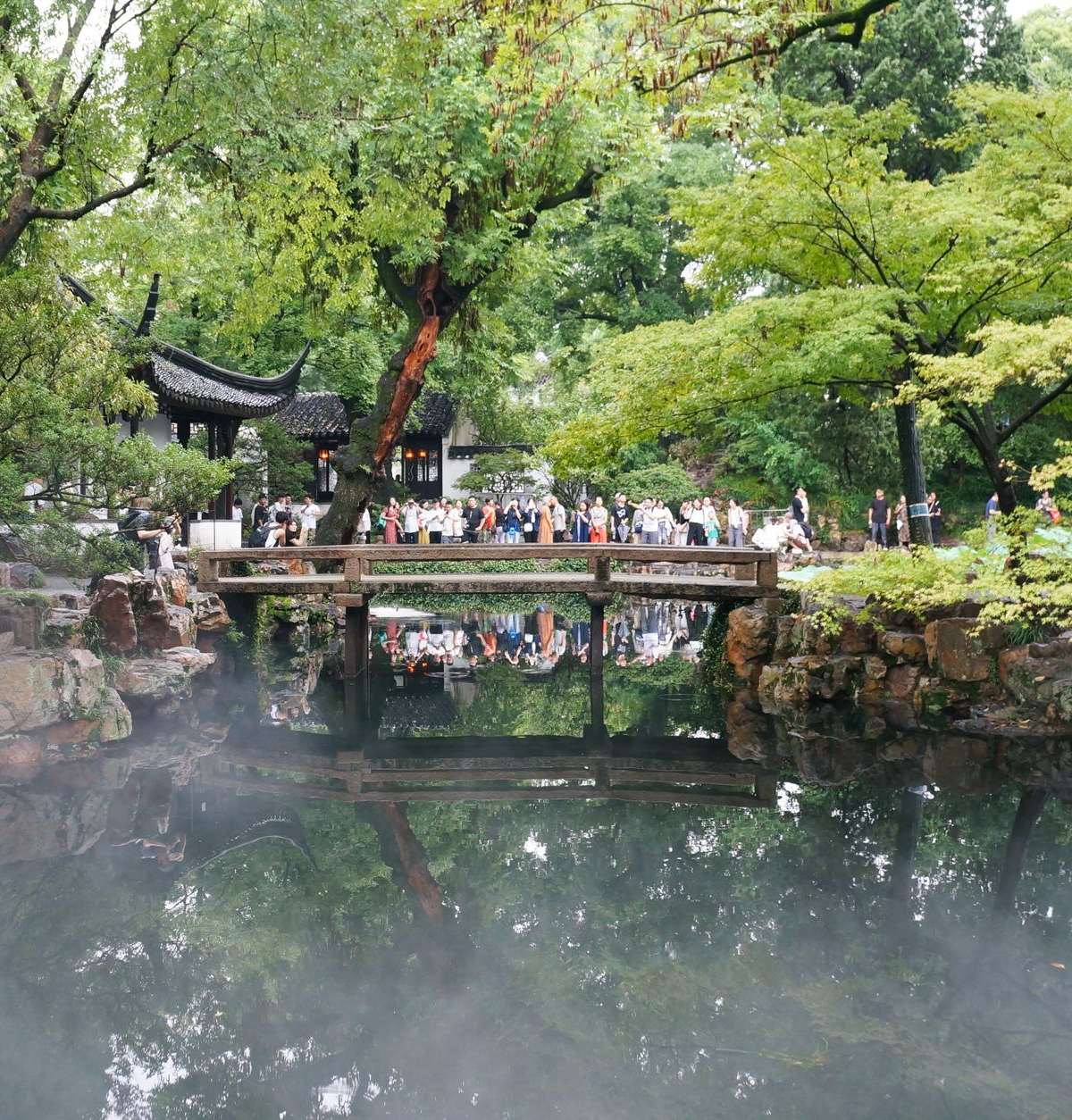
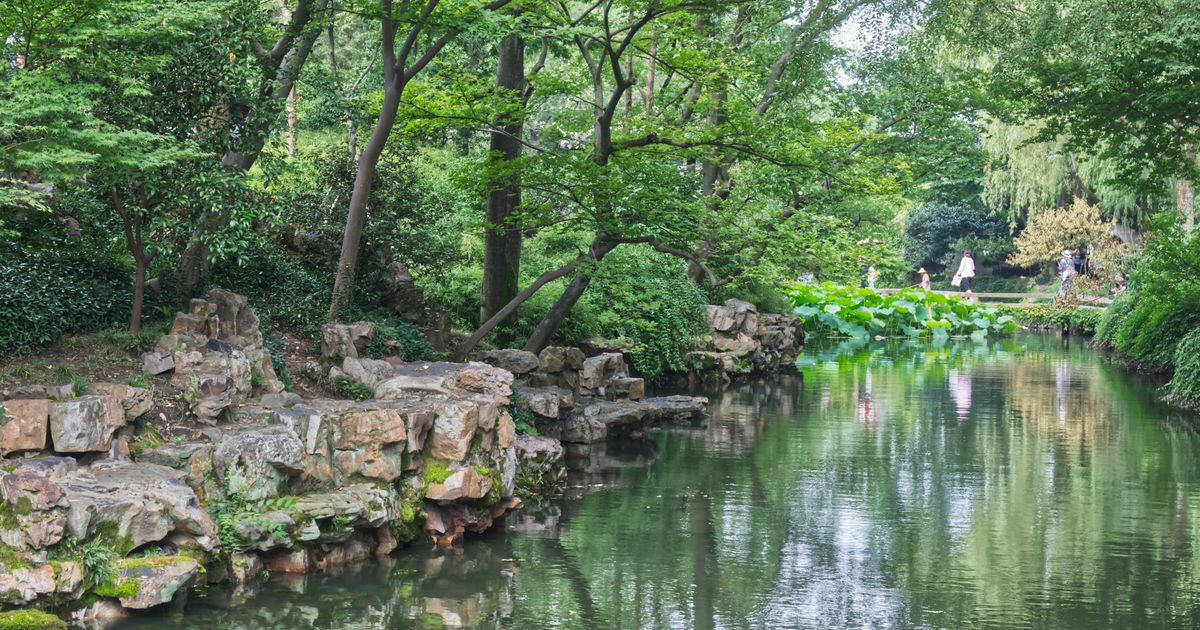
Classical garden pond and rockery at the Humble Administrator's Garden
How to read the garden
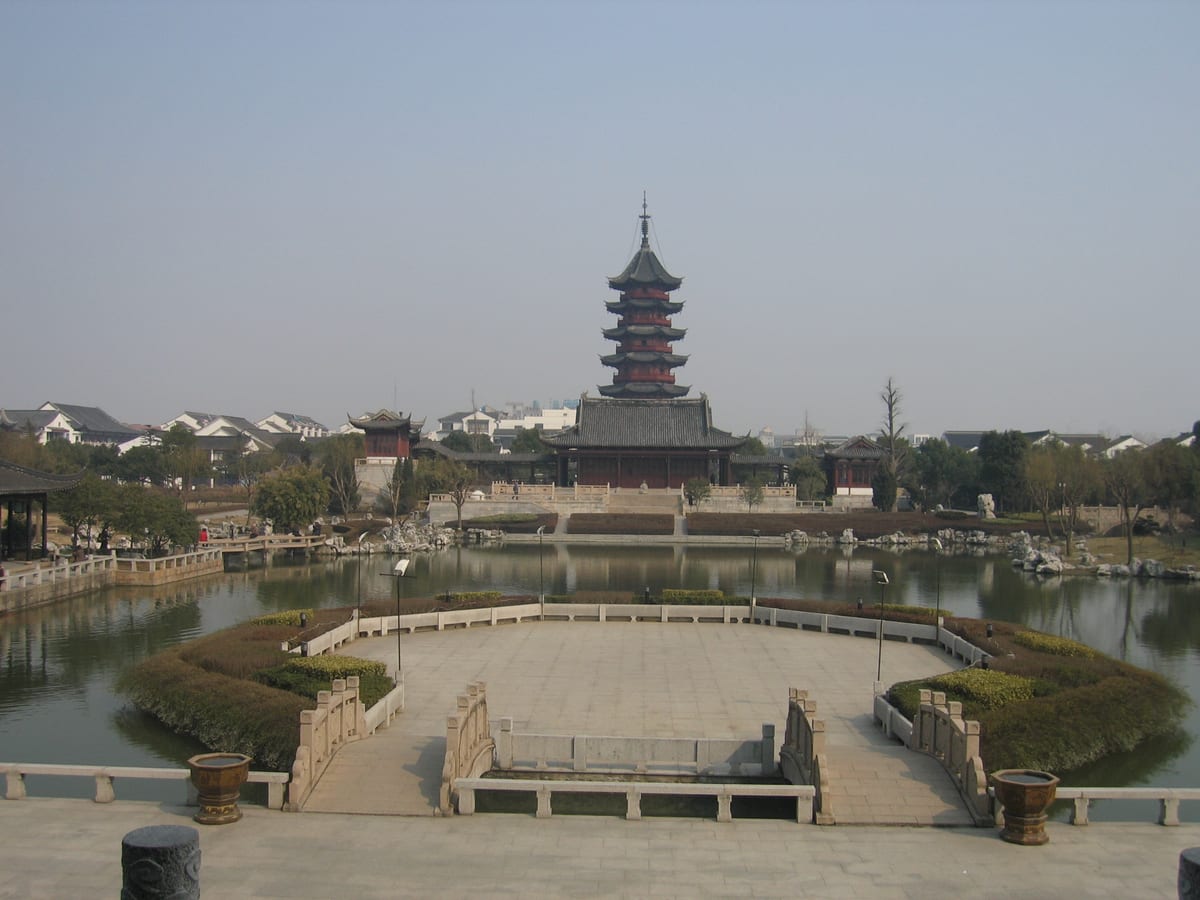
Water covers close to a third of the grounds, and everything else is arranged around it: zigzag bridges, covered walkways, pavilions set on islands, lotus that blooms through midsummer. The design leans on "borrowed scenery", where walls, gaps and doorways frame views from beyond the garden; the most famous example lines up the North Temple Pagoda, far outside the walls, so it appears to rise from the central pond.
The grounds split into three sections. The central one is the oldest and holds the postcard views: the Hall of Distant Fragrance facing the lotus pond, the Small Flying Rainbow covered bridge, and the fan-shaped With Whom Shall I Sit Pavilion. The western section feels more residential, built around the airy 36 Mandarin Ducks Hall; the eastern section is open lawns and bamboo, and most people walk it fastest.
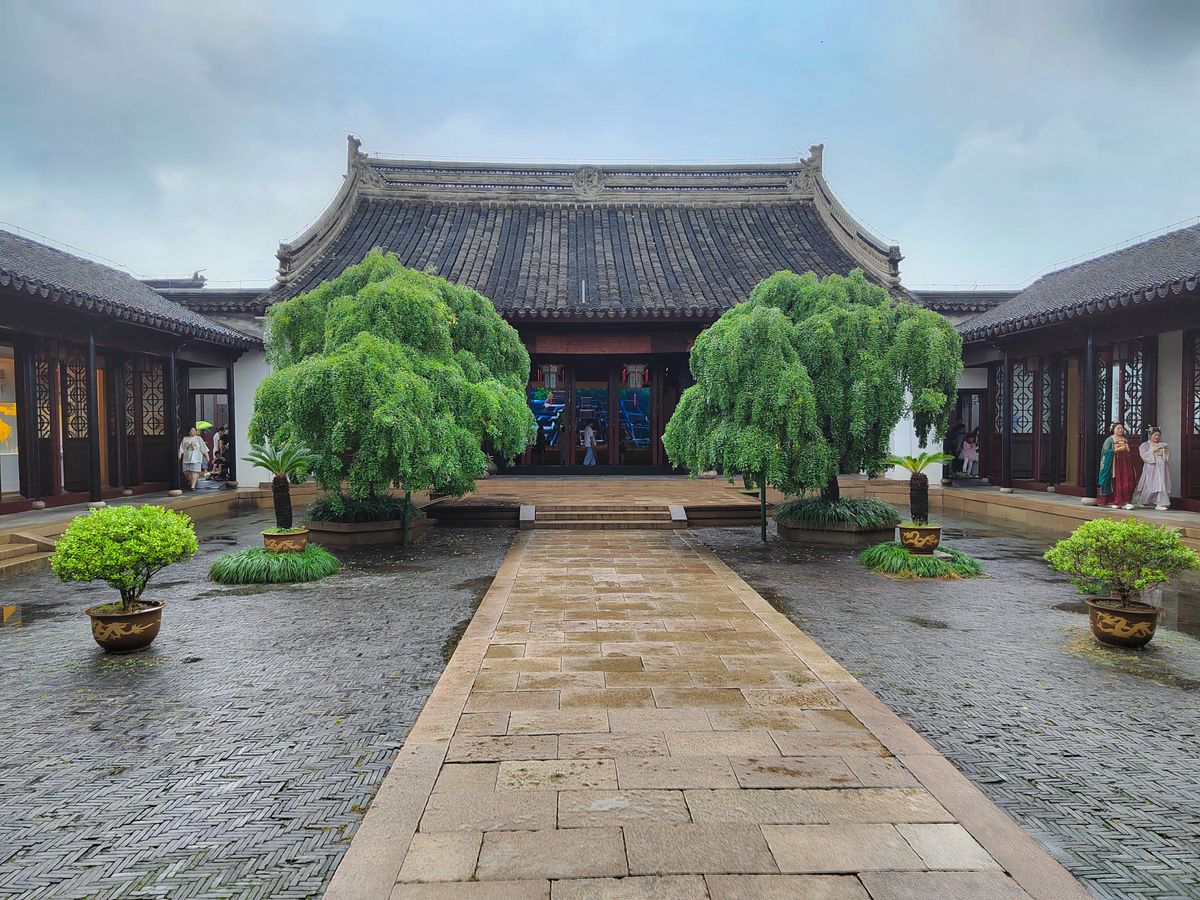
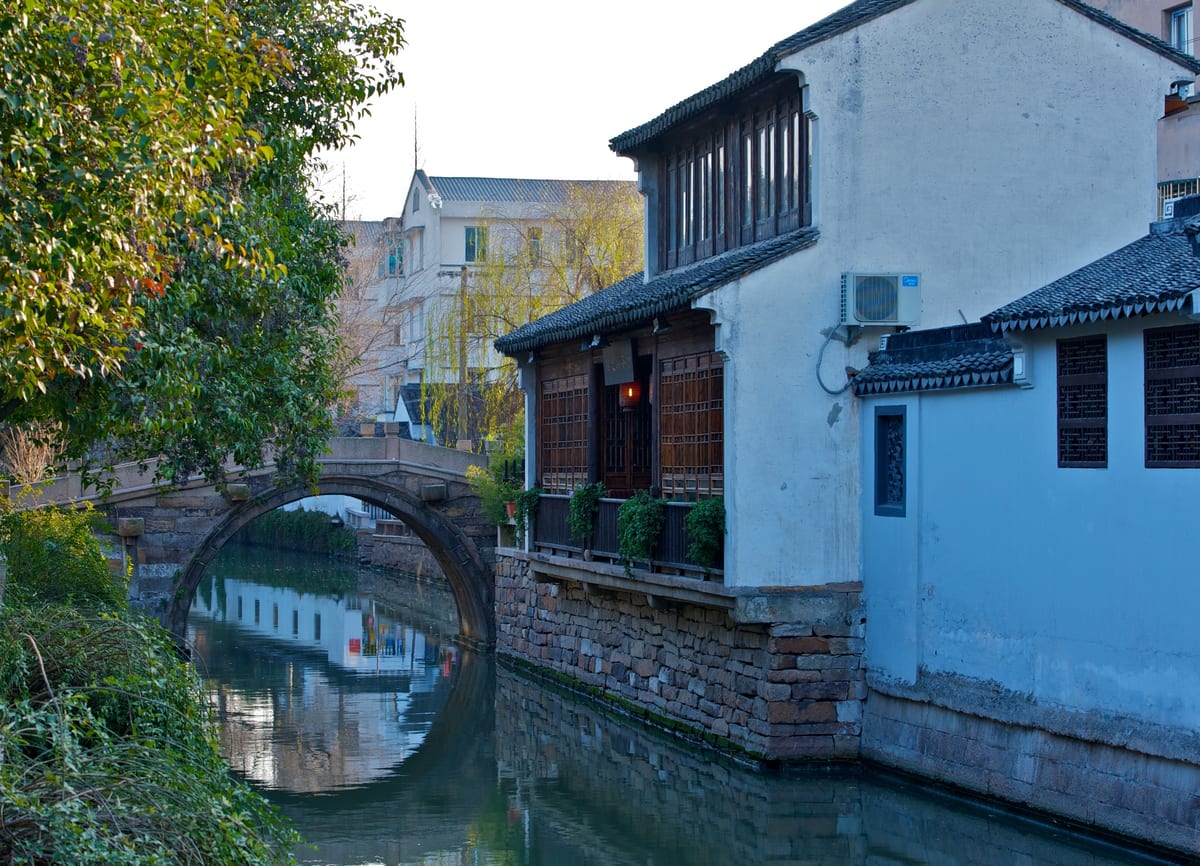
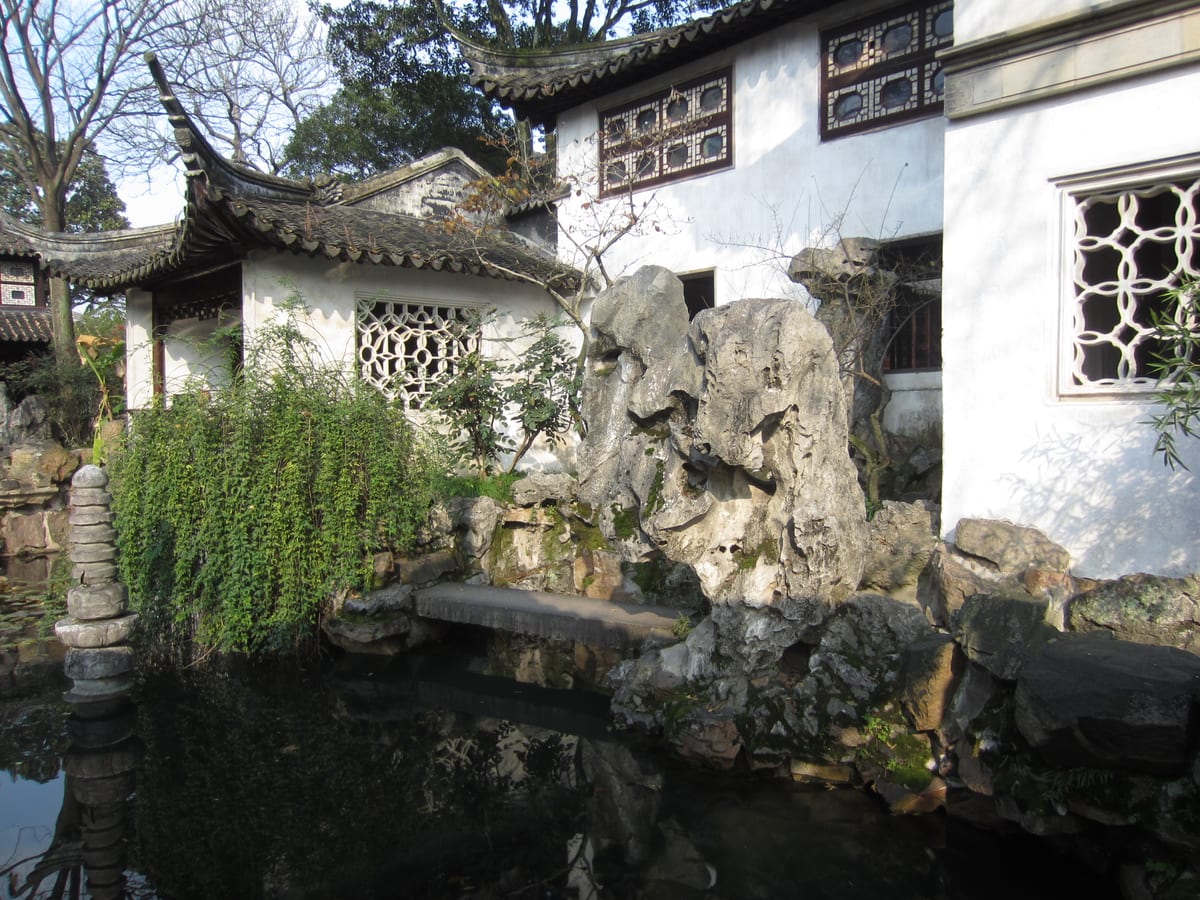
Covered walkway and lattice windows in a Suzhou garden
Booking is not optional
Entry is by timed, real-name reservation, and walk-up tickets are not sold on busy days, so treat booking as part of the plan. The official channel is the "Suzhou Gardens" (Suzhou Yuanlin) WeChat mini-program: you pick a date and an entry window, enter each visitor's name and passport number, then show your passport at the south gate. Slots for weekends and holidays can sell out days ahead. International cards sometimes fail in the mini-program, so have Alipay or WeChat Pay working, or book the same timed ticket through a platform such as Trip.com or Klook as a fallback. Children and some seniors qualify for free or reduced entry; check the current rules when you book.
Getting there and timing it
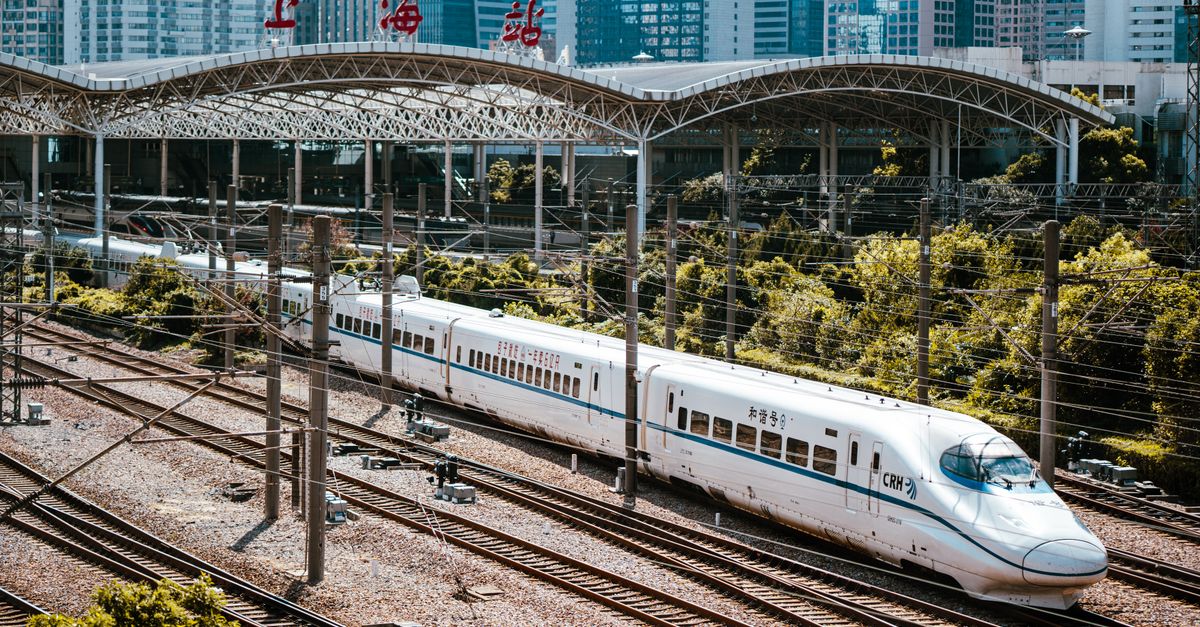
Since June 2024 the garden has its own metro stop: Zhuozhengyuan Subo station on Line 6 exits a short walk from the gate, shared with the Suzhou Museum. From Suzhou railway station it is two stops on the metro or a ten-minute taxi. Coming from Shanghai, high-speed trains reach Suzhou in roughly half an hour, which is why the garden works as a day trip.
Book the earliest entry window you can. The first hour is the only quiet one, the light on the water is at its best, and the tour groups arrive in waves from mid-morning. Allow at least 90 minutes inside. The Suzhou Museum next door (free, but it also wants an advance reservation) and the Lion Grove Garden a few minutes south make an easy combined day in the old town.
Common questions
Do I need to book before I travel? For weekends, holidays and the peak lotus season, yes, several days ahead. On a quiet weekday you may get a same-day slot, but do not count on it.
When is the best time of year? Late spring and autumn for the weather, midsummer for the lotus in full bloom, and winter for bare-branch views without the crowds.
Is the ticket expensive? It is one of the pricier classical gardens in Suzhou, with peak-season rates above off-season ones; check the current price when you book your slot.
Highlights
- Largest of Suzhou's classical gardens at about 5.2 hectares, UNESCO-listed in 1997
- Named after a poet's line about gardening as the 'government of the humble man'
- Water covers a third of the grounds, with lotus in bloom through midsummer
- Borrowed scenery frames the North Temple Pagoda above the central pond
- Fan-shaped With Whom Shall I Sit Pavilion and the Hall of Distant Fragrance
- Own metro stop since 2024: Zhuozhengyuan Subo on Line 6, shared with Suzhou Museum
- Entry by timed, real-name reservation; peak slots sell out days ahead
Travel Tips
Book before you go
Reserve a timed slot on the official 'Suzhou Gardens' WeChat mini-program with each visitor's passport number, then show your passport at the south gate. Trip.com or Klook work as a fallback if your card fails.
Take the first slot
The first hour after opening is the only quiet one; tour groups arrive in waves from mid-morning. Morning light on the water is also the best for photos.
Combine the neighbours
The Suzhou Museum shares the same metro exit (free, but reserve ahead) and the Lion Grove Garden is a few minutes south: an easy full day in the old town.
Pick your season
Late spring and autumn for mild weather, midsummer for lotus in full bloom. Weekday mornings are far quieter than weekend afternoons.