Xi'an
Bell Tower of Xi'an
In 1582 the people of Xi'an took the Bell Tower apart, carried it about a kilometre east from its original site by Guangji Street, and rebuilt it piece by piece at the exact crossing of the city's four great avenues, where it has stood ever since. A stone stele on the second floor still records the move. First raised in 1384, early in the Ming dynasty, the tower is a 36-metre timber hall on a square brick base, three tiers of upswept eaves under a gilded finial, the whole frame locked together with interlocking brackets rather than nails.
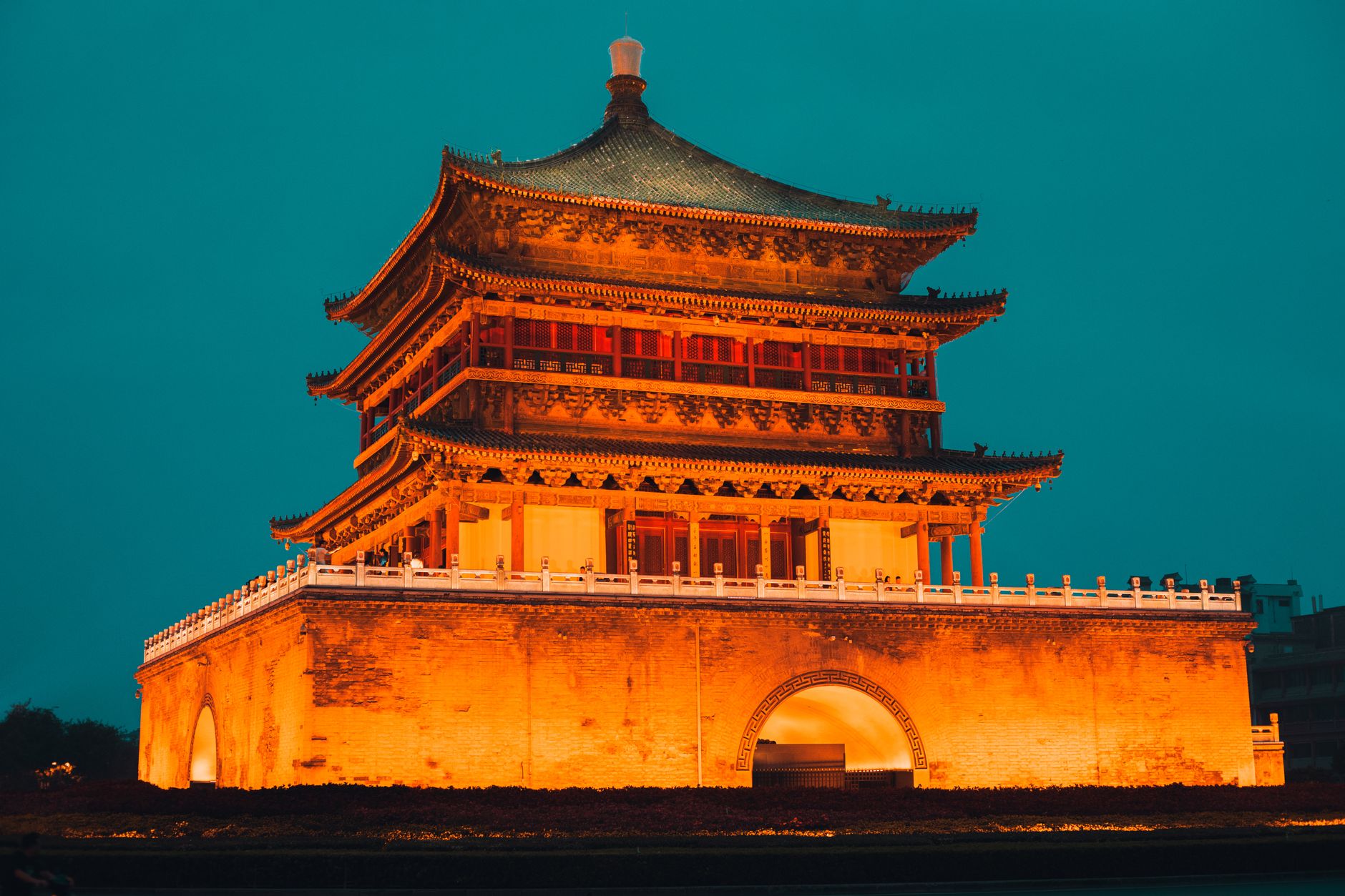
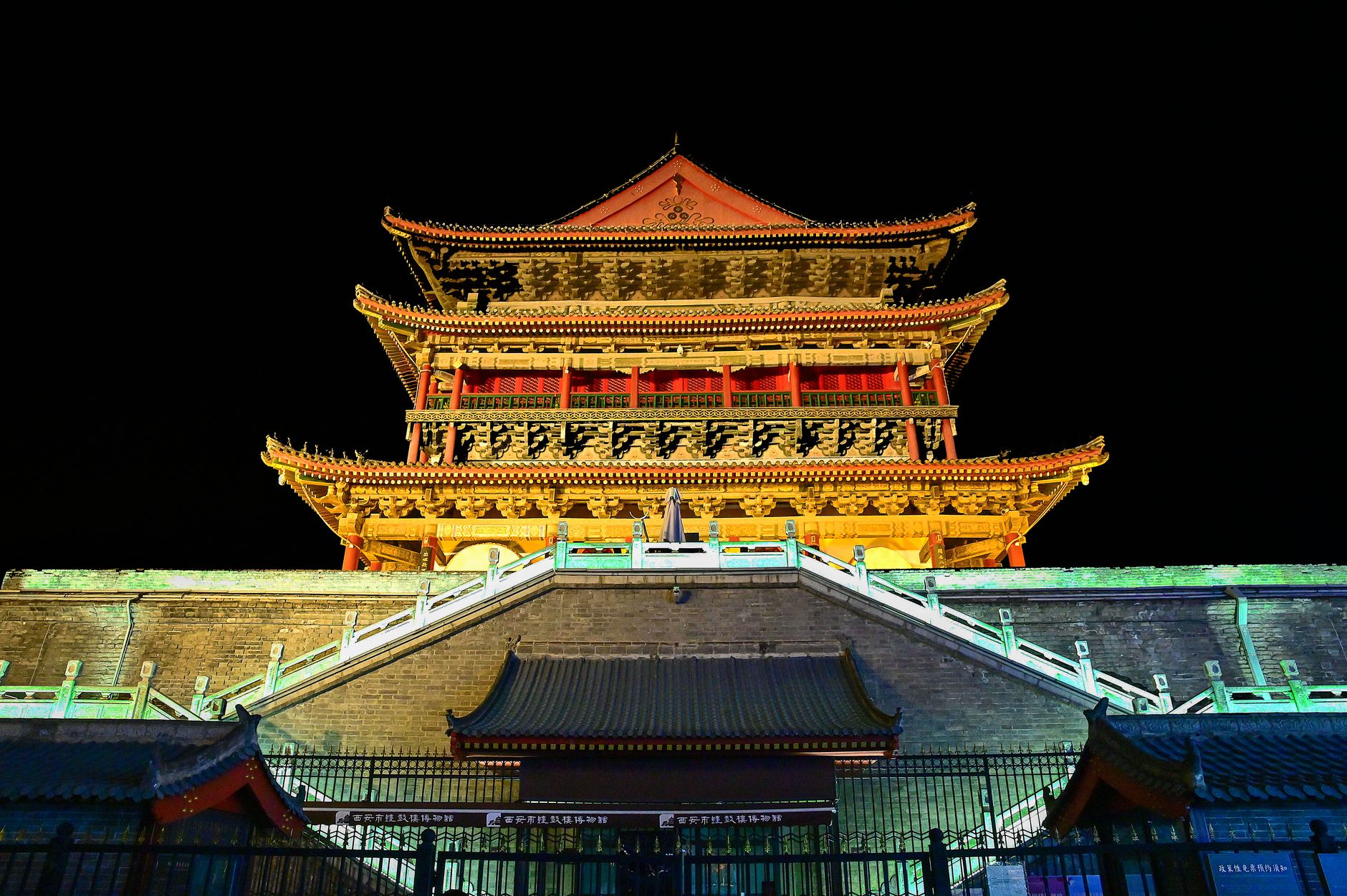
The Bell Tower glowing under floodlights at night above the central roundabout
Inside the tower
Climb the base and a balcony wraps the hall, with antique bronze bells on display. The bell that named the tower, the Tang-dynasty Jingyun Bell, was moved in 1953 to the Stele Forest (Beilin) Museum, where it still sits; the bell hanging here today is a full-size replica installed in 1997. Short chime performances run through the day, and the painted beams and coffered ceiling overhead are some of the finest Ming carpentry on public view in the city. Look for the relocation stele on the west wall of the upper floor.
The centre of the grid
From the balcony you read Xi'an at a glance: four arrow-straight avenues running to the four gates of the city wall, the Drum Tower one block west, and the grey rampart closing the rectangle around it all. The Ming planners moved the tower here precisely so it would anchor that grid, and four and a half centuries later it still does.
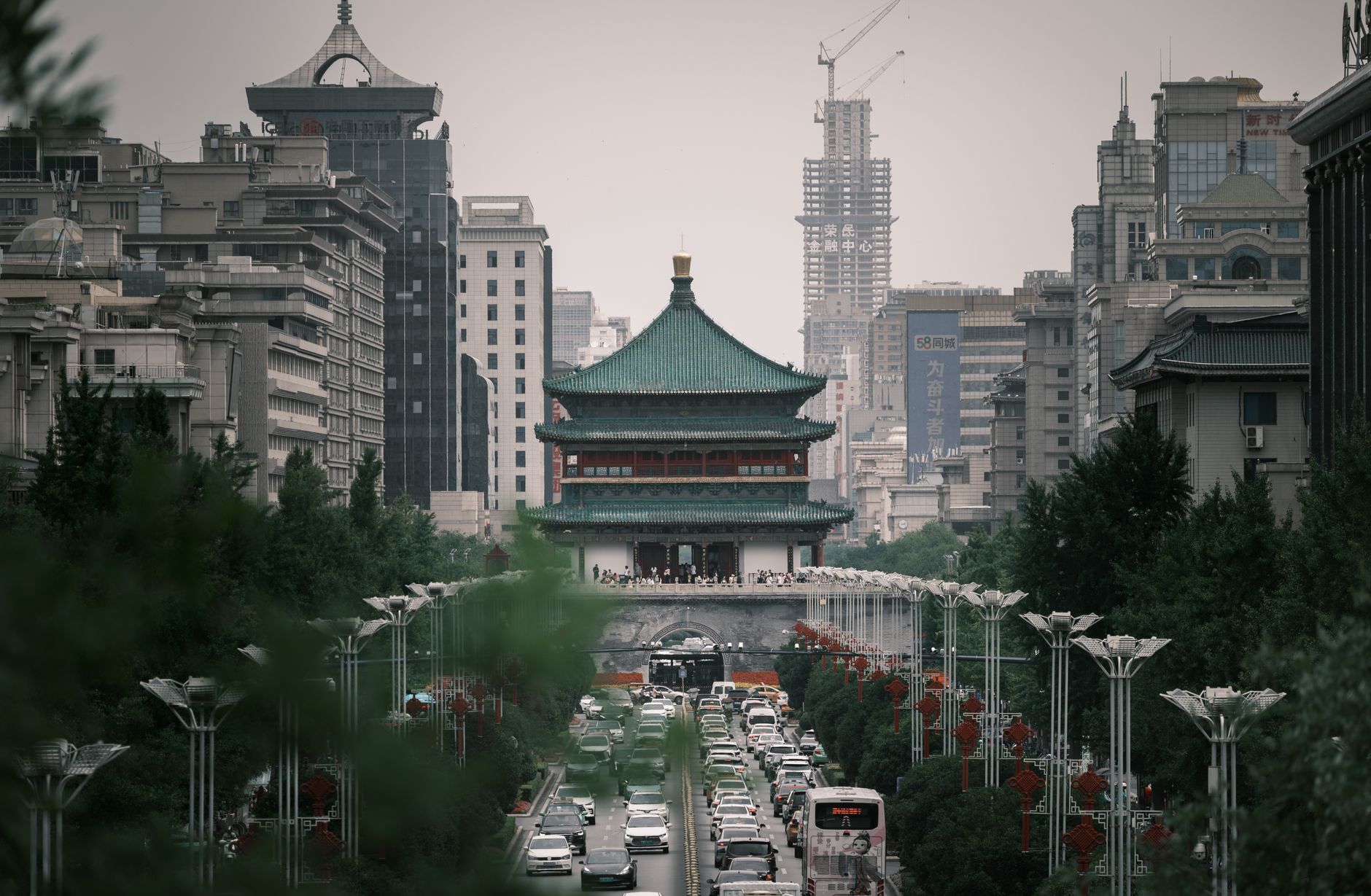
The illuminated tower seen across the surrounding plaza
Getting in: the underpass is the trick
The tower stands on an island in Xi'an's busiest roundabout, so there is no way to it at street level. Take metro Line 2 or Line 6 to Zhonglou (Bell Tower) station and leave by Exit C, which puts you straight into the circular pedestrian underpass; the tower's ticket office is inside the passage itself, a few steps away. The same underpass, one exit further round, surfaces by the walk to the Drum Tower, about five minutes west.
Hours, tickets and timing
The tower opens daily from morning until mid-evening, roughly 8:30am to 9pm in the warmer months and closing earlier in winter; check current times before an evening visit. A combined Bell Tower and Drum Tower ticket costs less than two singles and is the sensible buy, since the two stand a few minutes apart; exact prices shift now and then, so confirm at the window or book ahead online. Mornings are quietest for the climb. Then come back after dark, when the floodlit tower above the traffic circle becomes one of Xi'an's signature night views, and carry on into the Muslim Quarter for dinner.
Highlights
- The geographic heart of walled Xi'an, where the four main avenues meet
- A 36-metre Ming timber tower first raised in 1384, no nails in the frame
- Dismantled and moved a kilometre east in 1582; a stele upstairs records the feat
- The Tang-dynasty Jingyun Bell's full-size 1997 replica, with daily chime performances
- Balcony views down the avenues to the Drum Tower and the city wall
- Floodlit at night above the central traffic circle, steps from the Muslim Quarter
Travel Tips
Enter via the underpass
The tower sits on a roundabout island. Take metro Line 2 or 6 to Zhonglou station, Exit C; the ticket office is inside the pedestrian passage.
Buy the combo ticket
The combined Bell and Drum Tower ticket costs less than two singles, and the towers stand a few minutes apart on foot.
Come back after dark
The tower is fully floodlit at night, one of Xi'an's best evening photo spots, with the Muslim Quarter close by for dinner.