China
Xi'an
Xi'an is the one major Chinese city where the main event sits well outside town. The Terracotta Army is about 40 km away in Lintong, its tickets are real-name and date-locked, and the site rewards people who arrive before the tour buses. Solve that single logistics problem properly and the rest of Xi'an, the walled old town, the Muslim Quarter's food lanes, the Tang-era pagoda district, largely runs itself. Capital to thirteen dynasties including the Zhou, Qin, Han and Tang, and the eastern end of the Silk Road, this city wears its history more visibly than anywhere else in China.
How the city is laid out
Three zones matter. The Ming-era walled rectangle is the historic core: the Bell Tower marks its exact centre, the Drum Tower and the Muslim Quarter sit just northwest of it, and metro Line 2 runs straight through. South of the wall, Yanta District holds the Big Wild Goose Pagoda and the Qujiang area, the part of town that comes alive after dark. Lintong District, roughly 40 km northeast, has the Terracotta Army and the Huaqing Palace hot springs. Base yourself inside the walls or near the South Gate and everything except Lintong is a short metro ride or a walk.
The Terracotta Army without a tour
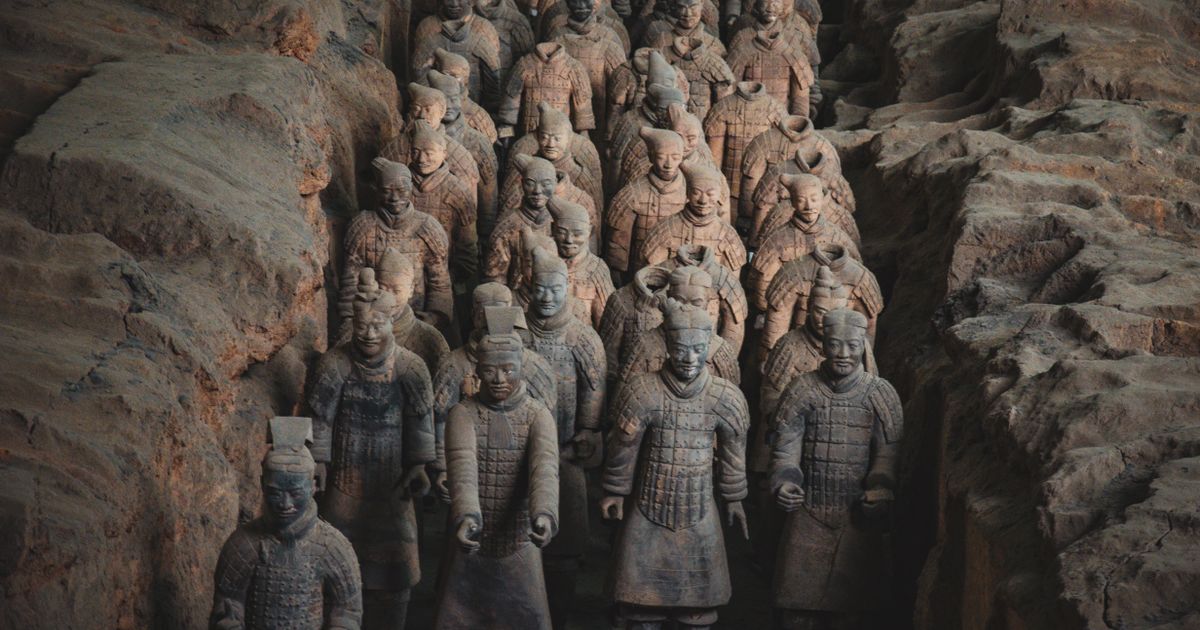
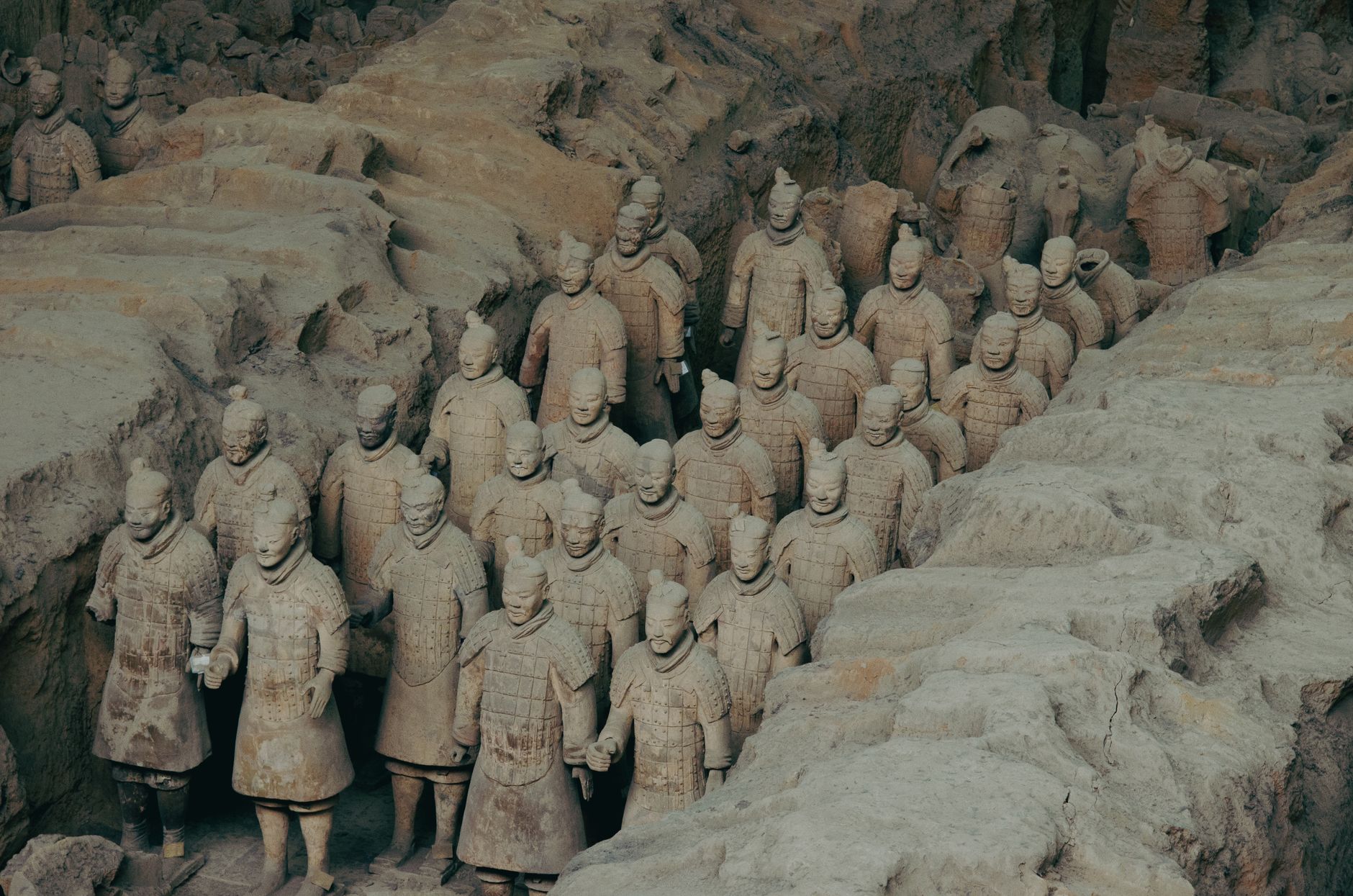
Discovered in 1974 by farmers digging a well, the buried army of China's first emperor, Qin Shi Huang, runs to an estimated 8,000 life-sized soldiers, horses and chariots, no two faces alike. It is a UNESCO World Heritage Site and the one trip out of the city nobody skips.
Ticketing is real-name: bookings are released about a week ahead, each person can hold one ticket per day, and you enter by scanning the passport you booked with. The official booking system asks for a Chinese phone number, which rules out most foreign visitors, so book through a travel platform instead, or use the on-site self-service machines, which have a passport-purchase option. Busy dates sell out, so don't leave it until the morning you travel.
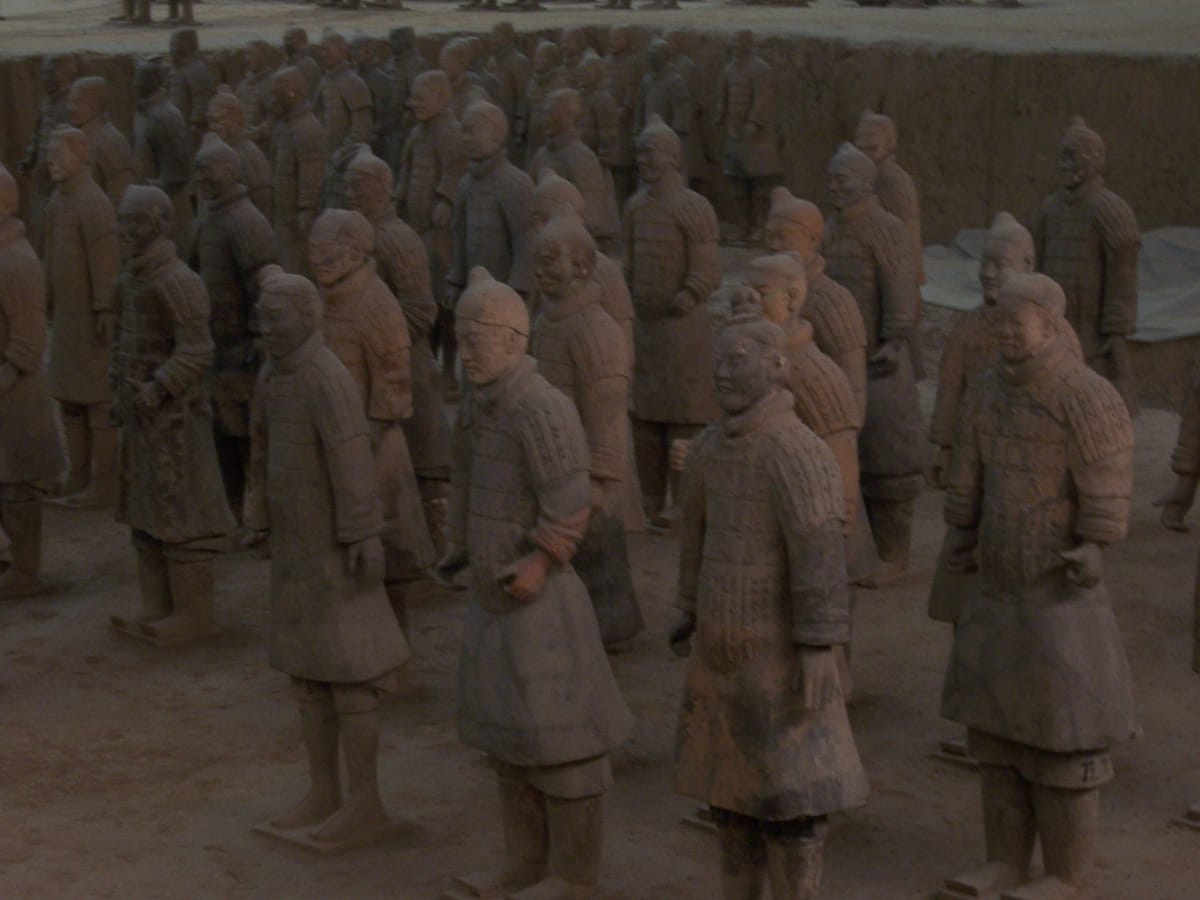
Ranks of life-sized soldiers in Pit 1 of the Terracotta Army near Xi'an
Getting there by public transport is simple: take metro Line 9 to Huaqing Pool station, leave by Exit C, walk a couple of hundred metres northeast to the bus station, then ride Lintong bus 602 or tourist bus 613 to the site. Board only the buses staffed by attendants in red vests, since unofficial "tourist" buses work the same stretch. Count on around an hour and a half each way from the city centre and give the site most of a day.
Terracotta Army tickets & day tours
Books with passport details, no Chinese phone number needed
Some links are affiliate links; we may earn a commission at no extra cost to you.
Inside the walls
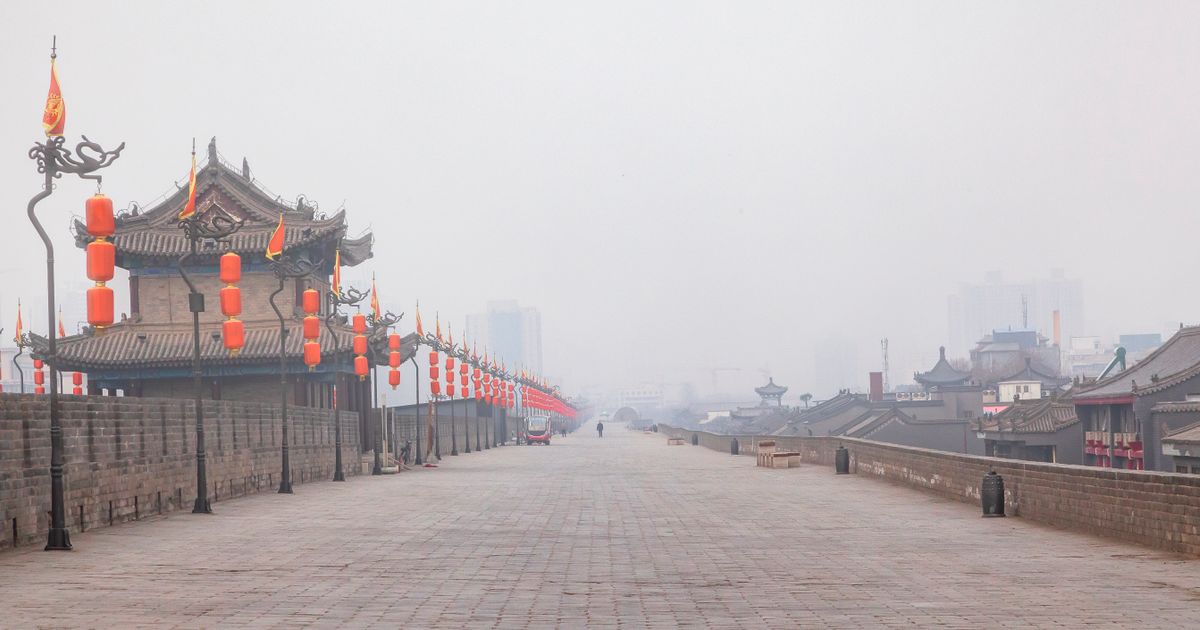
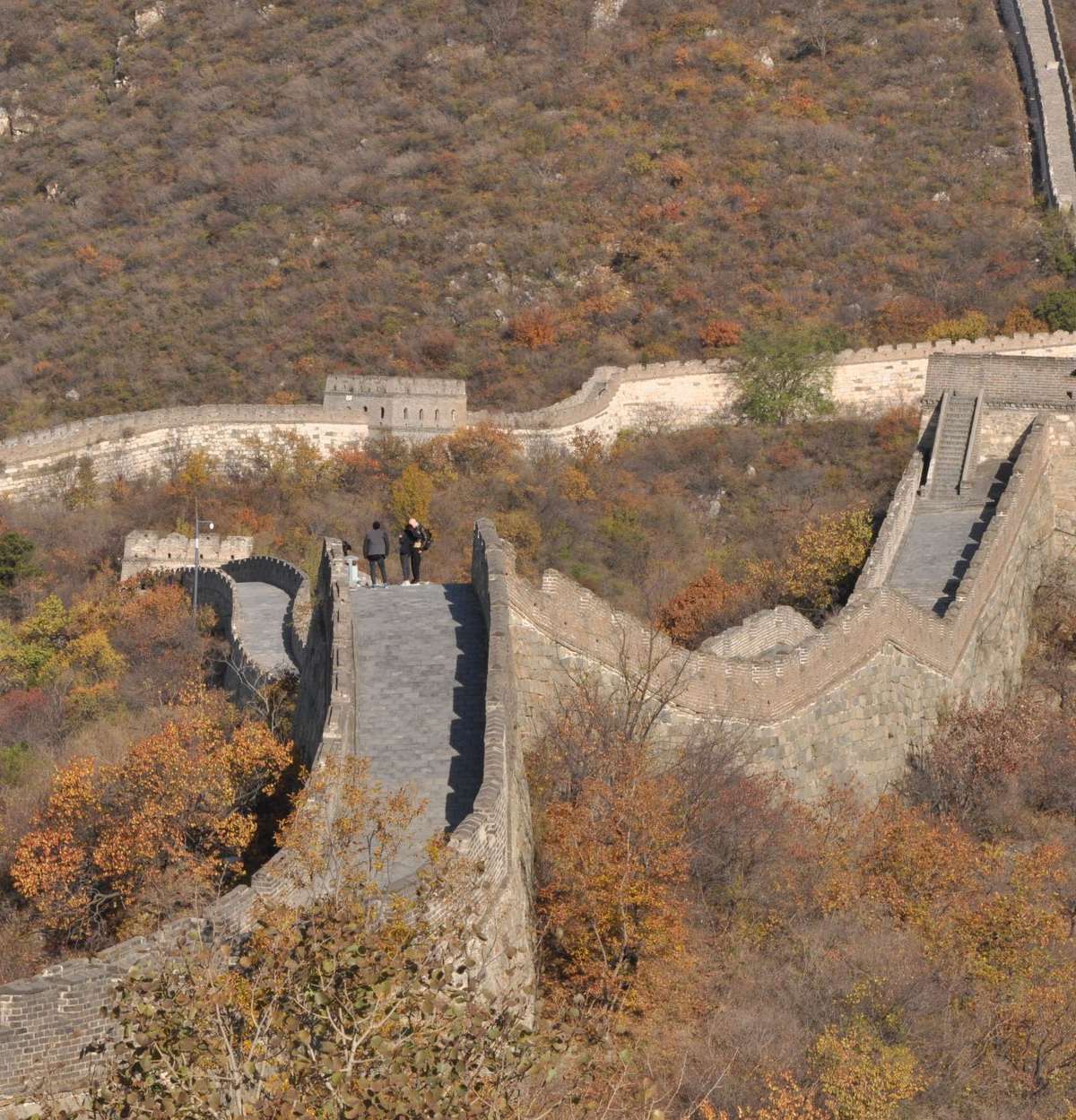
The City Wall is the most complete ancient city wall in China: rebuilt between 1370 and 1378 by the first Ming emperor on Tang foundations, it forms a closed 13.7 km rectangle around the old town, about 12 m high and wide enough on top for two-way cycling. Bikes are rented up on the rampart at the four main gates, and a full loop takes one to two unhurried hours. Rental stops in the evening, with late returns handled at the South Gate only, but the wall itself stays open after dark, when the lanterns and floodlights come on.
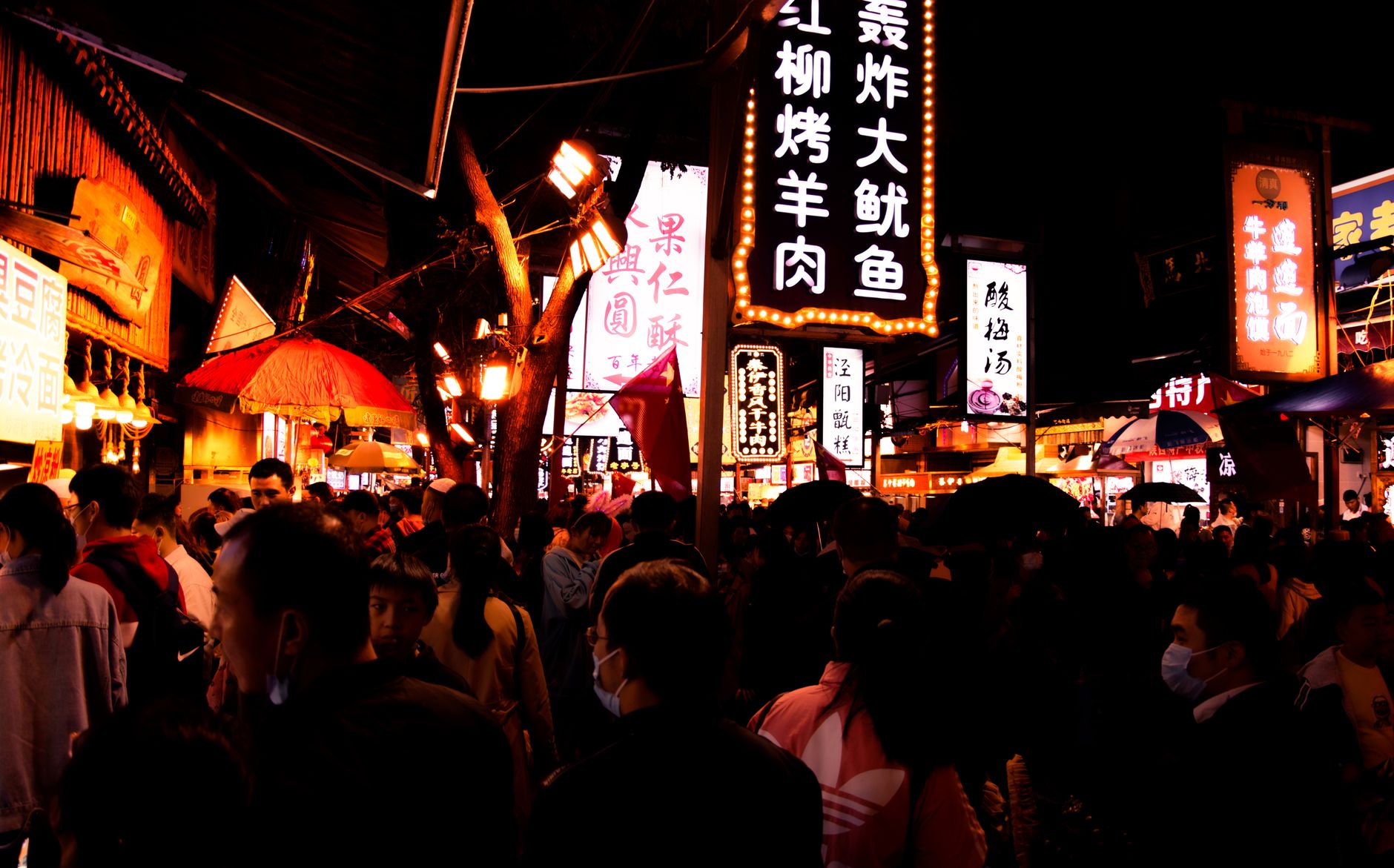
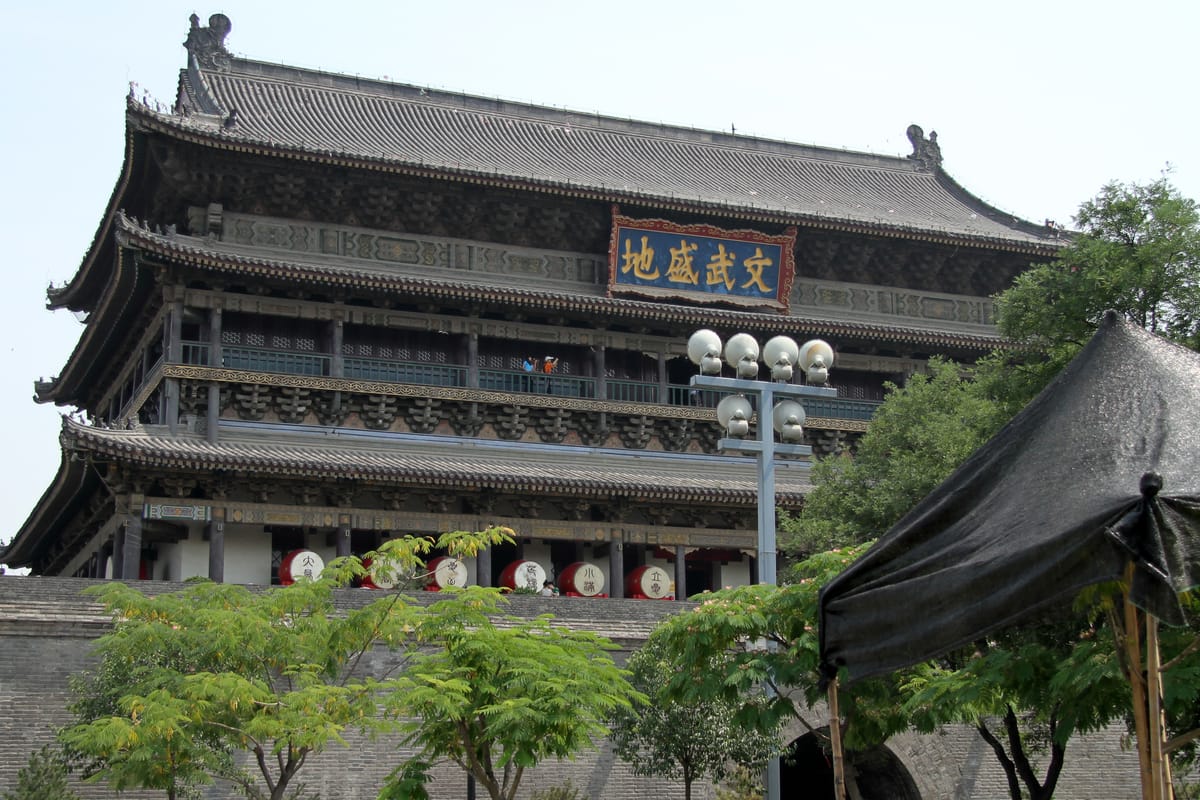
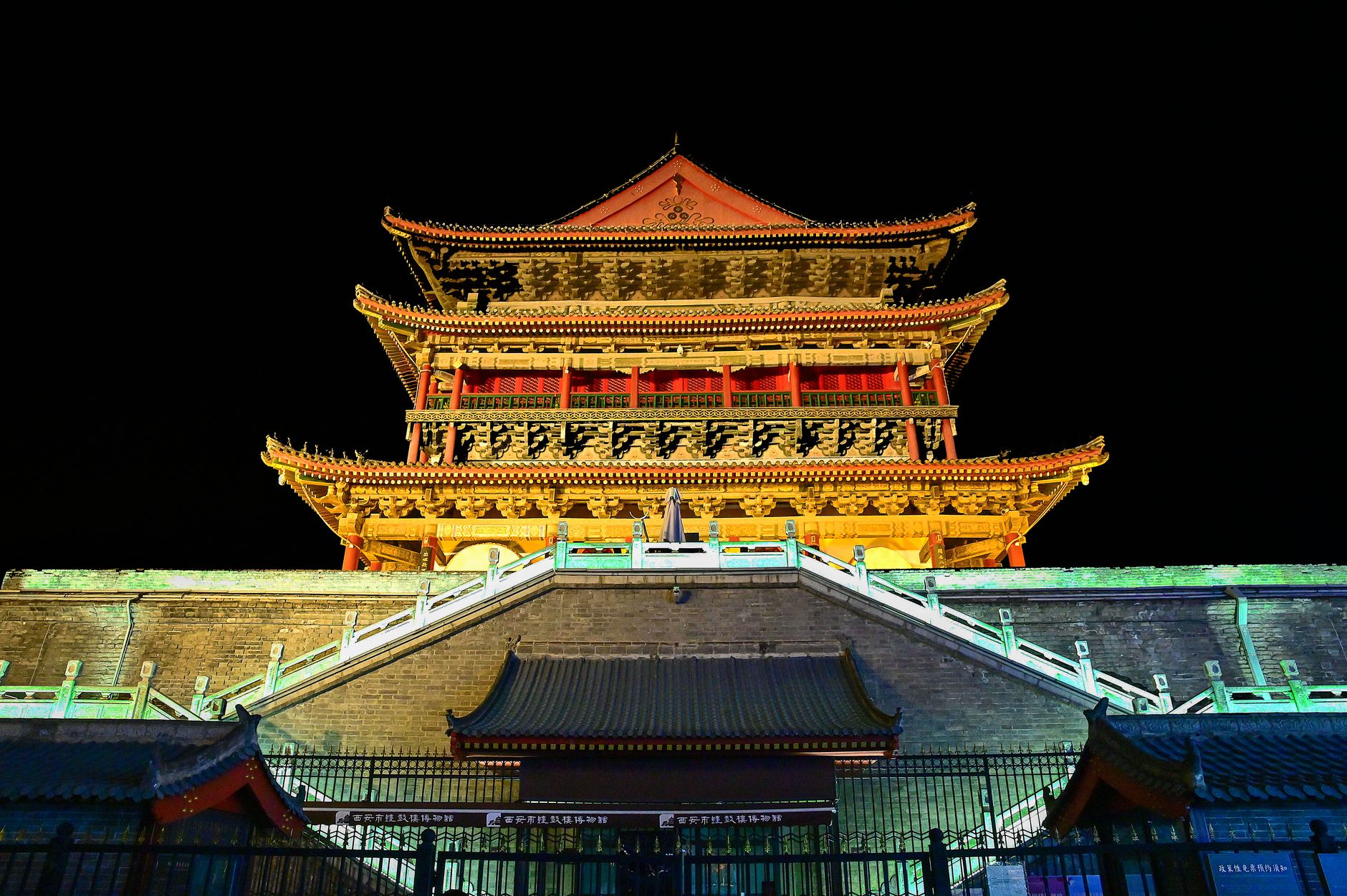
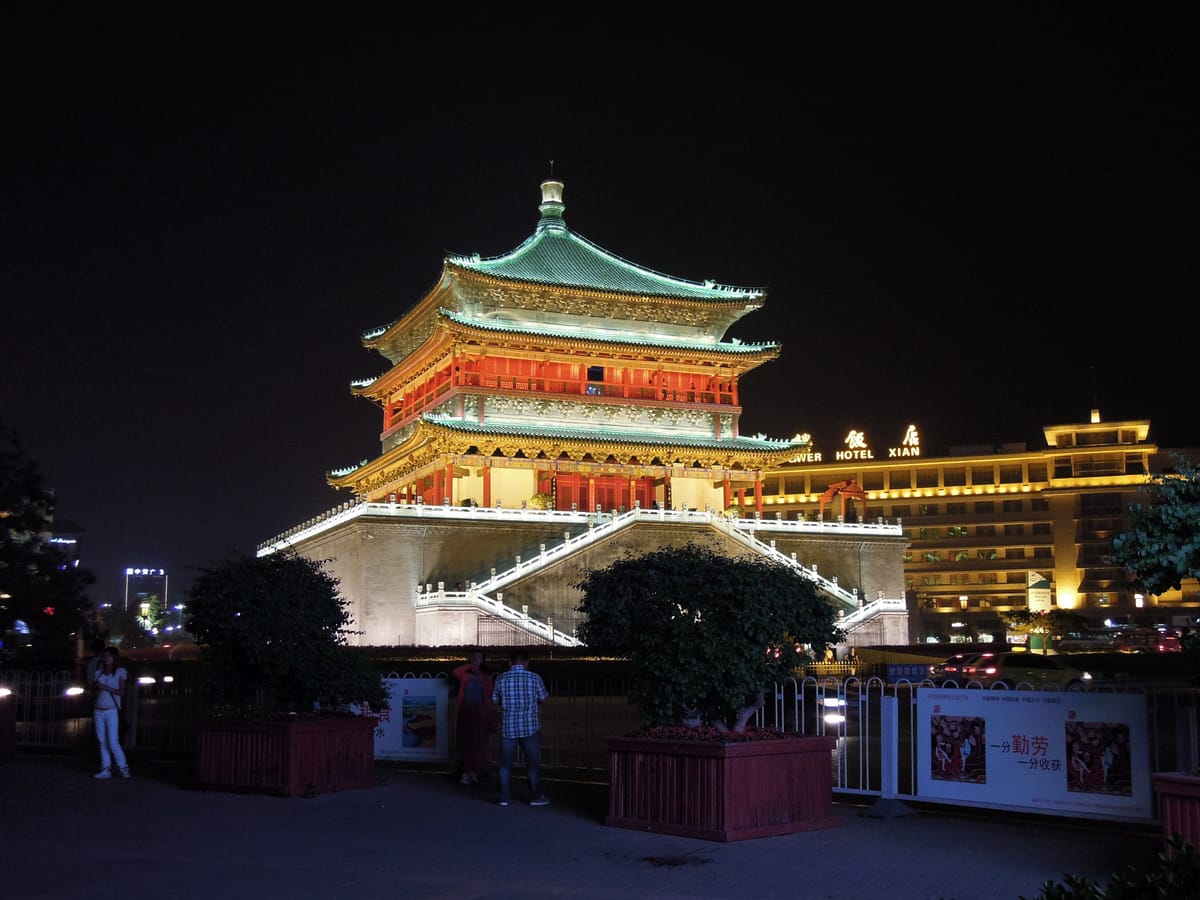
From the South Gate it is a short walk to the Bell Tower, the geographic and symbolic centre of the old city, and the neighbouring Drum Tower, both Ming-era and lit at night. Behind the Drum Tower the Muslim Quarter begins: a knot of lanes around the Great Mosque where the Hui community has cooked for centuries. Come hungry in the evening for roujiamo (flatbread stuffed with slow-cooked meat), biang biang noodles pulled to order, and yangrou paomo, the lamb soup you fill with hand-torn bread yourself.
Evenings south of the wall
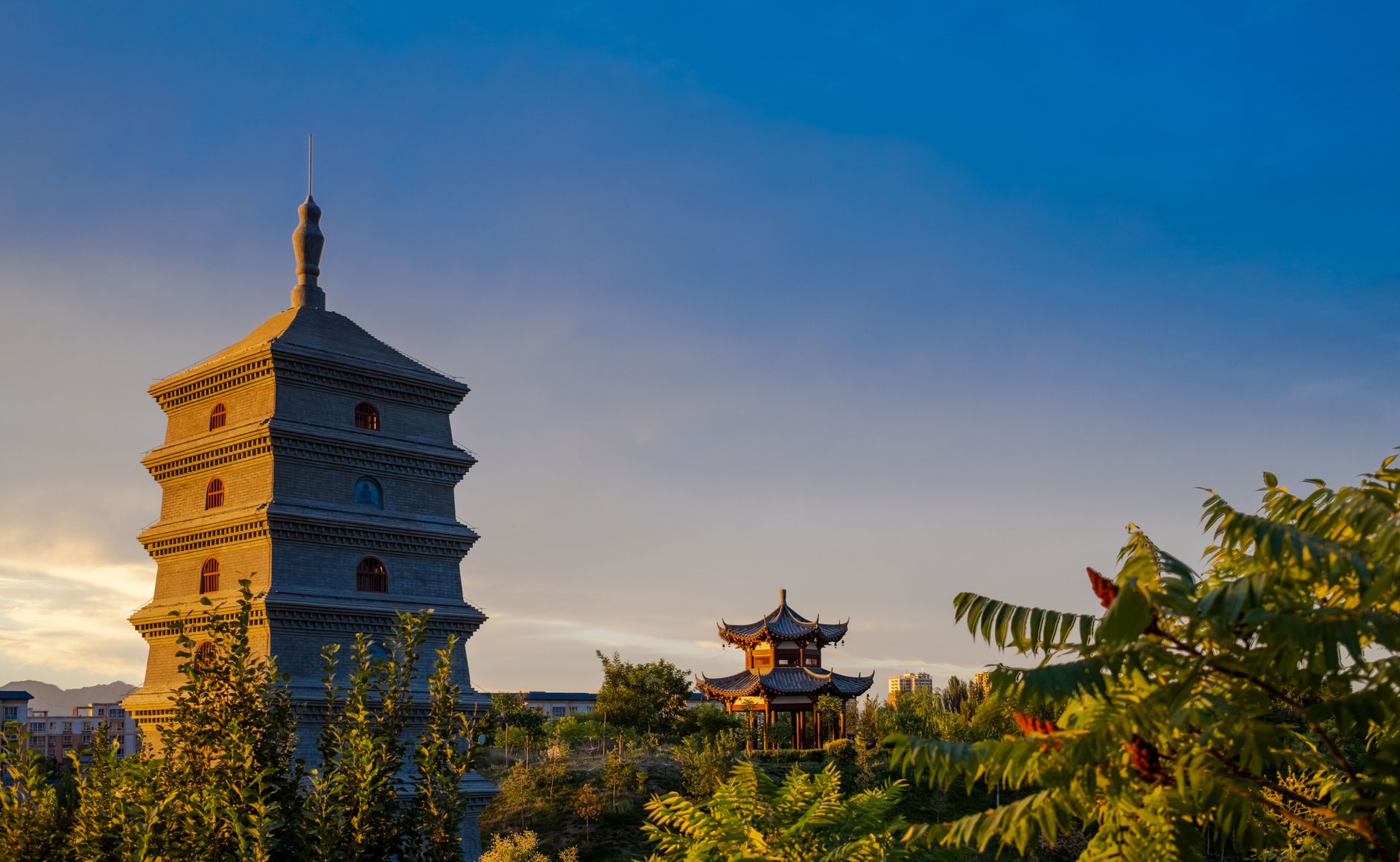
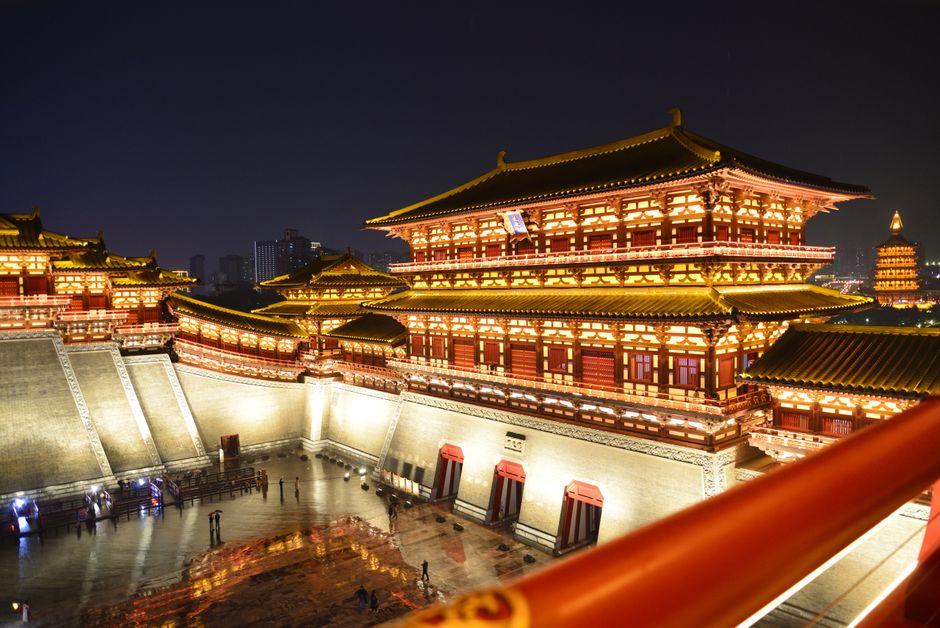
The Big Wild Goose Pagoda went up in 652 to house the Buddhist scriptures the monk Xuanzang carried back from India, and it still anchors the skyline of Yanta District. Come at dusk: the North Square in front of it stages a large musical fountain show, and directly south stretches Grand Tang Dynasty Ever-Bright City, a pedestrian street about 1.5 km long, free to enter, with costumed street performances running nightly from early evening. It is crowded, theatrical and knowingly kitsch, and worth one full evening.
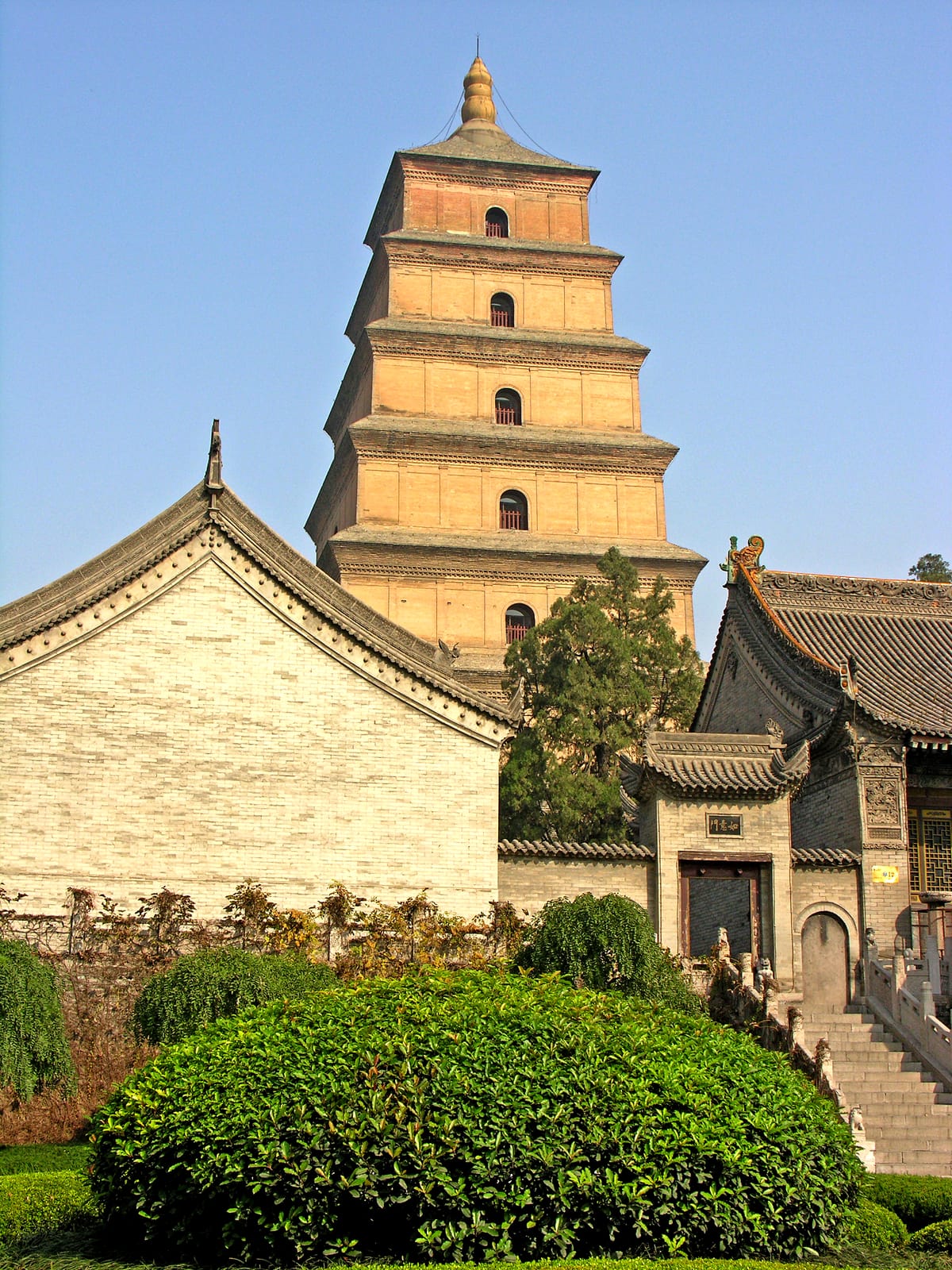
The Tang-dynasty Big Wild Goose Pagoda rising above temple halls in Xi'an
Arriving: flights, trains and the transit rule
Xi'an Xianyang International Airport is the hub for northwest China. Metro Line 14 links it with Xi'an North Railway Station in about 50 minutes, where you transfer to Lines 2 and 4 for the city centre. The airport is also a designated entry port for China's 240-hour visa-free transit scheme: as of mid-2026, eligible passport holders connecting onward to a third country can enter without a visa, with the permitted stay area in Shaanxi covering Xi'an and Xianyang. Rules shift, so confirm with the National Immigration Administration before relying on it.
High-speed rail is often the better way in. Xi'an North is one of the country's largest rail hubs, with direct trains from Beijing, Shanghai, Chengdu and most other major cities, and Line 2 runs from the station straight through the old town. Foreign passport holders can book Chinese train tickets on an English-language platform, or directly on the official 12306 English site with no service fee.
Trains & hotels for Xi'an
Chinese train tickets and old-town hotels in one English-language booking
Some links are affiliate links; we may earn a commission at no extra cost to you.
Around town, the metro is cheap and reaches almost every sight, ride-hailing works well, and the walled core is compact enough to cross on foot. Set up a mobile payment app before arriving, and keep your passport on you: it is scanned for the Terracotta Army, train tickets and hotel check-in.
When to come
Spring (March to May) and autumn (September to November) bring mild, mostly dry days roughly between 10°C and 28°C, with blossom or autumn leaves as a bonus. July and August are hot and humid, and the early-October National Day holiday brings the year's biggest crowds and hotel rates to match. Winter is cold but quiet, and the wall under frost or snow is at its most atmospheric.
Highlights
- Terracotta Army: an estimated 8,000 life-sized soldiers guarding China's first emperor, a UNESCO World Heritage Site
- Xi'an City Wall: China's most complete ancient city wall, a 13.7 km loop you can cycle in under two hours
- Muslim Quarter: food lanes around the Great Mosque, home of roujiamo and biang biang noodles
- Big Wild Goose Pagoda: Tang-dynasty pagoda from 652, with a musical fountain show on its North Square
- Grand Tang Dynasty Ever-Bright City: free 1.5 km pedestrian street with costumed night performances
- Bell Tower and Drum Tower: floodlit Ming landmarks at the exact centre of the old town
- Capital to thirteen dynasties and the eastern end of the Silk Road
- 240-hour visa-free transit port with direct high-speed rail to Beijing, Shanghai and Chengdu
Travel Tips
Book Terracotta Army tickets ahead
Tickets are real-name, released about a week in advance, one per person per day. The official system needs a Chinese phone number, so use a travel platform or the on-site self-service machines with the passport-purchase option.
Do the Terracotta trip by metro and bus
Take Line 9 to Huaqing Pool, leave by Exit C and walk northeast to the bus station, then ride Lintong bus 602 or tourist bus 613. Only board buses staffed by attendants in red vests.
Ride the wall before evening
Bikes are rented on top of the rampart at the four main gates and the full 13.7 km loop takes one to two hours. Rental stops in the evening and late returns are handled at the South Gate only.
Save an evening for the pagoda district
The fountain show on the Big Wild Goose Pagoda's North Square and the free costumed performances along Grand Tang Dynasty Ever-Bright City both start after dark.
Carry your passport everywhere
It gets scanned at the Terracotta Army, for train tickets and at hotel check-in. Set up a mobile payment app before you arrive; the metro and ride-hailing cover almost everything else.