Xi'an
Big Wild Goose Pagoda
The Big Wild Goose Pagoda began as a storage problem solved in brick. In 652, the monk Xuanzang needed somewhere fireproof to keep the sutras and Buddha figurines he had hauled back from India along the Silk Road, and the tower raised for them inside the Da Ci'en Temple has outlasted the dynasty that built it. Thirteen centuries later the seven-tier, 64-metre pagoda is still the emblem of Xi'an, printed on everything from metro cards to biscuit tins.
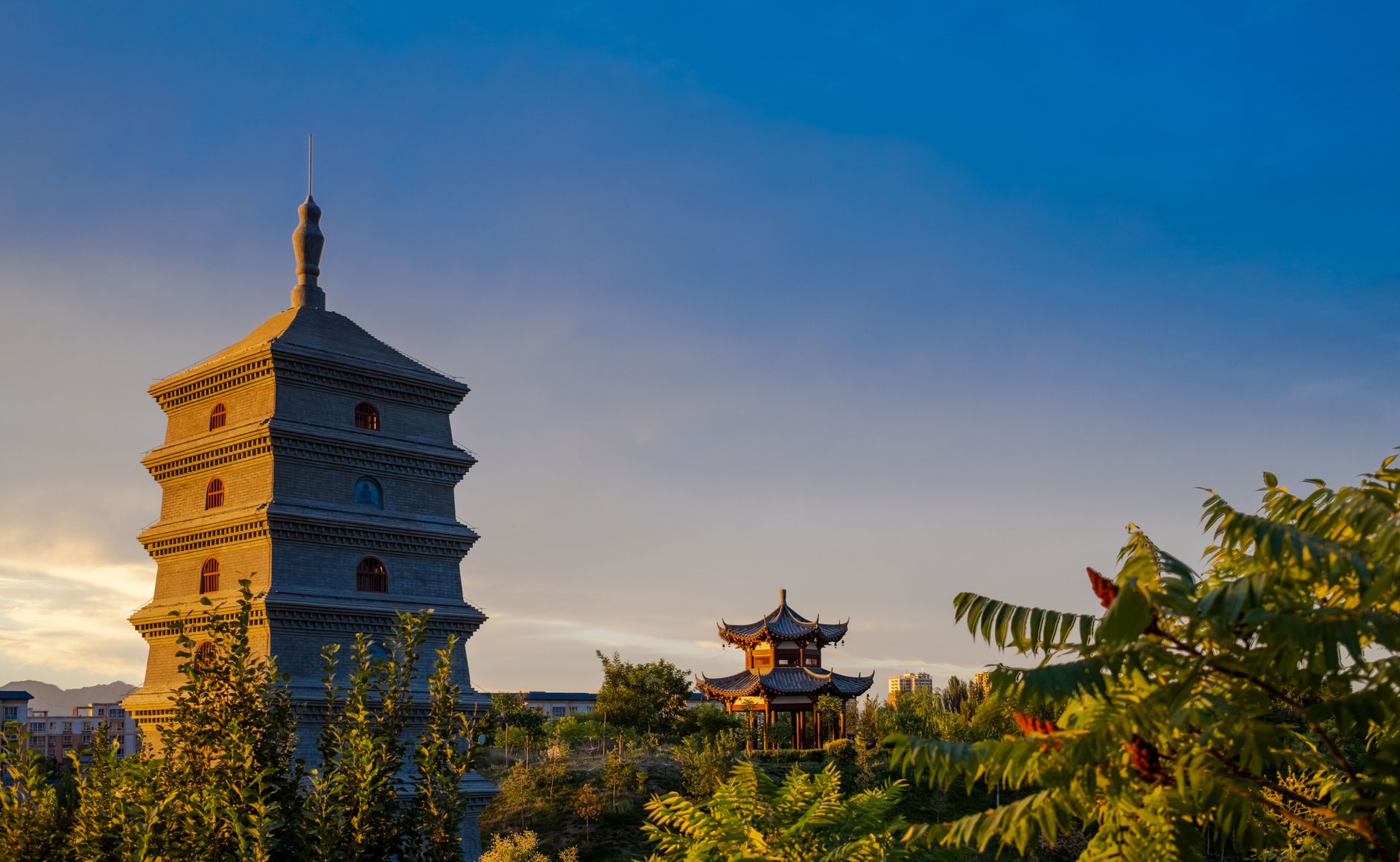
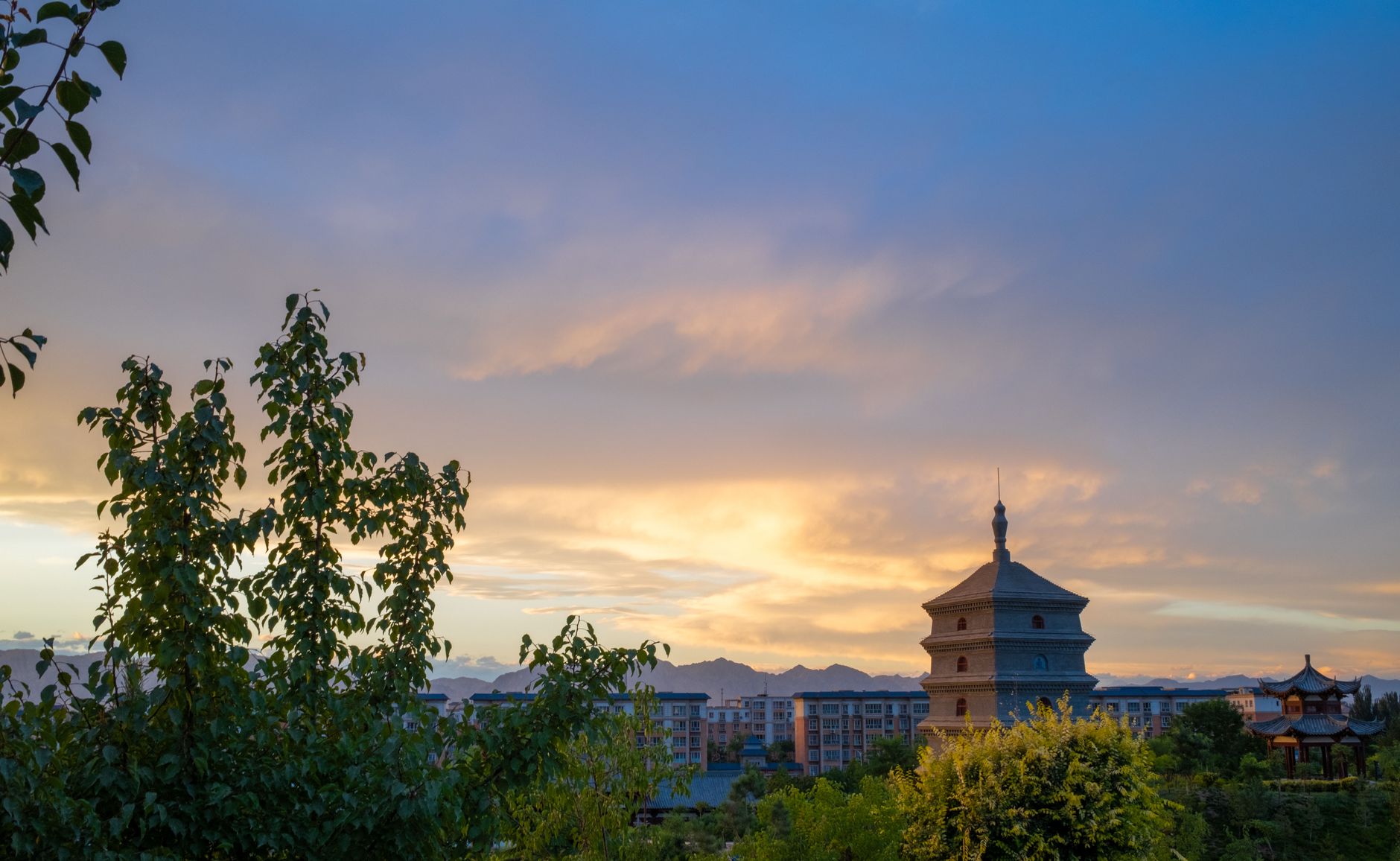
The Big Wild Goose Pagoda glowing at golden hour above the temple gardens
The temple first, then the tower
Your ticket at the gate covers the Da Ci'en Temple grounds: incense courtyards, prayer halls and a memorial hall devoted to Xuanzang and the translation work that filled the rest of his life. The temple entry is cheap, and climbing the pagoda itself is a separate small fee paid at the base of the tower, so decide inside whether you want to go up. In busy weeks you can reserve temple entry ahead on the temple's official WeChat account, and seniors over 65 and small children enter free with ID.
Climbing it
A wooden staircase, steep, narrow and polished by centuries of feet, switchbacks up the seven storeys. Lattice windows on each level frame a different slice of the city, and on a clear day the Qinling mountains edge the southern horizon. Look closely at the exterior brickwork on your way out: it imitates timber bracketing, a Tang habit of copying carpentry in masonry, which is part of why the tower has ridden out earthquakes that levelled its contemporaries.
The squares and the fountain
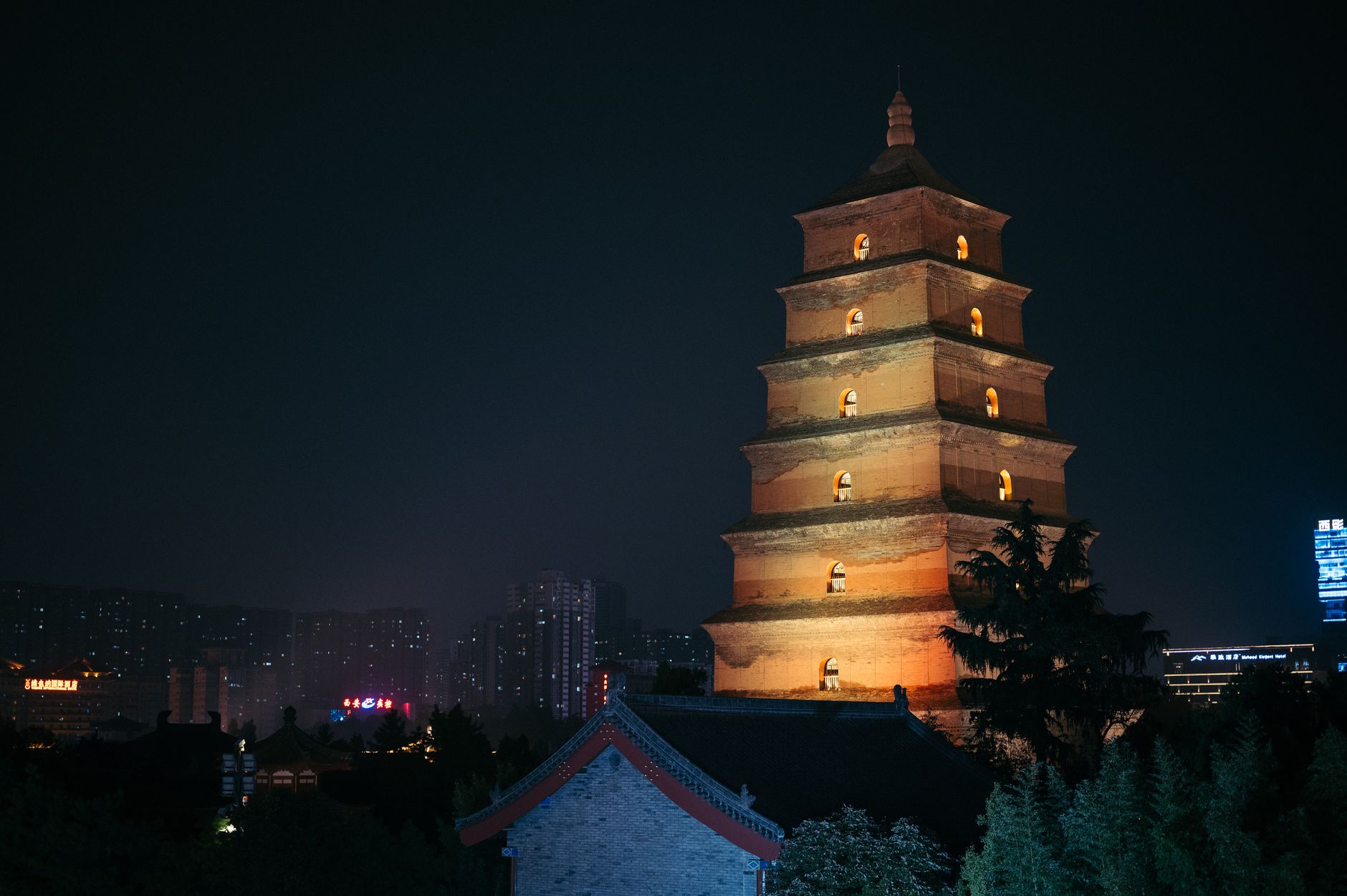
The pagoda anchors a long modern axis of squares and Tang-themed shopping blocks. The North Square holds a musical fountain billed as Asia's largest, free to watch, with several shows a day, typically midday, late afternoon and evening, each running about a quarter of an hour; it traditionally pauses one weekday for maintenance, so check the posted schedule that morning rather than planning blind. The South Square has the statue of Xuanzang striding back toward Chang'an, and after dark the whole ensemble of tower, eaves and water is lit in warm gold.
The illuminated pagoda lit up against the night sky
Hours and timing
The complex keeps seasonal hours: roughly 8:30 to 18:00 from March to November, opening later and closing earlier in winter, with ticket sales stopping about an hour before closing. The move that repays best is arriving mid-afternoon, climbing in the warm late light, then staying on for the illumination and an evening fountain show, three experiences on one visit. Allow two to three hours in total.
Getting there
Metro Lines 3 and 4 both stop at Dayanta station, a short walk north of the temple's north entrance. The Shaanxi History Museum is one stop away, and the two pair naturally into a half-day: museum in the morning while your legs are fresh, pagoda from mid-afternoon into the evening.
Highlights
- A seven-storey, 64-metre Tang-dynasty brick pagoda standing since 652 AD
- Built to house the sutras Xuanzang carried back from India along the Silk Road
- A steep wooden staircase climbs to lattice-window views over the city
- Da Ci'en Temple grounds with the Xuanzang memorial hall and incense courtyards
- A free musical fountain on the North Square, billed as Asia's largest
- Metro Lines 3 and 4 stop at Dayanta station, a short walk from the gate
Travel Tips
Two tickets, one decision
The gate ticket covers the Da Ci'en Temple grounds and is cheap; climbing the pagoda is a separate small fee paid at the base, so you can decide once you have seen the tower up close.
Time the fountain
The North Square fountain runs several free shows a day, typically midday, late afternoon and evening, and traditionally pauses one weekday for maintenance. Check the posted times that morning and arrive 20 minutes early for a spot.
Arrive mid-afternoon
Late light warms the brick, and staying on covers the night illumination and an evening fountain show in a single visit. Ticket sales stop about an hour before closing, so do not cut it fine.
Pair with the museum
The Shaanxi History Museum is one metro stop away. Museum in the morning, pagoda from mid-afternoon makes the natural half-day.