Xi'an
Xi'an City Wall
Nowhere else in China can you cycle a complete lap around a major city on top of its original wall. Xi'an's rampart runs 13.74 kilometres in an unbroken rectangle, wide enough on top for two-way bike traffic, and the loop takes most riders well under two hours. Built in the 1370s, at the start of the Ming dynasty, on the foundations of the Tang imperial city, it is the largest and most complete ancient city wall in the country, and riding or walking it is the best single orientation exercise Xi'an offers: old courtyards and the Bell Tower inside, high-rises and the moat park outside.
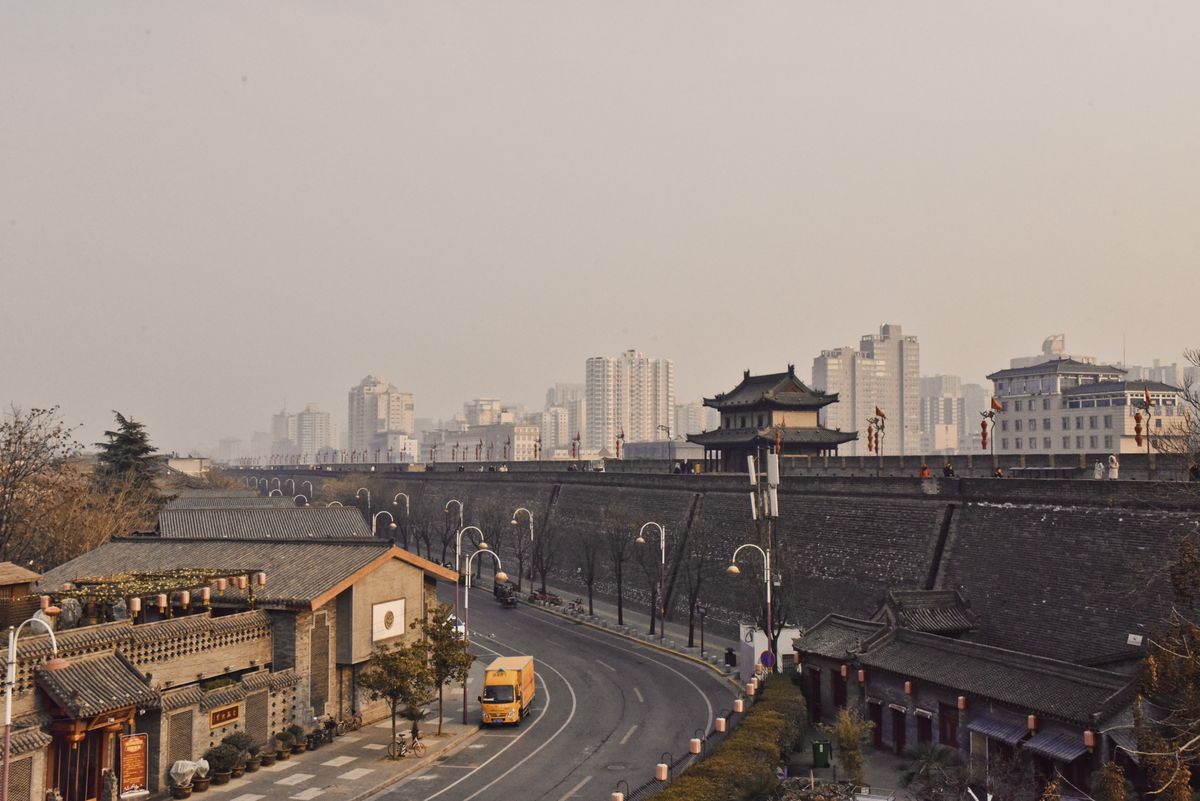
The massive grey rampart of the Xi'an City Wall beside the modern city
What you are standing on
The numbers explain why the wall feels more like an elevated road than a fortification. It stands about 12 metres high, spreads 12 to 14 metres across the top, and swells to 15 to 18 metres at the base. Ninety-eight defensive ramparts (enemy towers) project outward at intervals of roughly 120 metres, and a deep moat wrapped in a ring of parkland follows the outside, where locals dance and practise tai chi in the evenings. Xi'an was Chang'an, capital of thirteen dynasties and the eastern end of the Silk Road; this wall encloses the heart of that ancient city.
The gates
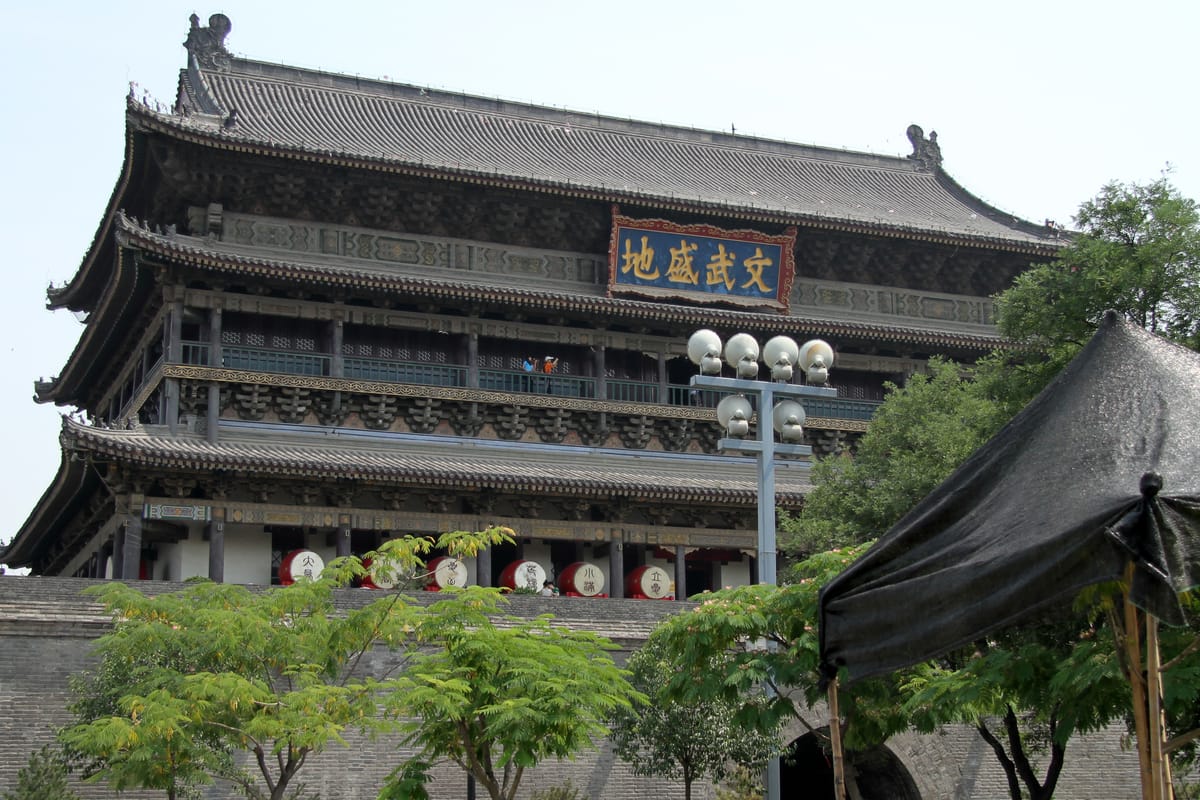
One great gate opens in the middle of each side: Yongning (south), Anding (west), Anyuan (north) and Changle (east). Each was built as a layered defensive complex, with an outer arrow tower, an inner main tower and a walled barbican courtyard between them designed to trap attackers. The South Gate (Yongning) is the showpiece and the usual entrance, dressed with red lanterns and the stage for costumed drum-and-gate ceremonies recreating the welcome once given to arriving envoys. Several smaller modern gates around the circuit also sell tickets and give access.
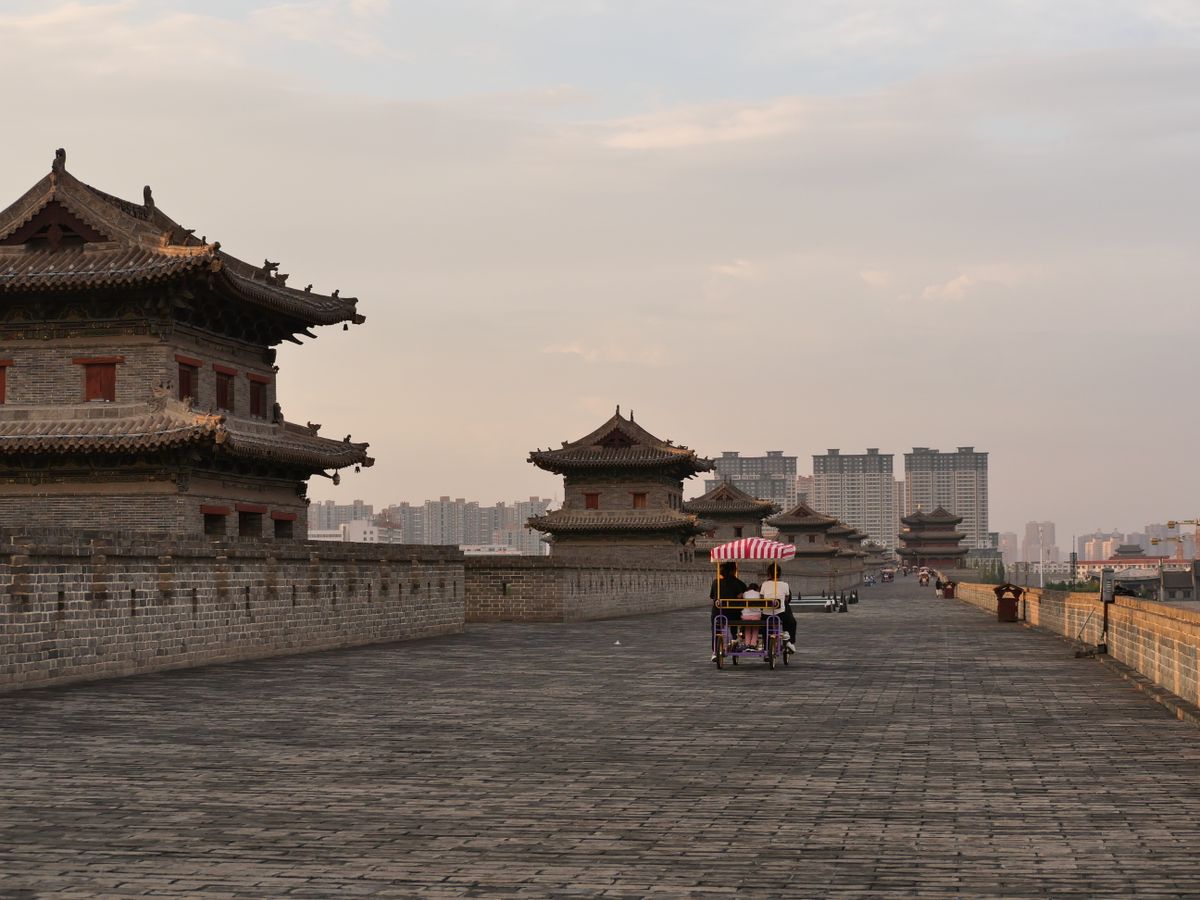
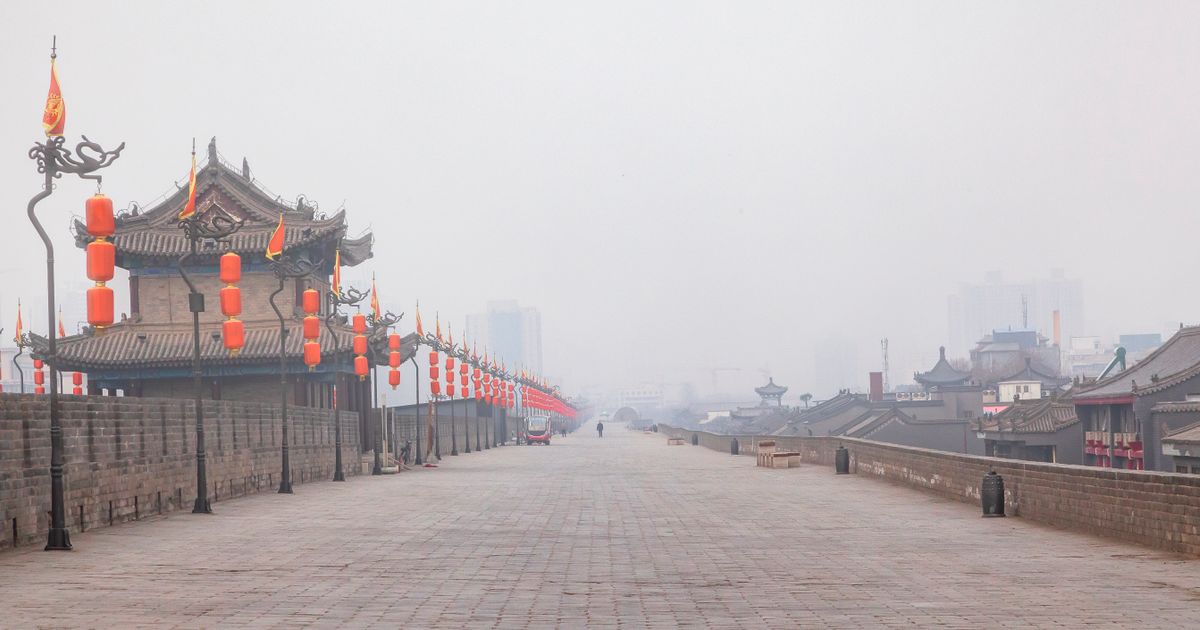
Visitors cycling along the wide brick top of the Xi'an City Wall
Cycling the loop
Bike rental stands operate at the four main gates and several points between, about nine spots in all, with singles and tandems on offer. Rentals run on a set window, typically around three hours, which is plenty for the full loop with photo stops; overtime is billed in increments, and you leave a refundable deposit. The brick surface is bumpy in stretches, so hold the camera tight. If you would rather not pedal, electric sightseeing carts circle the top, and walking one section, say South Gate to the southeast corner, works well too.
Tickets and hours
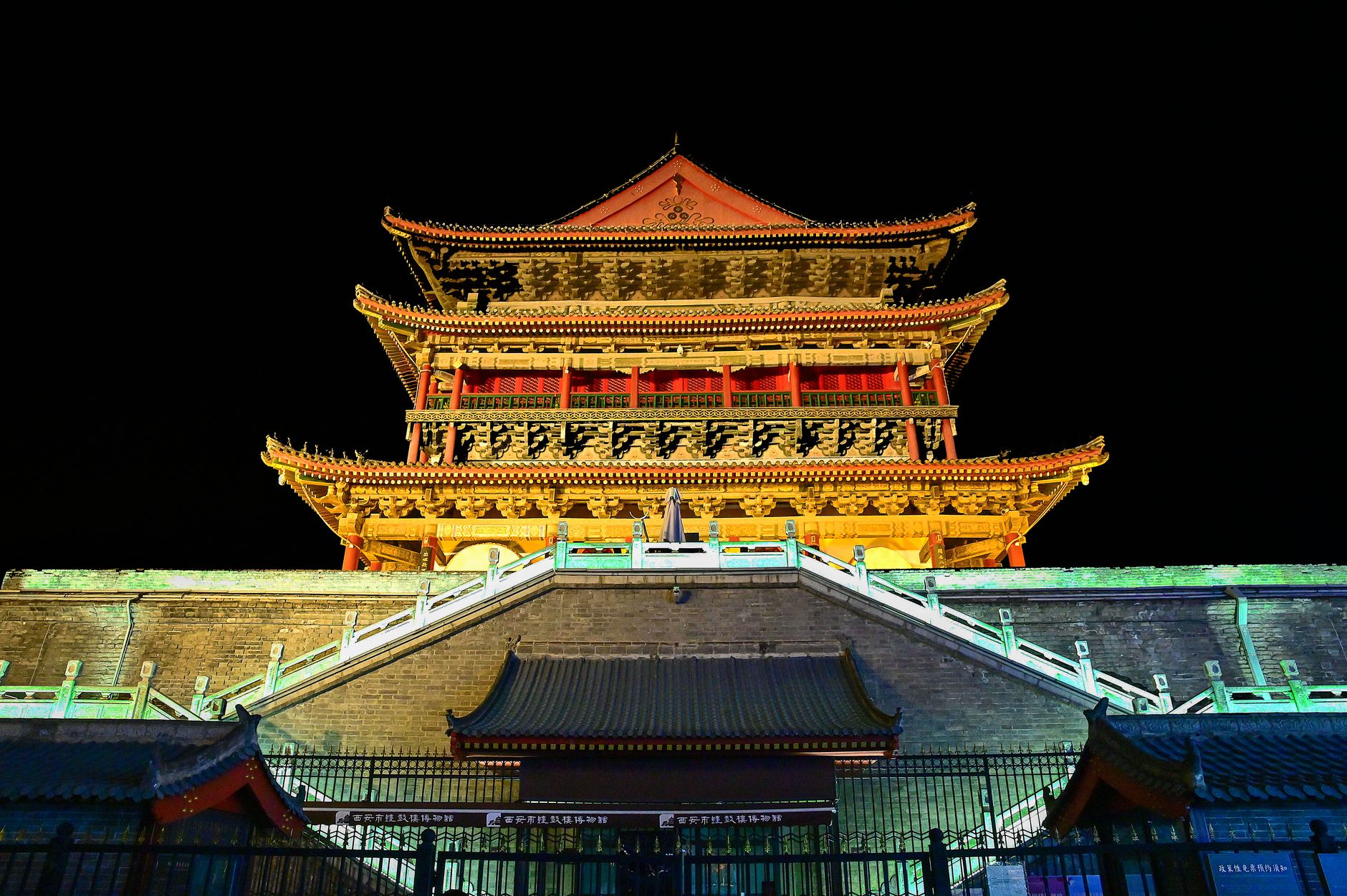
One ticket covers the whole wall; foreign visitors buy with their passport, at the gate or in advance through Trip.com or Klook, which both sell it in English. Hours differ by gate: the South Gate keeps the longest, from morning until well into the night, while the other gates generally close in the early evening and earlier still in winter. Ticket prices are revised from time to time, so check the current rate when you book. Climb up in daylight for the views, or after dark when the towers and lanterns are floodlit.
When to go
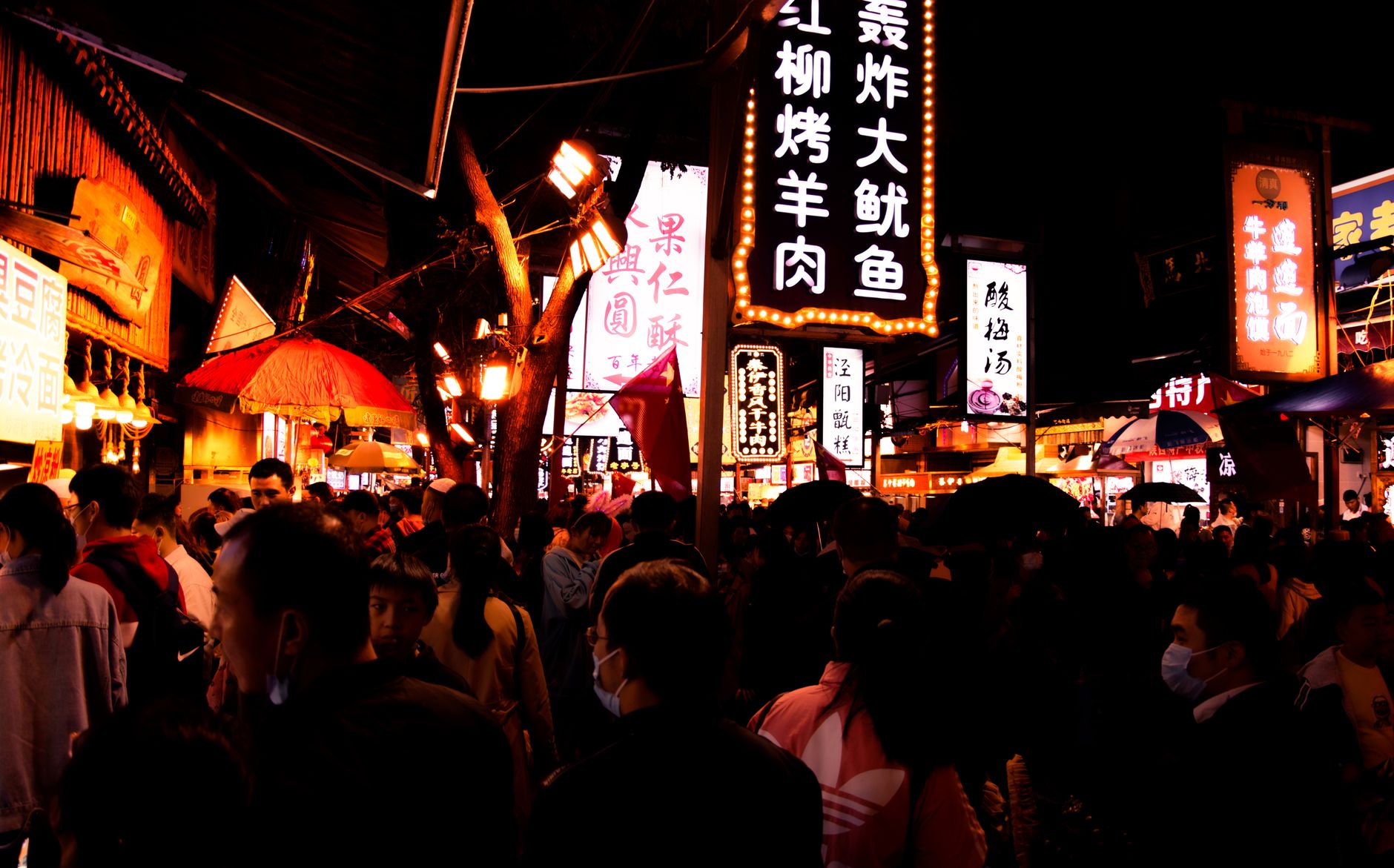
Early morning and the hour before sunset give the softest light on the brick and the most comfortable temperatures. There is almost no shade on top, and Xi'an summers are fierce, so carry water and sun protection in July and August. Spring and autumn are ideal. The Bell Tower, Drum Tower and Muslim Quarter all sit just inside the walls, an easy walk from the South Gate, so the wall slots naturally into a half-day loop of the old centre.
Highlights
- China's largest and most complete ancient city wall, an unbroken 13.74 km rectangle
- Built in the 1370s (early Ming) on the foundations of the Tang imperial city
- About 12 m high and 12 to 14 m wide on top, with 98 ramparts spaced roughly every 120 m
- Cycle the full circuit in under two hours from rental stands at the main gates
- The lantern-hung South Gate (Yongning) with its arrow tower and barbican courtyard
- Floodlit towers and walls after dark, with the moat park circling below
Travel Tips
Tickets and entry
One passport-linked ticket covers the whole wall; buy at the gate or ahead on Trip.com or Klook. Prices change periodically, so check the current rate.
Mind the gate hours
The South Gate stays open well into the night; other gates generally close in the early evening, earlier in winter. Plan your exit gate accordingly.
Renting a bike
Rentals run on a set window, typically around three hours, with a refundable deposit. That is enough for the loop with photo stops; overtime is billed in increments.
Beat the heat
There is almost no shade on top. Carry water and sun protection in summer; early morning, late afternoon and after dark are far more comfortable than midday.
Combine nearby sights
The Bell Tower, Drum Tower and the food-filled Muslim Quarter all sit just inside the walls, an easy half-day loop on foot from the South Gate.