Xi'an
Terracotta Army
The Terracotta Army has stood in formation underground for more than 2,200 years, guarding the tomb of Qin Shi Huang, the emperor who unified China in 221 BC. Farmers digging a well in March 1974 broke into the first pit by accident; archaeologists have been excavating ever since, and much of the complex is still in the ground. The site, formally the Emperor Qinshihuang's Mausoleum Site Museum, lies in Lintong District about 40 km east of central Xi'an and has been a UNESCO World Heritage Site since 1987.
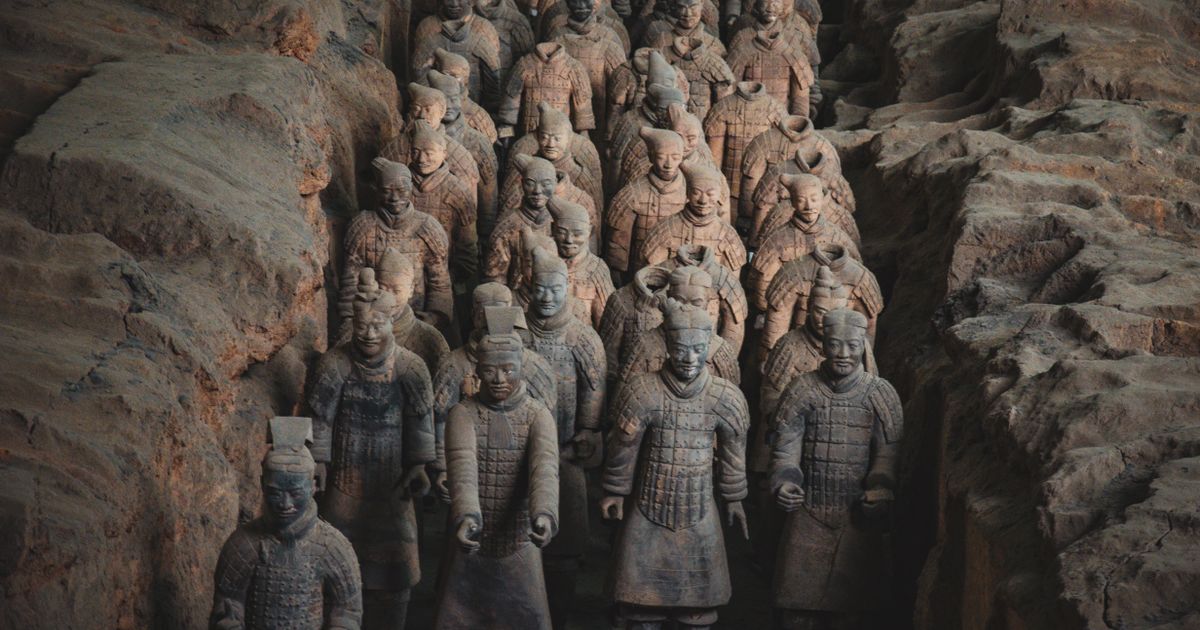
Rows of Terracotta Warriors standing in the excavation pit
What you are looking at
Ancient records say some 700,000 labourers worked on the emperor's mausoleum complex, and the warriors were its garrison: an estimated 8,000 soldiers, 130 chariots and 670 horses, mass-produced from moulds and then finished by hand, which is why no two faces are alike. The figures originally carried real bronze weapons and were painted in bright colours. Traces of pigment survive on freshly excavated warriors, and conservators now work to stabilise the paint the moment a new figure comes out of the soil, one reason excavation moves so slowly.
The three pits, and the order to see them in
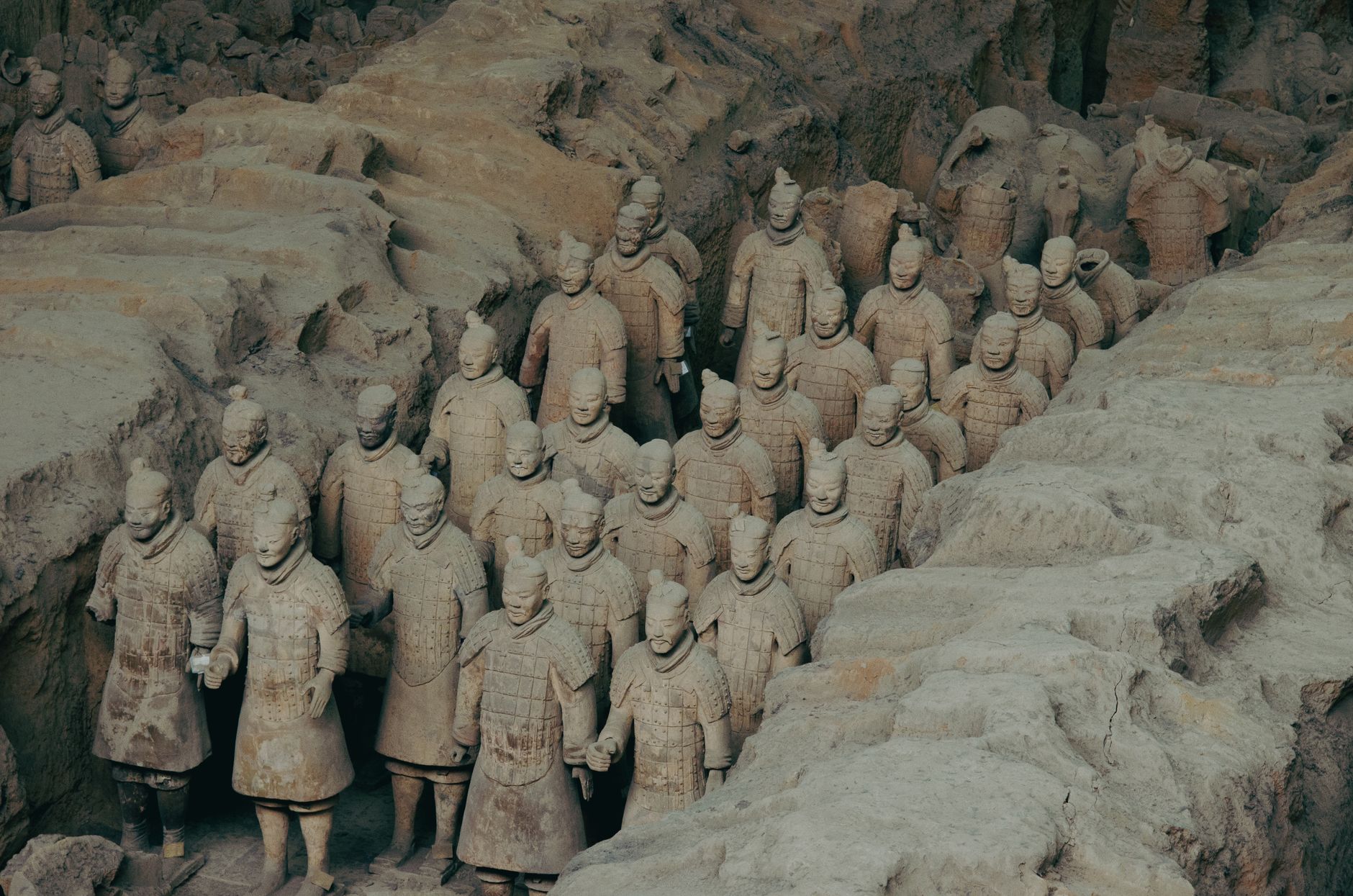
- Pit 1 is the one from the photographs: a hangar-sized hall where corridors of restored infantry stand in battle formation. The classic view is from the raised platform at the front, looking down the columns.
- Pit 2 holds the cavalry, archers and chariot units, plus several star figures (including the kneeling archer) displayed in glass cases at eye level. It is the best place to study armour, hairstyles and faces up close.
- Pit 3 is the smallest and is read by archaeologists as the army's command post.
Most guides walk Pits 3 and 2 first and save Pit 1 for last, so the visit builds instead of peaking at the entrance. If you go unguided, it is worth copying that order. A licensed guide or audio guide earns its keep here: without the context of how the army was made, buried, burned and rediscovered, the pits can read as rows of statues.
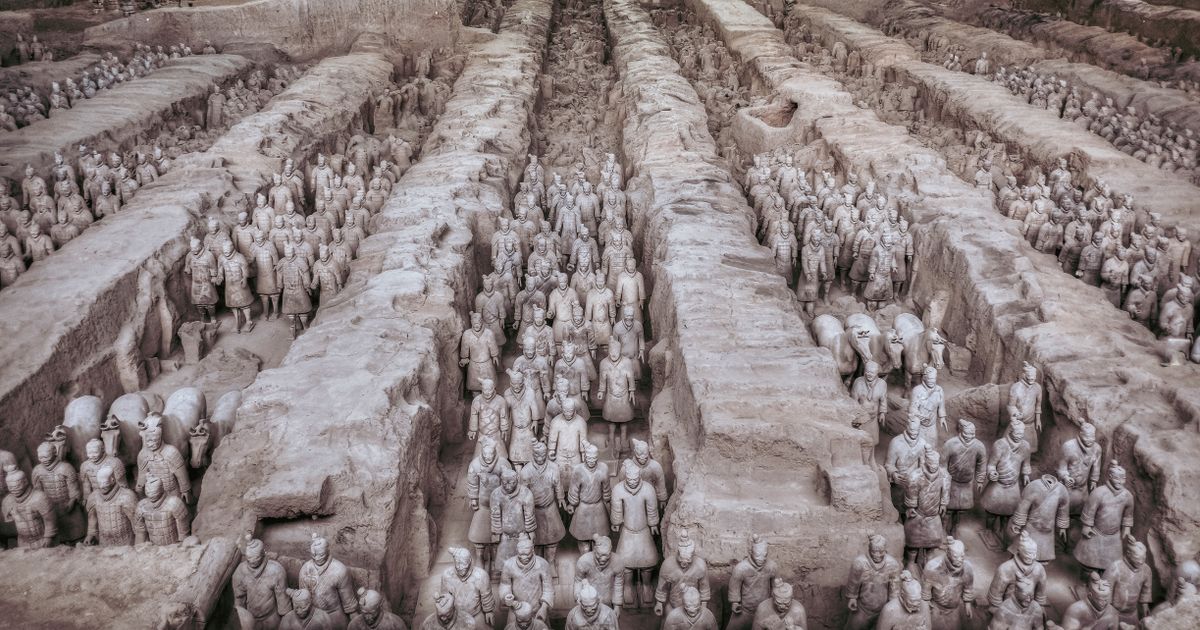
The vast Pit 1 with hundreds of warriors arranged in battle formation
The Bronze Chariots have moved to Lishan Garden
Two half-scale painted bronze chariots, unearthed in 1980 beside the emperor's burial mound, were long displayed next to the pits. Since May 2021 they have had their own purpose-built underground museum in Lishan Garden, the part of the site around the tomb mound itself, a short free shuttle ride from the pits and covered by the same ticket. They are among the finest bronze objects ever found in China, and because most tour groups skip Lishan Garden entirely, the hall is often quiet. Leave time for the detour.
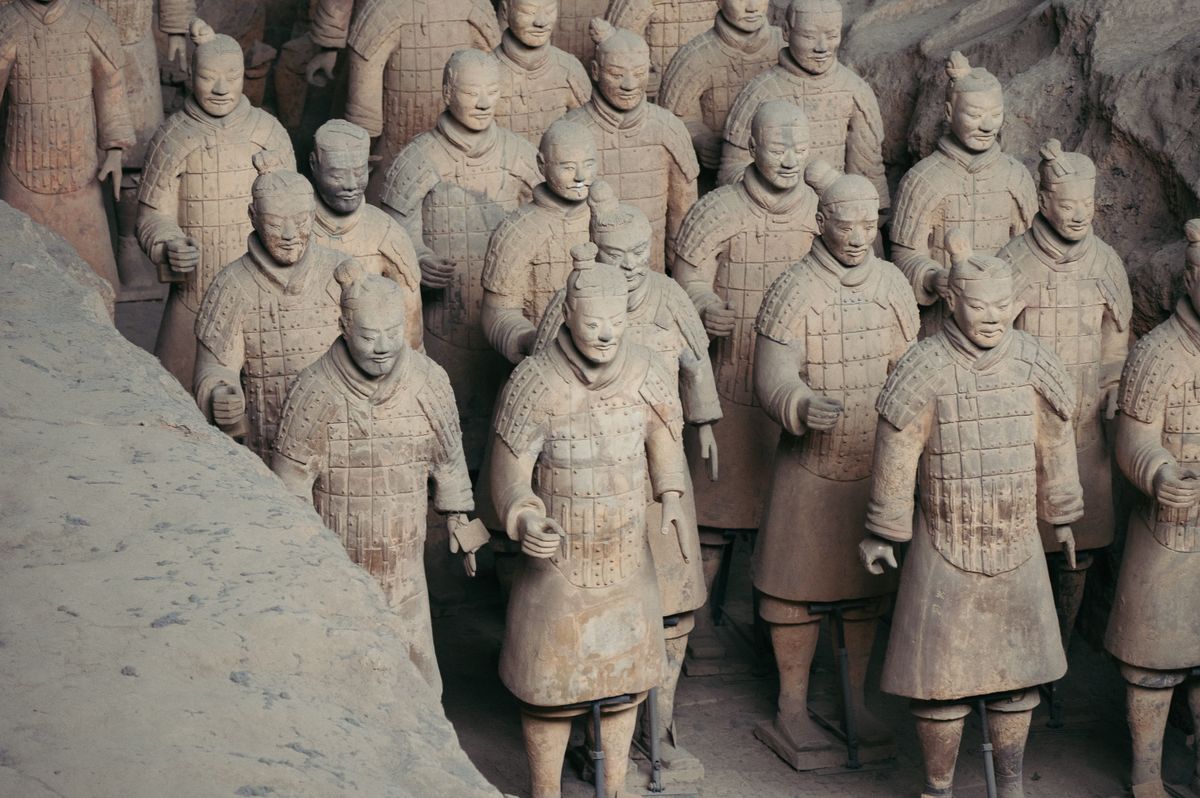
Close-up detail of individual terracotta warriors showing unique faces and armour
Tickets and timing
The museum sells tickets through a real-name online reservation system, on its official website and WeChat account, with each ticket tied to a passport or ID number that is checked at the gate. The official booking flow is in Chinese, so most foreign visitors reserve the same timed-entry tickets through Trip.com or Klook instead. Book as soon as your dates firm up: ordinary days are usually fine a few days out, but holiday weeks sell out well ahead. Admission covers all three pits, Lishan Garden and the shuttle between them; check the current price when you book.
As of 2026 the site opens at 8:30, with last admission at 17:00 in peak season (April to October) and 16:30 in the winter months. Tour groups arrive in waves from mid-morning, so an early start buys you a quieter Pit 1 and cooler walking in summer.
Getting there
- Metro + bus: Line 9 to Huaqingchi station (Exit C), then bus 602, 613 or Tourist Line 5 (306) for the final stretch to the museum.
- Direct bus: Tourist Line 5 (306) runs the whole way from the east square of Xi'an Railway Station.
- Taxi or Didi: about an hour from the city centre. Arrange your return trip in advance rather than counting on hailing a car at the site near closing time.
Allow at least half a day, and wear shoes you can walk in: the grounds are spread out and shade is scarce between the halls.
Highlights
- Around 8,000 life-sized warriors, each with a unique face, hairstyle and expression
- Pit 1, a hangar-sized hall of infantry in full battle formation: the iconic view
- The painted Bronze Chariots, now in their own underground museum at Lishan Garden
- A UNESCO World Heritage Site and one of the great archaeological finds of the 20th century
- One ticket covers the three pits, Lishan Garden and the shuttle bus between them
Travel Tips
Book ahead with your passport
Tickets are real-name and sold online via the official site and WeChat, matched to your passport at the gate. The official flow is in Chinese, so most foreign visitors book the same timed tickets on Trip.com or Klook. Holiday dates sell out well ahead.
Opening hours
The site opens at 8:30, with last admission at 17:00 in peak season (Apr-Oct) and 16:30 in winter (as of 2026). An early start beats the mid-morning tour-group wave.
See the pits in the right order
Walk Pits 3 and 2 first and save Pit 1 for last, so the visit builds instead of peaking at the entrance.
Don't skip Lishan Garden
The painted Bronze Chariots moved to a purpose-built underground museum there in 2021. Your ticket includes it, and a free shuttle runs from the pits.
Getting there
Metro Line 9 to Huaqingchi (Exit C), then bus 602, 613 or Tourist Line 5 (306). Tourist Line 5 also runs direct from Xi'an Railway Station; a taxi or Didi takes about an hour.
Suggested itineraries
Related reading
How to Book China's High-Speed Trains (12306 & Trip.com): 2026 Guide
8 min read

Arriving in China: Entry, Immigration & Customs Guide (2026)
8 min read

Do You Need a Visa for China? (2026 Visa-Free Entry Guide)
8 min read

China Itinerary: The Perfect 10 Days for First-Time Visitors (Beijing, Xi'an & Shanghai)
9 min read