Guangzhou
Chen Clan Ancestral Hall
This building was crowdfunded, 1880s style. Chen families from all 72 counties of Guangdong pooled donations to raise a shared ancestral temple and study hall in the provincial capital, with Chen Lanbin, China's first envoy to the United States, among the names behind the appeal. Built between 1888 and 1894, the Chen Clan Ancestral Hall (Chen Jia Ci, also called the Chen Clan Academy) gave clansmen a base while they prepared for the imperial examinations, and because every county wanted its money visible on the walls, it became the most extravagant showcase of Lingnan decorative craft anywhere. Today it houses the Guangdong Folk Art Museum.
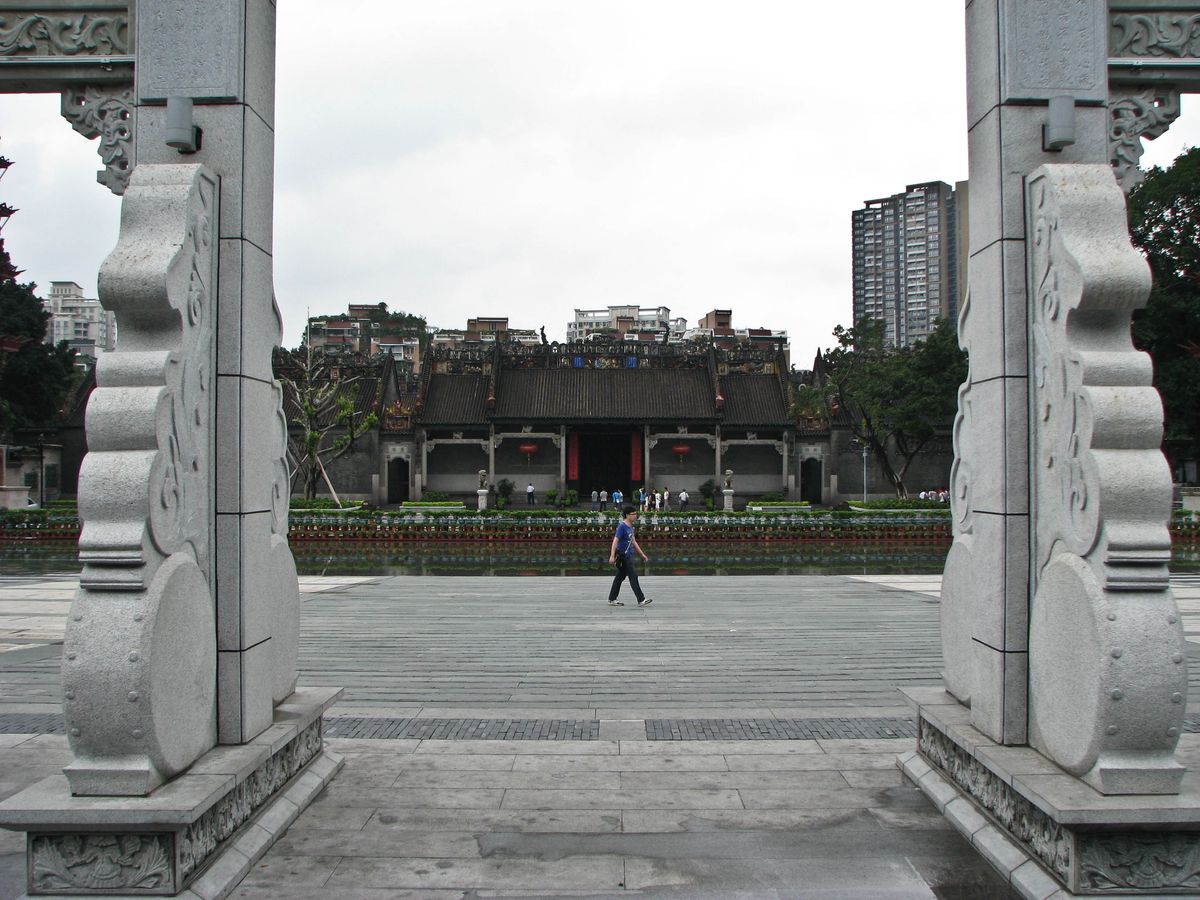
The main hall of the Chen Clan Ancestral Hall seen across the forecourt
What to see
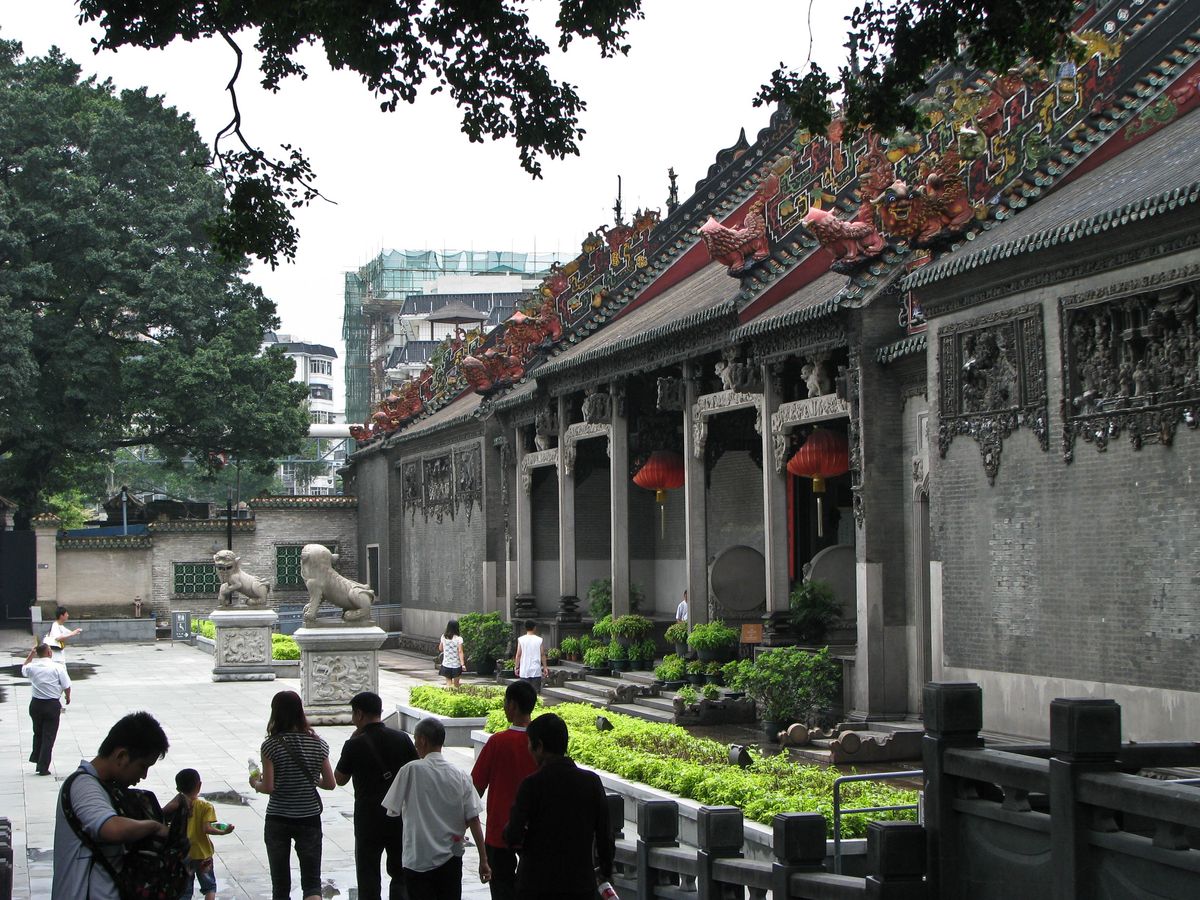
The complex is a symmetrical grid of nineteen buildings, nine halls and six courtyards linked by corridors, but visitors come above all for the surfaces. The ceramic roof ridges are the headline act: friezes of Shiwan pottery figures, whole opera scenes with dragons, flowers and mythical beasts, crown every hall in colour. Below them, look for wood carving on screens and beams, brick carving on the exterior walls, stone carving on the balustrades, and rarer lime sculpture and iron casting, the full set of Lingnan building crafts in one compound. Inside, the museum's galleries display ivory carving, embroidery, jade and other folk arts of the Guangdong region.
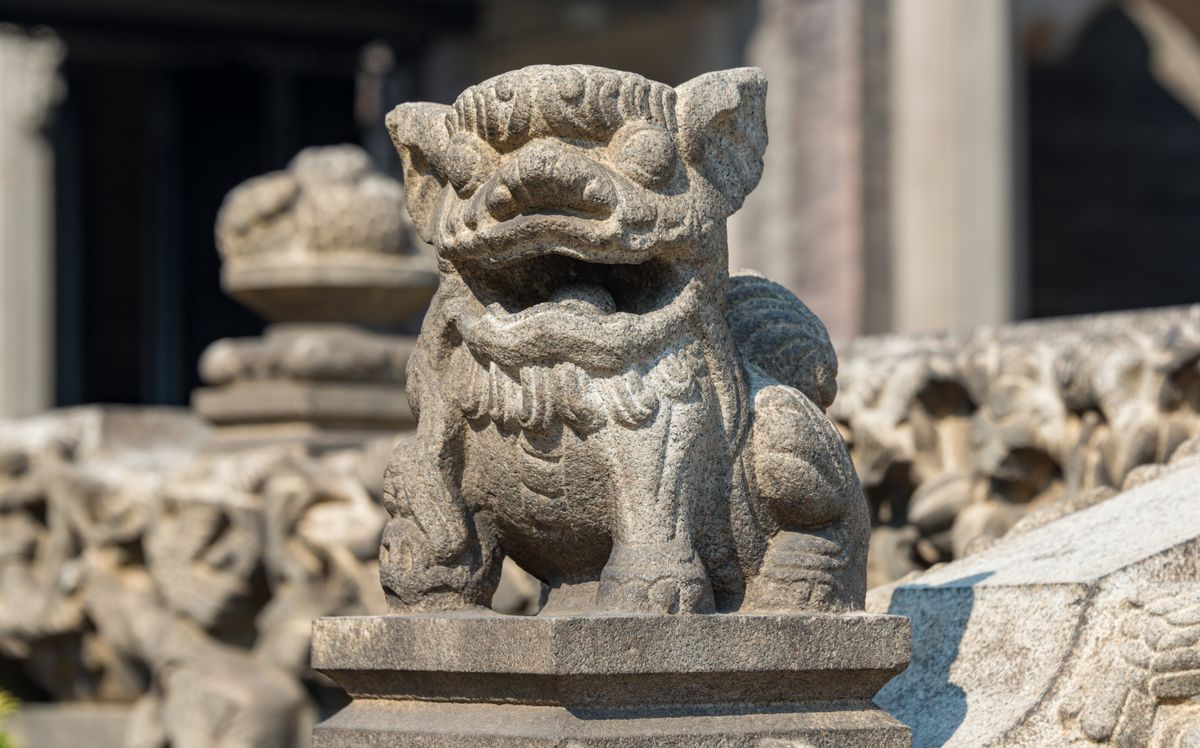
A carved stone guardian lion at the Chen Clan Ancestral Hall
Hours and tickets
Open daily from morning until late afternoon, typically about 09:00 to 17:30, with ticket sales ending before closing; check current times if you are cutting it fine. Entry costs a token amount, one of the smallest heritage tickets in Guangzhou, with discounts for students and seniors carrying valid ID. Audio guides can be rented at the entrance. Give yourself at least an hour before closing to walk the three main halls without rushing.
Getting there
Take Metro Line 1 or Line 8 to Chen Clan Academy (Chenjiaci) station; the hall is a short signposted walk from the exits. It pairs naturally with the old streets and teahouses of surrounding Liwan district.
When to go
A clear morning, when soft light rakes across the roof ridges and the courtyards are still quiet, beats any other slot; tour groups arrive from mid-morning. Spring and autumn are the most comfortable seasons. The carvings reward slow, close looking, so bring binoculars or a zoom lens for the rooftop opera scenes.
Practical notes
The site is compact and fully walkable in about ninety minutes. Photography is allowed throughout, though tripods may be restricted inside the exhibition halls.
Highlights
- Shiwan ceramic opera scenes crowning every roof ridge in colour
- Wood, brick and stone carving plus lime sculpture and iron casting, the full Lingnan craft set
- Nineteen buildings, nine halls and six courtyards in a symmetrical Qing-era layout
- Funded in the 1880s by Chen families from all 72 counties of Guangdong
- The Guangdong Folk Art Museum's ivory, jade and embroidery galleries
- Steps from Chenjiaci metro station on Lines 1 and 8
Travel Tips
Look up close
The rooftop ceramic friezes hold the finest detail; bring binoculars or a zoom lens to read the opera scenes.
Go at opening
Arrive on a clear morning before the tour groups to photograph the courtyards in soft raking light.
Pair with Liwan
Combine the visit with the old streets and teahouses of the surrounding Liwan district.