Guangzhou
Shamian Island
Shamian owes its existence to a ditch. In 1859, after the Second Opium War, Britain and France had a canal dug along the northern edge of a Pearl River sandbank, turning it into an island they then split between themselves, three fifths British, two fifths French. For nearly a century this quarter-square-kilometre islet was a gated foreign enclave of consulates, banks, churches and trading houses, and its quiet grid still holds more than 150 European-style buildings. Central Guangzhou roars a footbridge away; on the island the loudest sound is usually a wedding photographer directing a couple under the banyans.
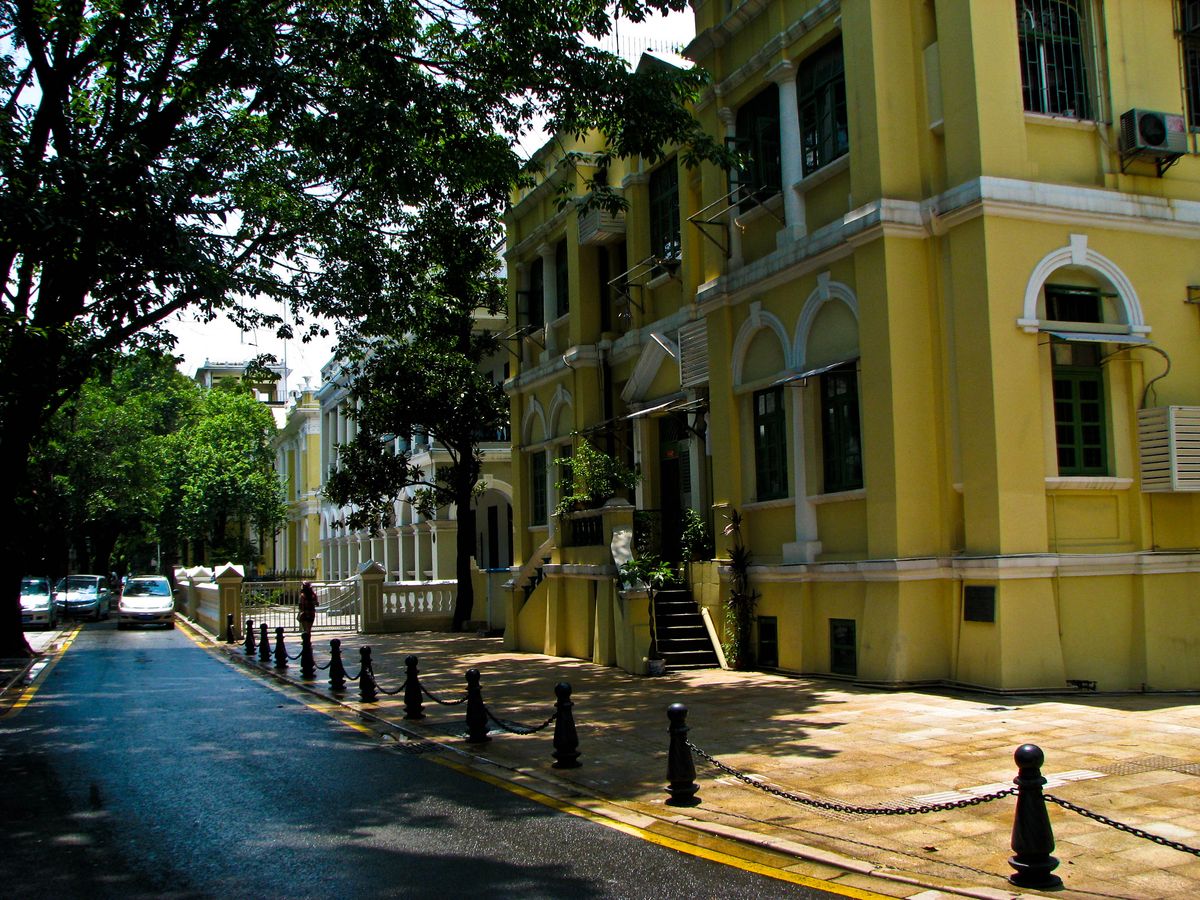
A pastel colonial mansion on a tree-lined street of Shamian Island
Reading the streets
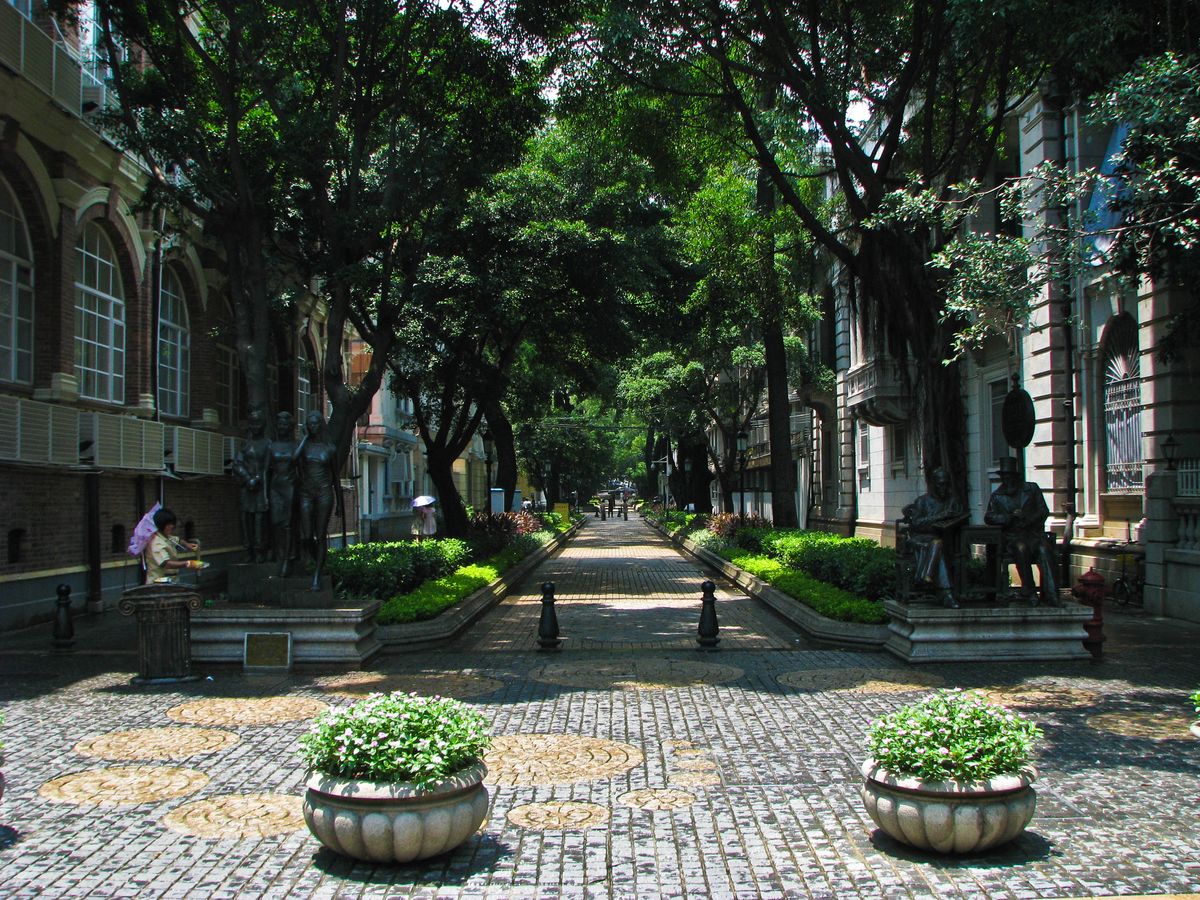
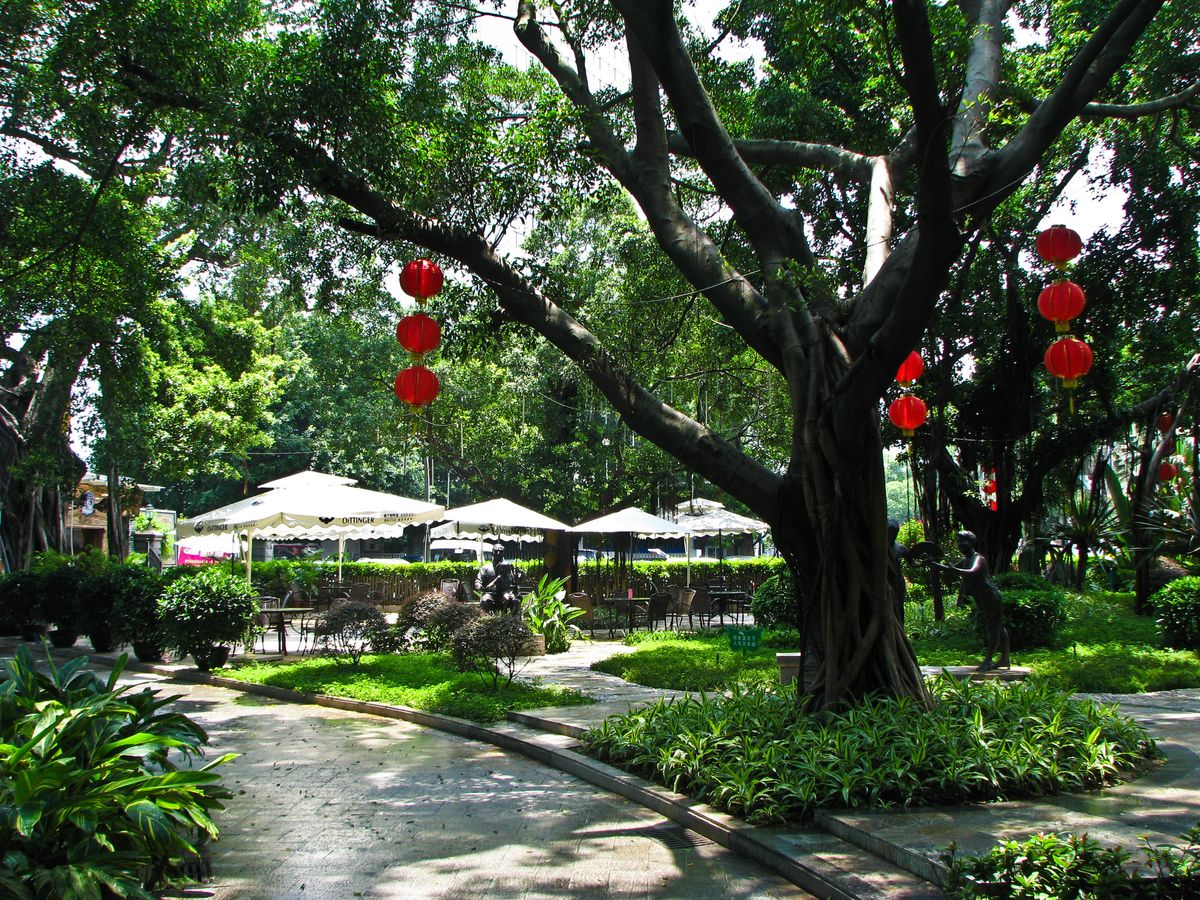
There is no single monument here; the island itself is the sight. Walk Shamian Dajie, the central boulevard, under banyans whose canopies meet overhead, past pastel mansions in neoclassical, baroque and veranda-wrapped treaty-port styles, many now cafes, boutique hotels and offices. Two churches bookend the concession story: the red-brick Christ Church of 1865, built for the British Protestant community at the western end, and the French Catholic chapel of Our Lady of Lourdes, finished in 1892, near the eastern end. Bronze sculptures along the gardens replay scenes of old Canton, and the southern embankment looks out over the Pearl River, with the White Swan Hotel anchoring the island's southwest corner.
The adoption chapter
The island's strangest modern role is invisible unless you know to look. The 28-storey White Swan Hotel, opened in 1983 as one of China's first luxury hotels, spent two decades as the last stop for American families adopting Chinese children, because the US consulate that issued the visas sat on Shamian until it moved across town in 2013. Thousands of families walked these lanes with new daughters and sons, which is why the island still turns up in adoption memoirs, and why some visiting families treat the walk as a pilgrimage.
A tree-lined garden boulevard with sculptures on Shamian Island
Two bridges in, no ticket needed
Shamian is a public neighbourhood: free, ungated and open at all hours, with only the churches keeping their own daytime hours. The neat way to see it is to enter at one end and leave at the other. Take metro Lines 6 or 8 to Cultural Park station, Exit E, about four minutes' walk from the eastern entrance; cross the island at strolling pace; then leave over the footbridge at the western end to Huangsha station on Lines 1 and 6, Exit F. Qingping Market, the traditional medicine bazaar, sits just across the canal, and the Shangxiajiu pedestrian street is a short walk beyond it, so old Liwan fills the rest of the day naturally.
Timing the light
Come early morning, when locals practise tai chi in the gardens and the low sun cuts through the banyans, or in the last hour before dusk. Weekends belong to wedding couples and their photographers, who claim the prettiest facades by mid-morning. Spring and autumn are the kindest seasons; in Guangzhou's steamy summer the island's deep shade is one of the coolest places to be outdoors. Flat and compact, the whole island circles comfortably in one to two hours with a coffee stop.
Highlights
- More than 150 preserved European buildings on a man-made concession island from 1859
- Shamian Dajie's banyan-shaded central boulevard, made for slow walking
- Christ Church (1865) and the French chapel of Our Lady of Lourdes (1892)
- The White Swan Hotel and the island's American adoption history
- Bronze sculptures of old Canton life along the garden boulevards
Travel Tips
Enter east, leave west
Arrive via Cultural Park station (Lines 6/8, Exit E), walk the length of the island, and exit over the Huangsha footbridge (Lines 1/6, Exit F). You see everything without backtracking.
Best light early or late
Early morning and the hour before dusk give the softest light through the banyans and the thinnest crowds; weekend mid-mornings fill with wedding shoots.
There is no ticket
The island is a free public neighbourhood, open around the clock. Only the churches keep their own daytime hours.
Combine with Qingping
Qingping Market sits just across the canal and Shangxiajiu pedestrian street a short walk further, so Shamian slots naturally into a day in old Liwan.