Guangzhou
Sun Yat-sen Memorial Hall, Guangzhou
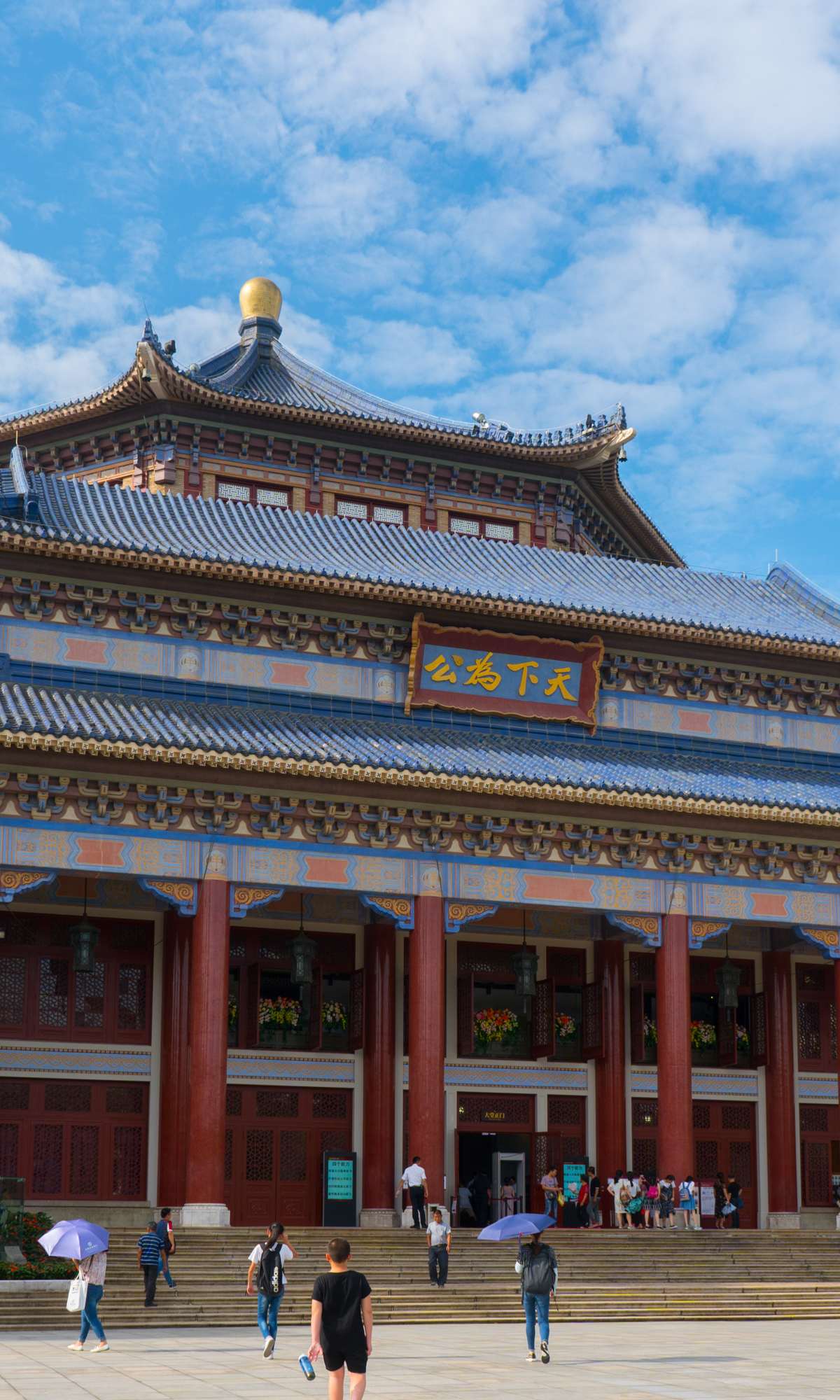
The engineering is the reason to walk in rather than just photograph the roof. When the Sun Yat-sen Memorial Hall opened in 1931, its architect Lü Yanzhi (who also designed Sun's mausoleum in Nanjing) had pulled off something no Chinese theatre had attempted: an auditorium of about 3,200 seats under a dome spanning roughly 71 metres, with not a single pillar between any seat and the stage. From outside you see a classical octagonal palace in deep-blue glazed tiles at the foot of Yuexiu Hill; inside, it is a piece of early modern structural bravado, and it still works for a living as a theatre and concert venue.
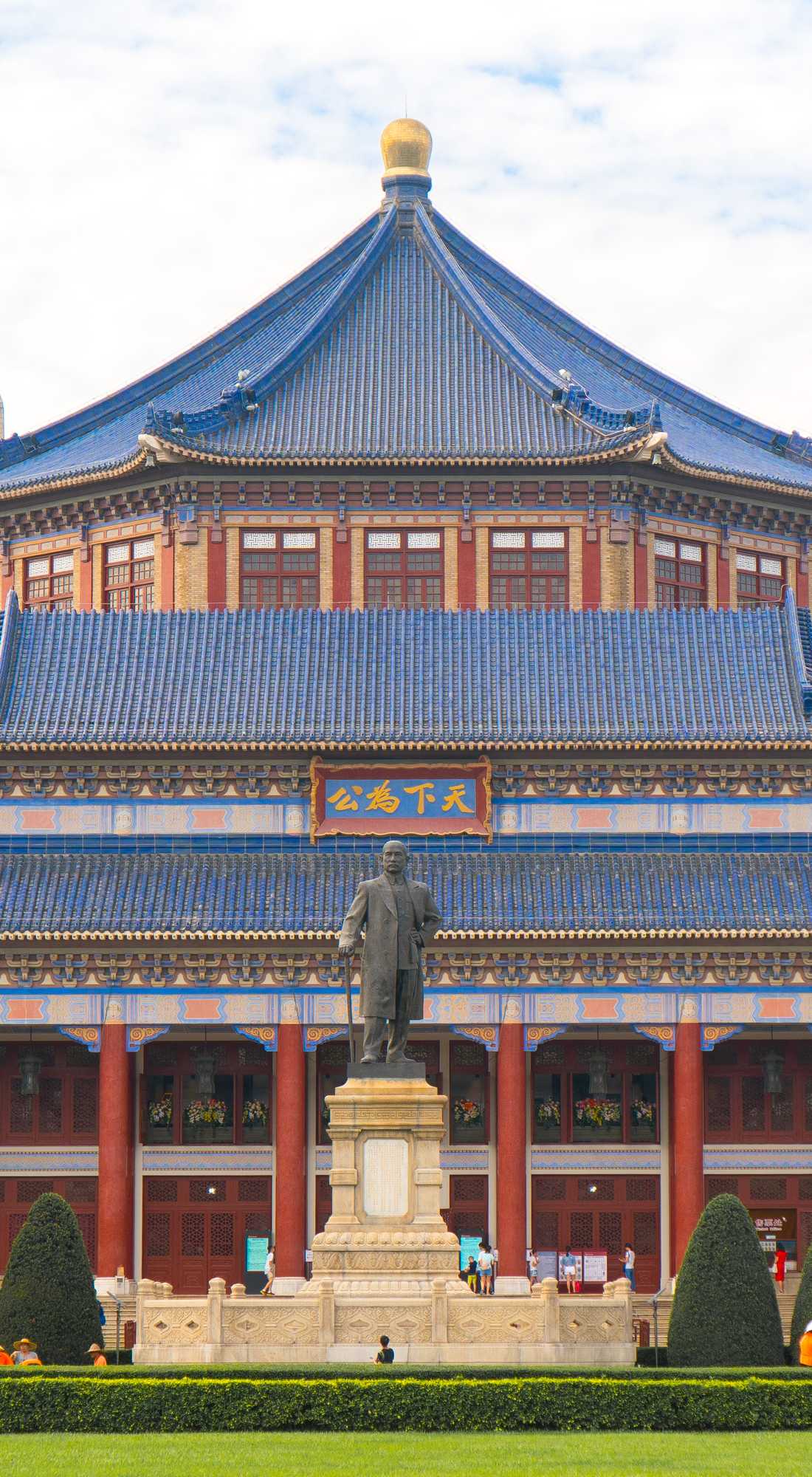
Sun Yat-sen Memorial Hall, the blue octagonal hall framed by topiary and the Sun Yat-sen statue
What to look for
Above the main entrance hangs the gilded plaque "Tianxia wei gong" (tian xia wei gong, "the world belongs to all") in Sun Yat-sen's own calligraphy, the phrase he borrowed from the Confucian classics as a slogan for the republic. A bronze statue of Dr. Sun stands in the broad forecourt, and the gardens around the hall shelter old banyans and a celebrated ancient kapok tree that turns red with blossom in early spring. The hall was funded by donations from Guangzhou residents and overseas Chinese communities, which is part of why the city treats it with such affection.
Hours, tickets and how entry works
The gardens are open to wander without a ticket; you pay a small fee only to enter the main hall and its exhibition rooms, with free entry for seniors over 65 and reduced rates for students in most cases. The site opens daily from the morning until late afternoon, with last entry shortly before closing; exact hours have varied between sources and seasons, so check the current schedule before a tightly planned visit. One thing worth knowing: the auditorium is a working venue, so on performance days parts of the interior can close to sightseers, and an evening concert is also a legitimate way to see the dome from a seat instead of a rope line.

The grand front facade of the Sun Yat-sen Memorial Hall under a blue sky
Getting there
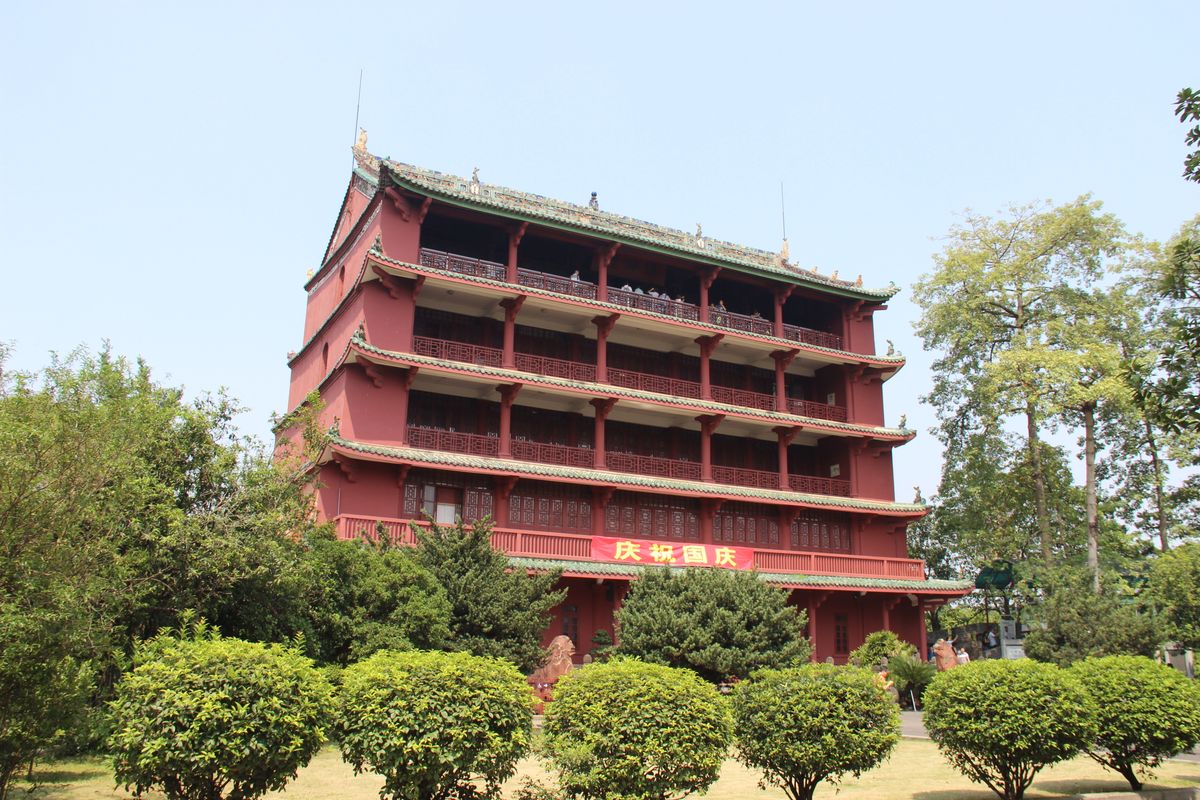
Metro Line 2 stops at Sun Yat-sen Memorial Hall station (Jinian Tang); Exit C leaves you about 150 metres from the gate. Buses along Dongfeng Middle Road stop at the Memorial Hall stop. The location makes a natural half-day chain: climb Yuexiu Hill behind the hall for Zhenhai Tower and the Guangzhou Museum, then continue to the Five Rams statue in Yuexiu Park.
When to go
Mornings are quietest and give the kindest light on the blue roof. March is kapok season, when the old tree by the hall flowers red. October to December brings Guangzhou's driest, most comfortable weather; summer visits are best kept to early morning before the heat and the tour groups arrive. Weekend and holiday afternoons are the busiest window.
Highlights
- Octagonal hall roofed in deep-blue glazed tiles, built 1929 to 1931
- A roughly 3,200-seat auditorium under a 71-metre dome with no interior pillars
- Sun Yat-sen's gilded calligraphy plaque Tianxia wei gong above the entrance
- Bronze statue of Dr. Sun and gardens with an ancient red-blossom kapok tree
- Still a working theatre and concert hall, funded originally by public donations
Travel Tips
Combine with Yuexiu Hill
Pair the hall with Zhenhai Tower, the Guangzhou Museum and the Five Rams statue on the hill behind it for a half-day of history.
Go early
Mornings are quietest and the soft light best flatters the blue glazed roof; weekend and holiday afternoons are the peak crush.
Free gardens, paid hall
Wandering the grounds costs nothing; a small ticket covers the main hall and exhibits. On performance days parts of the interior may be closed to visitors.
March for the kapok
The ancient kapok tree by the hall flowers red in early spring, the most photogenic moment of the year for the grounds.