Dunhuang
Western Thousand Buddha Caves
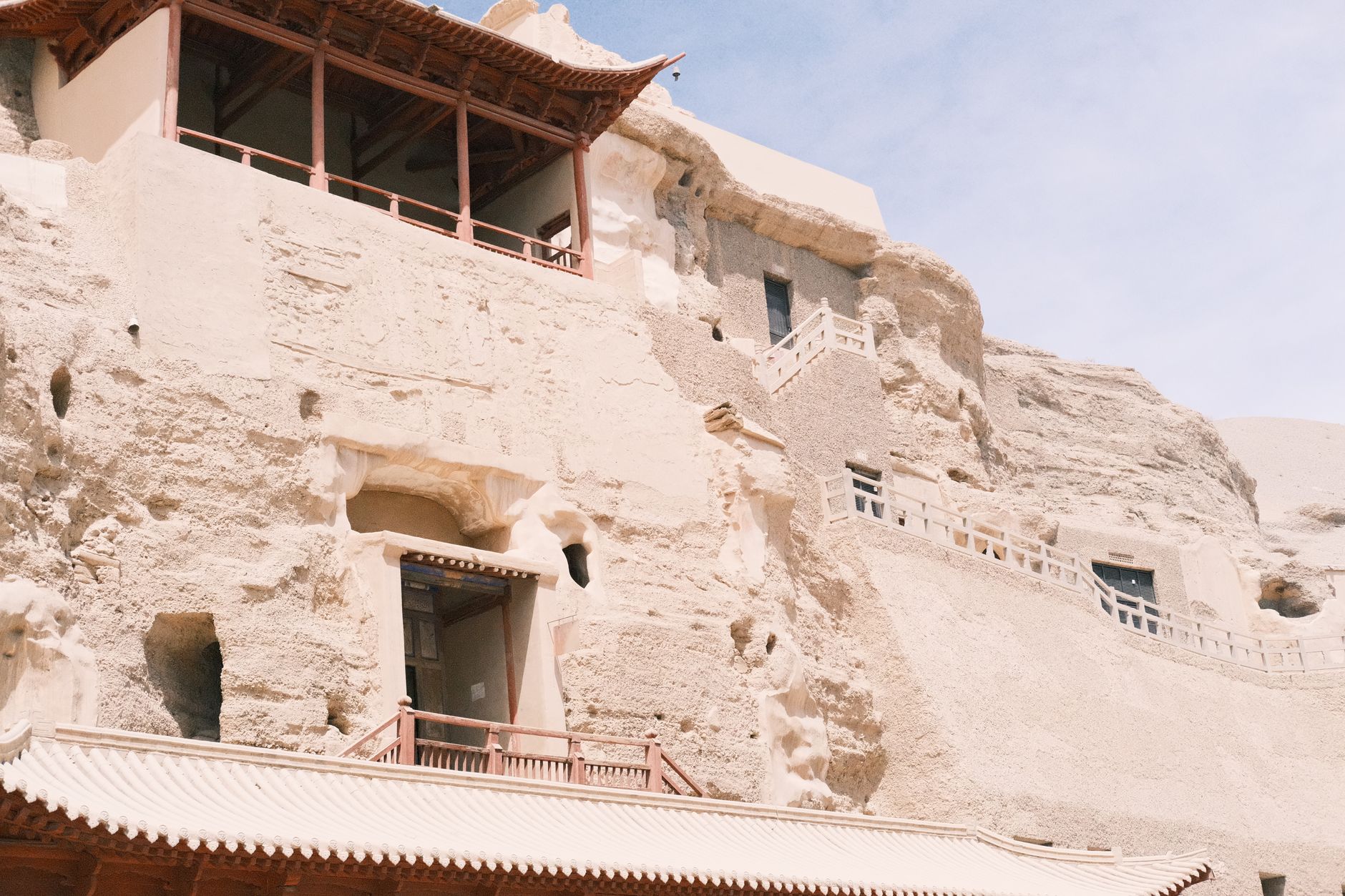
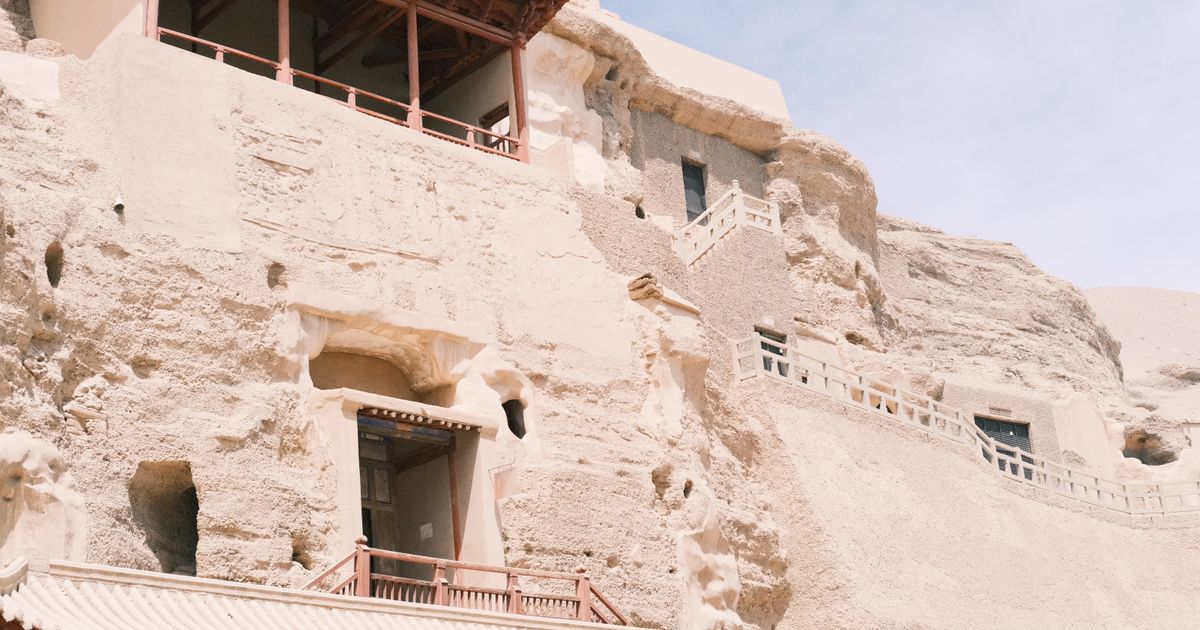
The cliff face of the Western Thousand Buddha Caves above the Dang River
Most people who reach Dunhuang see the Mogao Caves and stop there. The Western Thousand Buddha Caves (Xiqian Fodong) sit about 35 km southwest of town, cut into a cliff above the Dang River, and hardly anyone makes the trip. That is the appeal: the same early Dunhuang mural tradition, seen up close with a guide, above a green river gorge instead of a ticket queue.
What survives in the cliff
Sixteen grottoes remain here, carved from the Northern Wei period (386-534) onward with some later work into the Tang. About nine are preserved well enough to enter; the others can only be viewed from the walkway outside. Between them they hold roughly 800 square metres of wall painting and around 34 painted clay figures: serene Buddhas and bodhisattvas, flying apsaras, and Jataka scenes, worn and intimate in a way the crowded Mogao caves rarely allow.
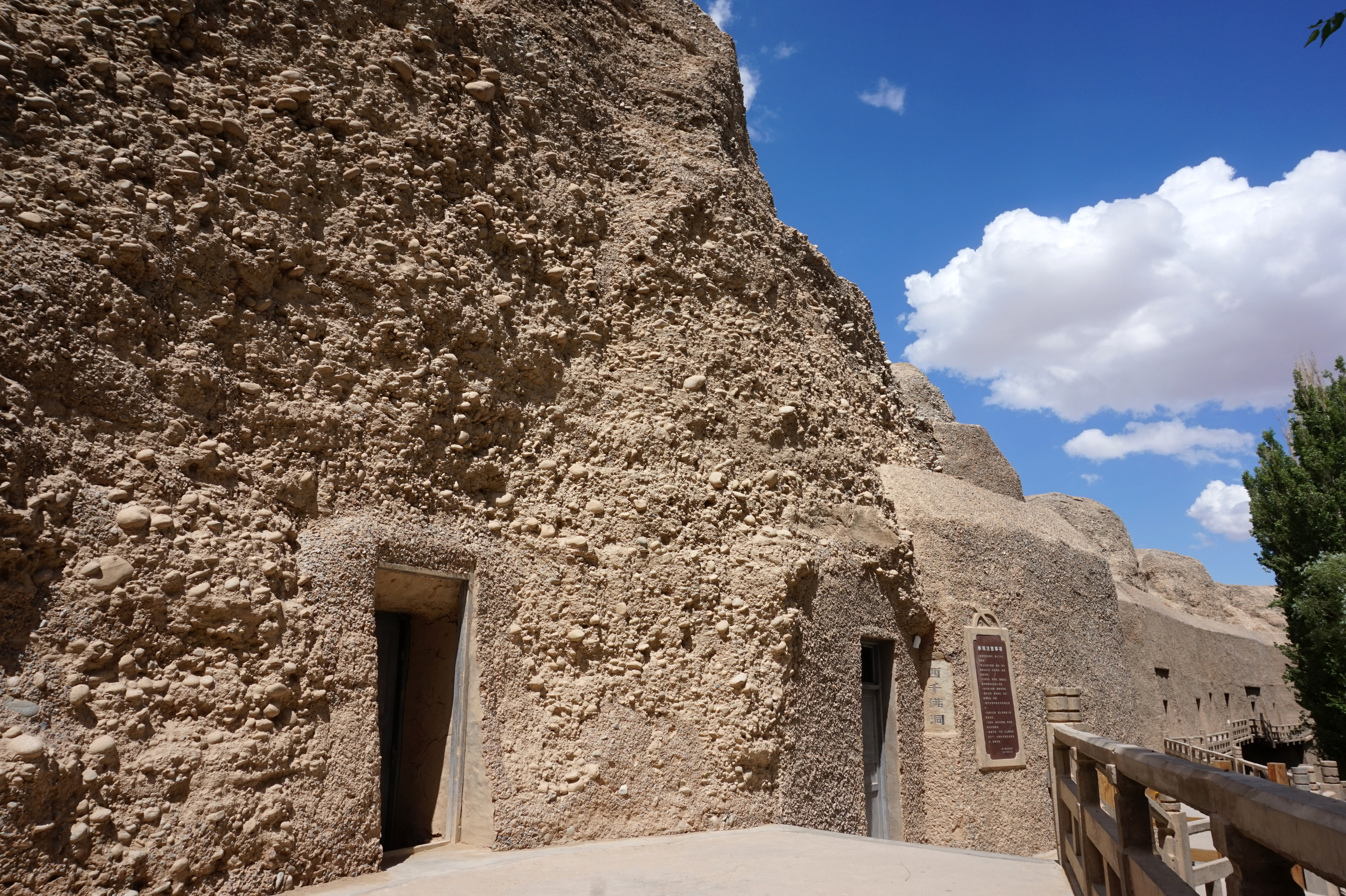
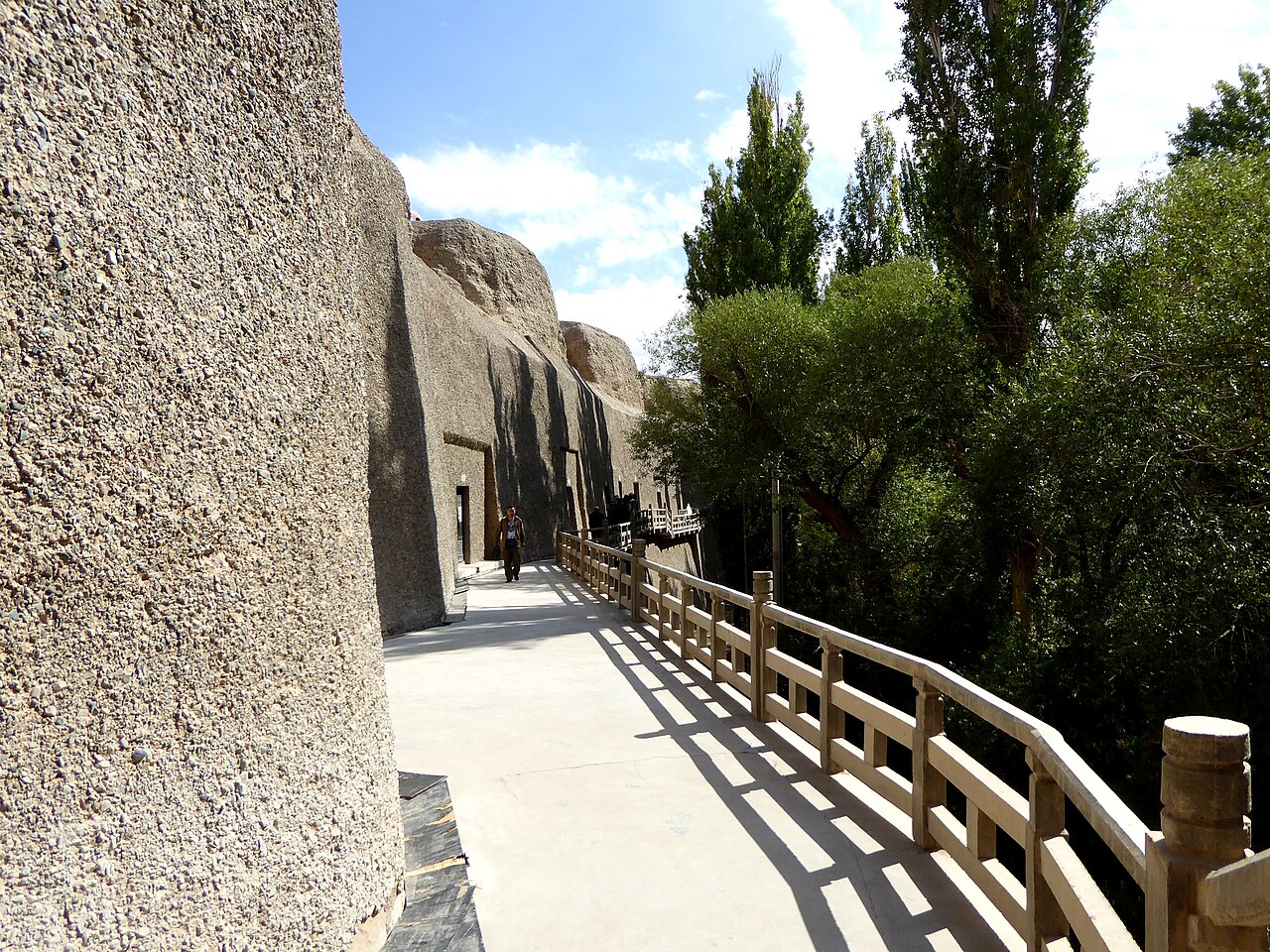
Cliffside walkway leading to the grottoes among riverside trees
How a visit works
You reach the caves along a walkway cut into the cliff, and a guide unlocks and explains each open grotto in turn rather than letting you wander alone. Most visits run one to two hours. As at Mogao, photography inside the caves is not permitted, to protect the pigments, so leave the camera in your bag and put your questions to the guide instead.
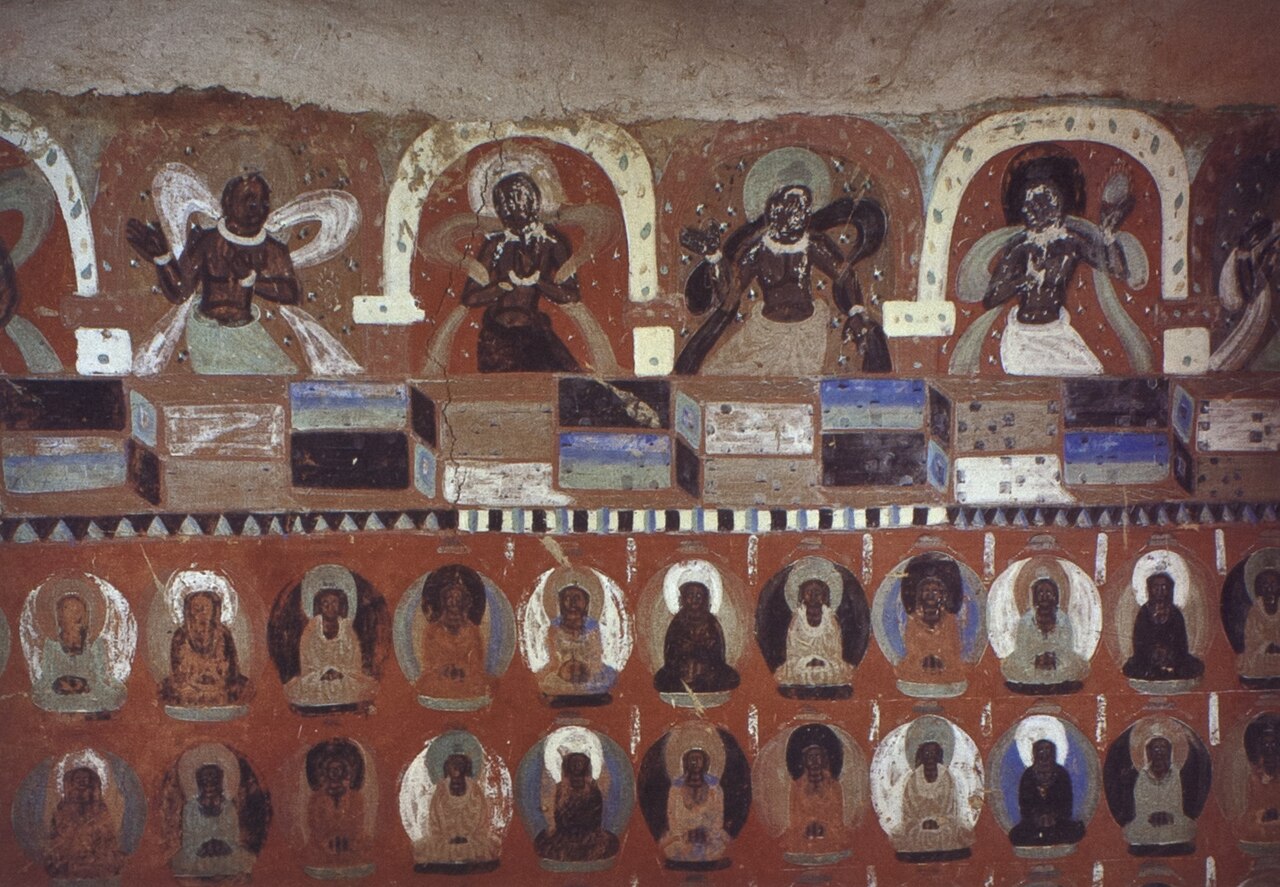
Ancient Buddhist mural inside a Northern Wei grotto
Getting there
There is no public bus. The site is roughly a 40 to 50 minute drive from central Dunhuang, so most people arrive by taxi or chartered car. Because it lies on the road running southwest out of town, it can be folded into a west-line day trip that also reaches the Yumen Pass and the Yadan badlands. Hiring a car or joining a small-group day tour usually works out simpler than arranging a one-off taxi both ways: Dunhuang west-line day tours. Confirm the caves are open before you set out, as they sometimes close for conservation.
Opening hours and fees
Open daily on seasonal hours: roughly 08:30-17:00 in the warmer months and a shorter window (about 09:00-16:30) in winter, with last entry in the mid-afternoon. Admission is inexpensive, and every visit is guided to protect the fragile paintings. Check the current timetable the day before, since conservation work can change access without much notice.
When to go
April to October is the comfortable range, with spring and autumn the most pleasant and mornings cool and quiet. Bring water and a light layer, as the exposed riverside cliff catches the wind even in summer.
Highlights
- The uncrowded 'sister' site to the Mogao Caves, 35 km southwest of Dunhuang
- Sixteen cliff grottoes carved from the Northern Wei (386-534) into the Tang
- About nine caves open to enter; roughly 800 sq m of murals and 34 clay figures
- Guided cave-by-cave visits above the green Dang River gorge
- Flying apsaras and Jataka scenes seen up close, worn and intimate
- A green river oasis cutting through the surrounding desert
Travel Tips
Come for the slower pace
If a timed Mogao visit felt rushed, this is the same Dunhuang art with a guide, far fewer people, and time to ask questions.
No photography inside
Cameras are not permitted in the caves to protect the pigments; enjoy the murals with your eyes and save photos for the river gorge outside.
Confirm it is open, and sort transport
There is no public bus and the caves occasionally close for conservation, so check the day before and pre-arrange a taxi, car, or west-line day tour.