Dunhuang 2-Day Itinerary: Mogao Caves, Singing Sands & Silk Road Passes (2026)
Dunhuang sits at the end of the Hexi Corridor, roughly 1,100 km west of Xi'an, where the Gobi desert closes in from all sides and the Silk Road split into northern and southern branches. For over a thousand years this was the last provisioning stop before the deserts of the west, and the first reward for caravans coming home. That geography still shapes a visit today: the whole point of two days here is to see both the art that accumulated in this bottleneck town and the desert landscape that made it strategic.
The two-day structure is direct: Day 1 stays close to town: the Mogao Caves in the cool of the morning, the Mingsha dunes at sunset. Day 2 heads 80–180 km west into the open Gobi, visiting Yumen Pass, the Han Great Wall ruins and the Yardang badlands, all best done with a hired car or small-group tour.
Is Two Days Enough for Dunhuang?
Two full days covers the headline sights without rushing, and fits neatly into a wider China itinerary. A third day lets you slow down or add the Western Thousand Buddha Caves and Yangguan Pass. One day is possible but leaves you choosing between the caves and the dunes.
Best time to visit: May, June, September and October are the practical sweet spot: warm days, cool nights, good light. July and August hit 35°C+ but are still busy; visit the dunes at dawn or dusk and cover up. Spring can bring sandstorms, winter is cold but uncrowded. Year-round: hat, sunglasses, lip balm and high-SPF sunscreen are not optional in the desert.
Sand dunes on the edge of the Gobi near Dunhuang
This itinerary at a glance:
- Day 1: Mogao Caves (morning), Mingsha Mountain & Crescent Lake (sunset), Shazhou Night Market
- Day 2: Yumen Pass, Han Great Wall Ruins, Yardang National Geopark (sunset); Western Thousand Buddha Caves or Yangguan Pass as alternatives
- Base yourself in central Dunhuang, a walkable town where everything is a short taxi ride apart
- Book ahead: Mogao Caves tickets commonly sell out in peak season: reserve online well in advance
Day 1: Painted Caves and Singing Sands
Morning: Mogao Caves
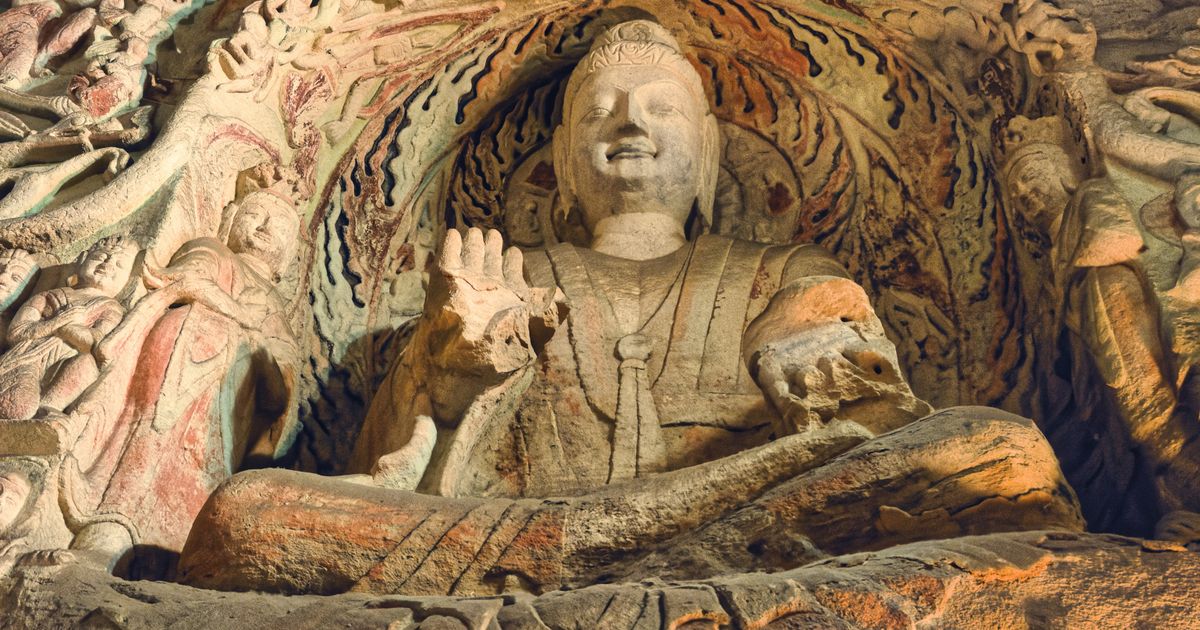
Start at the Mogao Caves, a honeycomb of 735 grottoes carved into a cliff over a thousand years, filled with painted murals and clay statues spanning ten dynasties. Photography is not allowed inside the caves.
Mogao Caves Tours
Book an English-guided Mogao tour with tickets included
Some links are affiliate links; we may earn a commission at no extra cost to you.
Late afternoon: Mingsha Mountain & Crescent Lake
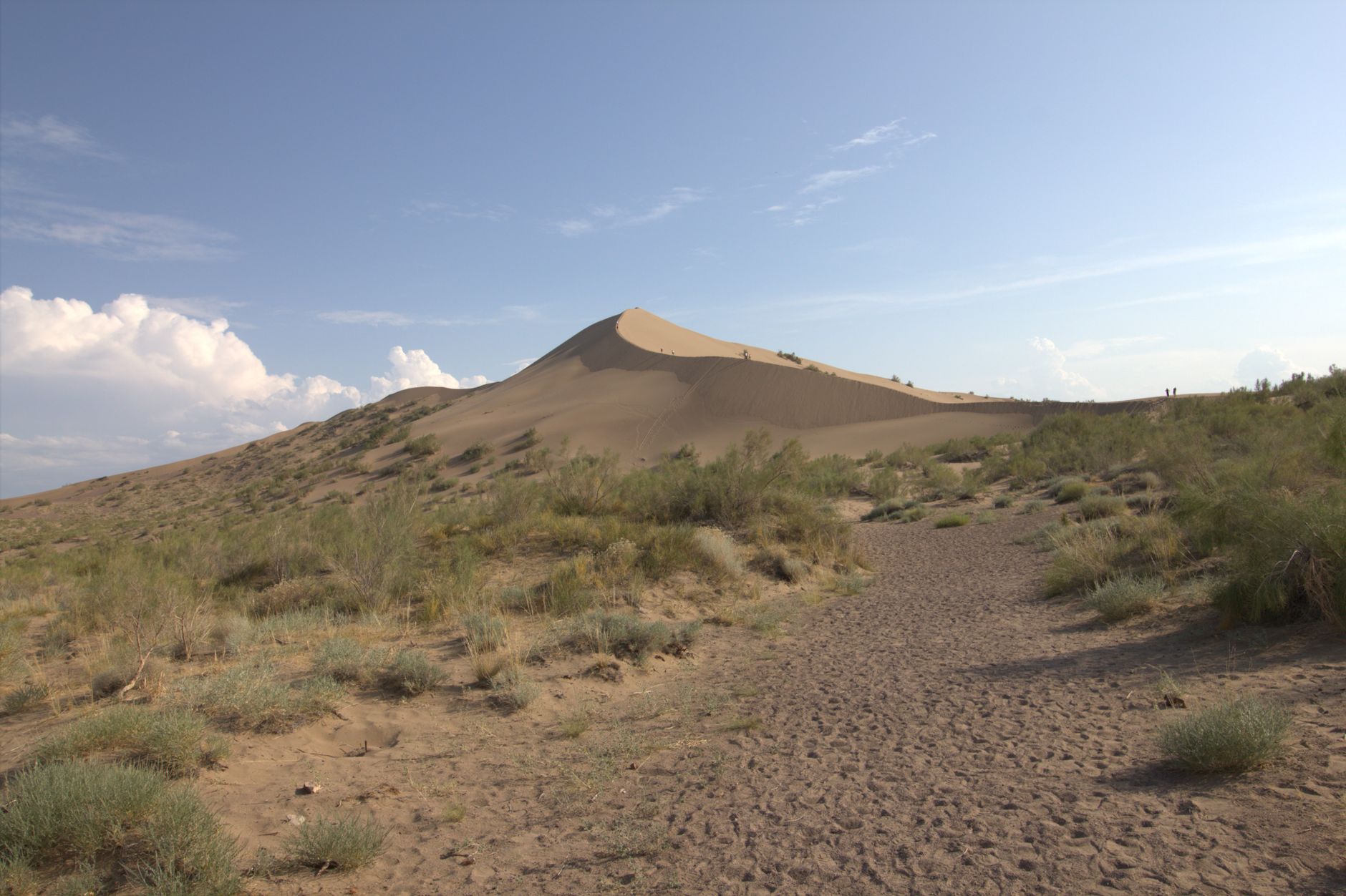
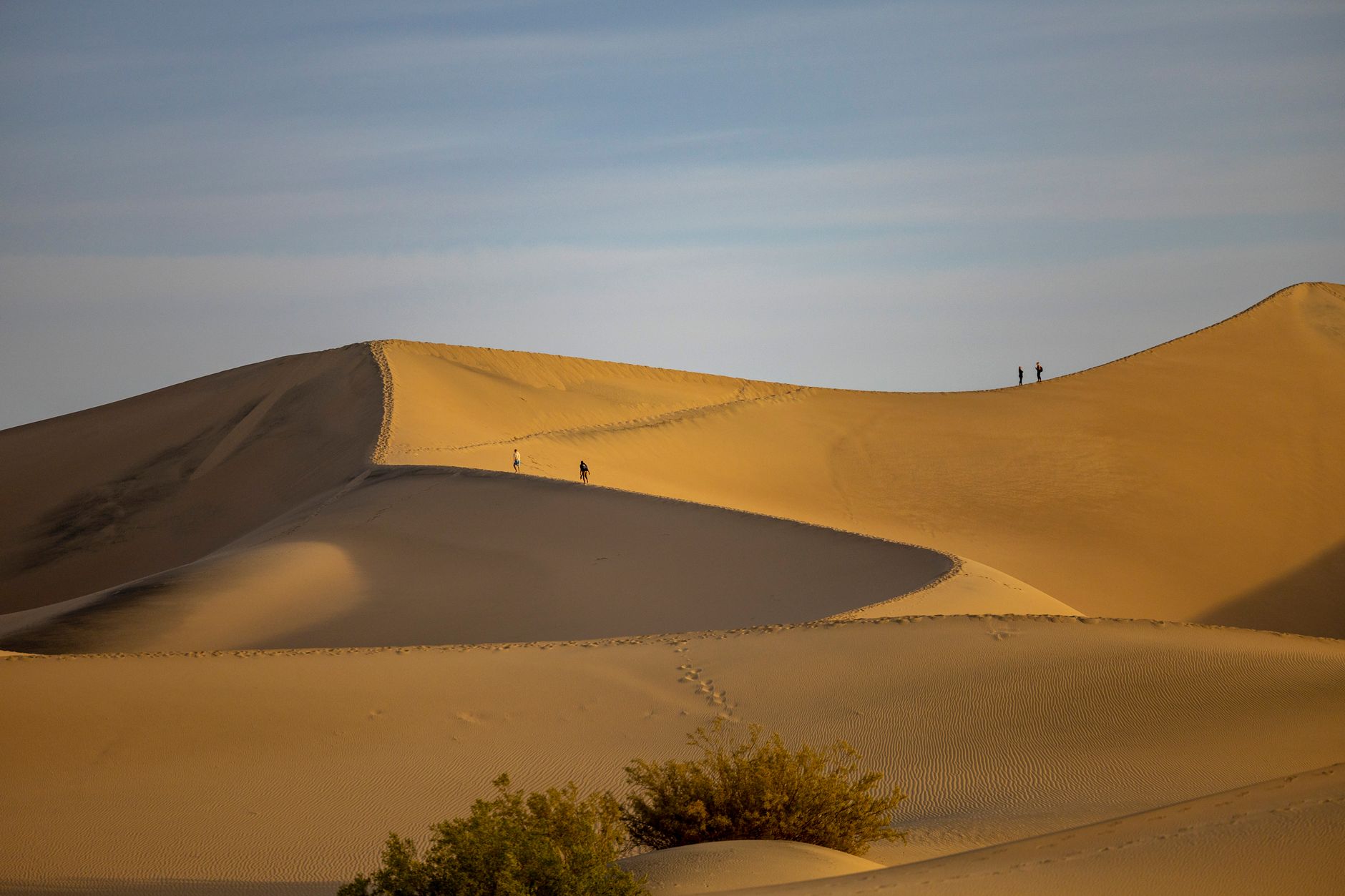
A short drive from town, Mingsha Mountain and Crescent Lake is the postcard of Dunhuang: towering dunes that hum as the wind moves them, wrapped around a crescent-shaped spring that has survived in the sand for two thousand years. Ankle gaiters are rentable at the gate for a small fee, and they are worth it: fine desert sand gets everywhere fast. Camel rides run in caravan formation across the dune base. You can also sandboard down the slopes or climb the wooden ladder-steps to the ridge.
Arrive at least two hours before sunset: the heat eases, the light turns the sand gold, and the view from the ridge is the reason people photograph this place. The dunes get very hot midday; do not rush here straight from Mogao in the afternoon.
Visitors climbing the singing sand dunes at sunset
Evening: Shazhou Night Market
Back in town, the Shazhou Night Market is the right place to eat after a day in the desert: Dunhuang specialities like lukoumian (donkey-meat noodles), hand-pulled noodles, cumin-spiced lamb skewers and apricot-pit juice, alongside stalls of dried fruit and souvenirs. It is touristy but lively. Download a translation app before you leave the hotel: see the guide to the essential apps for China.
Day 2: Desert Passes and Yardang Badlands
Day 2 heads west into the open Gobi. Yumen Pass, the Han Great Wall ruins and the Yardang Geopark are spread across 80–180 km of desert with minimal public transport between them. Hire a driver for the day or join a small-group Western Route tour, and both options are easy to arrange through your hotel or local agencies in Dunhuang. Pack water and food; facilities out here are sparse.
Yumen Pass & the Han Great Wall
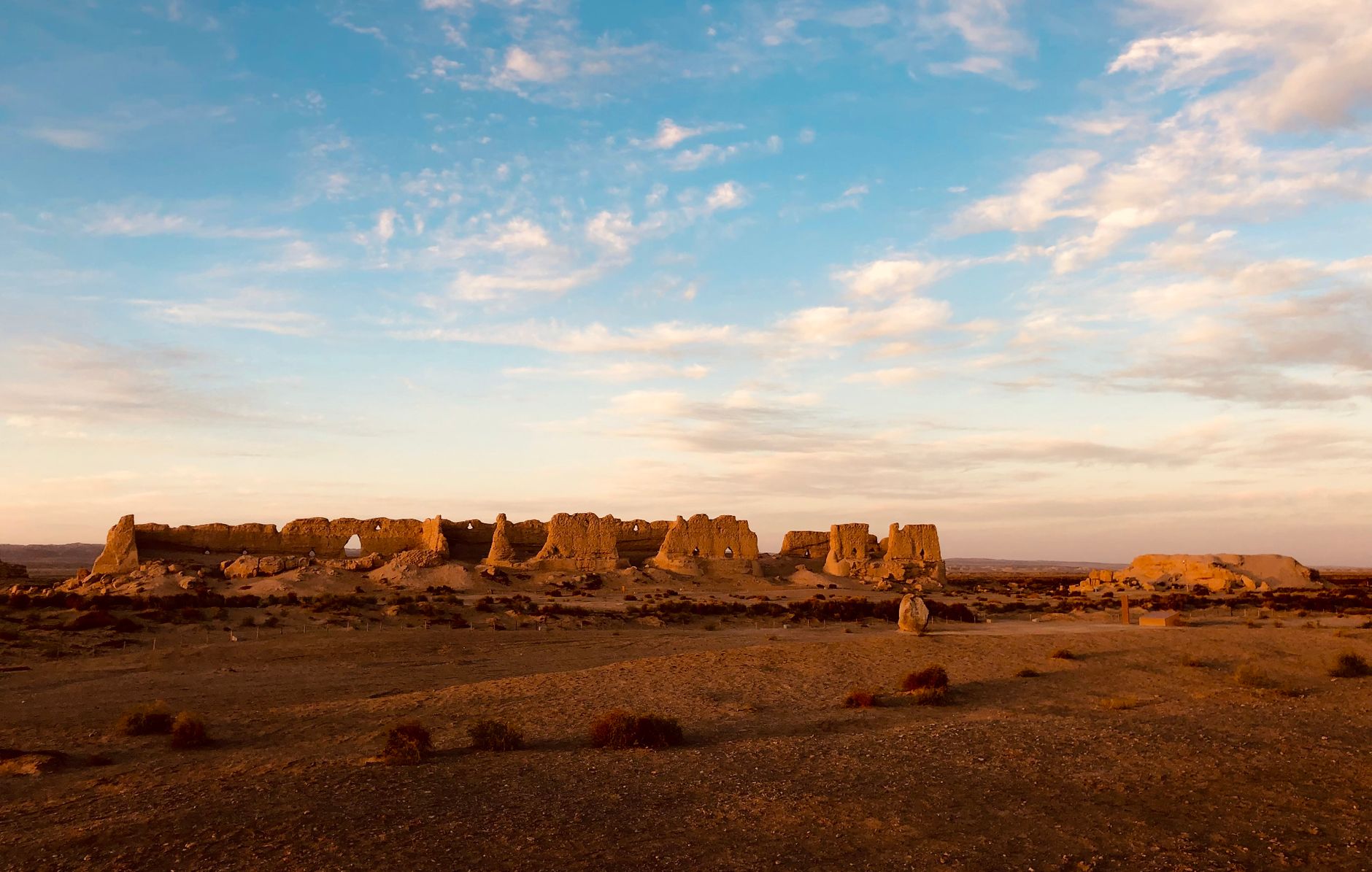
Yumen Pass (the Jade Gate) was the western customs post of Han-dynasty China, the point where the empire ended and the Silk Road continued into Central Asia. What survives is a lone square beacon tower of rammed earth standing in an immense gravel plain. The emptiness is the whole point. A few kilometres away, a stretch of the Han Great Wall Ruins survives as low walls built from layered reeds and sand: two thousand years old and completely unlike the stone wall near Beijing.
Ancient Silk Road fortress ruins in the Gobi at golden hour
Dunhuang Yardang National Geopark
Further out, the Dunhuang Yardang National Geopark, often called the "Devil City," is a field of wind-sculpted rock formations that take on the shapes of fleets of ships, castles and animals. Time your visit for dusk: the wind picks up in the late afternoon, the light drops across the eroded shapes, and the formations earn their nickname in a way that midday visits do not. You tour by park shuttle bus along a set loop. Drive back to town under the stars afterward.
If you have more time: alternatives
Prefer caves and culture over the long desert drive? Swap in the Western Thousand Buddha Caves, a quieter site set in a river gorge, or Yangguan Pass, the southern gate of the Silk Road with a museum and reconstructed beacon tower. For a short hike with views over the oasis, Mount Sanwei rises directly across from the Mogao cliffs.
Getting to Dunhuang
Dunhuang has its own airport with direct flights from Xi'an, Lanzhou, Beijing and several other Chinese cities, and flying in and out is the most common approach for international visitors. There is also a rail station on the Lanzhou-Xinjiang high-speed line, which makes it reachable by train from Lanzhou or Jiayuguan. Many travellers combine Dunhuang with Jiayuguan and Zhangye (the Danxia rainbow hills) for a longer Gansu Silk Road loop.
Plan flights, hotels, and trains from one place:
Book flights & hotels
Find flights to Dunhuang and hotels in town
Some links are affiliate links; we may earn a commission at no extra cost to you.
For train-specific booking help, see the guides to booking China train tickets and China's high-speed train types.
Where to Stay and Getting Around
Stay in central Dunhuang. The town is small, safe and walkable, with everything from hostels to comfortable mid-range hotels and a few resorts near the dunes; see the guide to where to stay in China for booking tips. In town, walk or take a cheap taxi. For Day 2, you need a hired car or tour: public transport to the western passes is essentially nonexistent.
Practical Tips
- Reserve Mogao tickets early: several weeks ahead in July, August and national holidays. Bring the passport you booked under.
- Protect against sun and sand: hat, sunglasses, lip balm, sunscreen, and a light scarf for windy days.
- Carry water and snacks on Day 2: the western passes have few facilities and distances are long.
- Cash and mobile pay: set up Alipay or WeChat Pay before arriving; small desert sites may be cash-only.
- Sunset planning: the dunes (Day 1) and the Yardang park (Day 2) are both best at last light: do not try to do both on the same evening.
Frequently Asked Questions
How many days do you need in Dunhuang? Two full days covers the essentials: Mogao Caves, Mingsha Mountain and Crescent Lake, and a Day 2 loop to the desert passes and Yardang badlands. Add a third day to slow down or include the Western Thousand Buddha Caves and Yangguan Pass.
Do I need to book Mogao Caves tickets in advance? Tickets are capped daily and commonly sell out in peak season (summer and national holidays). Reserve online in advance and bring your passport. English-language tours run at fixed times.
What's the best time of year to visit Dunhuang? May–June and September–October offer warm days and comfortable light. Summer is hot but busy; spring risks sandstorms; winter is cold and quiet.
How do I get to the western desert passes? Yumen Pass, the Han Great Wall and the Yardang Geopark are 80–180 km west of town with little public transport. Hire a driver for the day or join a small-group Western Route tour.
Can foreign visitors book Mogao tickets directly online? The official site can be tricky with foreign passports and payment methods. Booking via a reliable agent or Klook is a practical alternative that also includes English guides. Walk-up tickets at the Digital Exhibition Center are another option but sell out fast in summer.
Ready to lock it in? Open the Dunhuang destination guide for more detail, then use the My Trip planner to save this route as a day-by-day plan you can adjust as you go.
Common Mistakes
- Turning up at Mogao without a reservation. Daily entry is capped and the standard route commonly sells out in summer and on holidays. Reserve online weeks ahead and carry the passport you booked under: entry is real-name and checked at the gate.
- Scheduling both sunsets on the same evening. The dunes (Day 1) and the Yardang park (Day 2) are each at their best in the last light. Trying to combine both on one night means rushing one and missing the other.
- Treating Day 2 like a quick drive. Yumen Pass, the Han Great Wall and the Yardang Geopark span 80–180 km of open Gobi with little public transport and few services: without a hired car or small-group tour, water, and snacks, the day falls apart.
- Underestimating the desert sun. Even outside July–August the glare and wind are fierce; skipping a hat, sunglasses and high-SPF sunscreen makes the dunes genuinely unpleasant.
Who This Is For
You'll enjoy this trip if you want world-class Silk Road history and desert scenery in one compact, low-stress base: Mogao's Buddhist art and the singing-sand dunes are both worth the journey, and central Dunhuang is small, safe and walkable. It also connects naturally into a longer Gansu loop with Jiayuguan and Zhangye.
Skip it if you dislike long desert drives (Day 2 is several hours in a car), need everything on public transport, or are on a very tight budget (the Day 2 hired car or tour is the main expense). Visitors who want to photograph inside the caves will be disappointed: photography is not allowed inside Mogao.
Sources
- Mogao Caves Official Reservation Website · Dunhuang Academy
- Mogao Caves — Dunhuang Academy · Dunhuang Academy