Datong
Yungang Grottoes
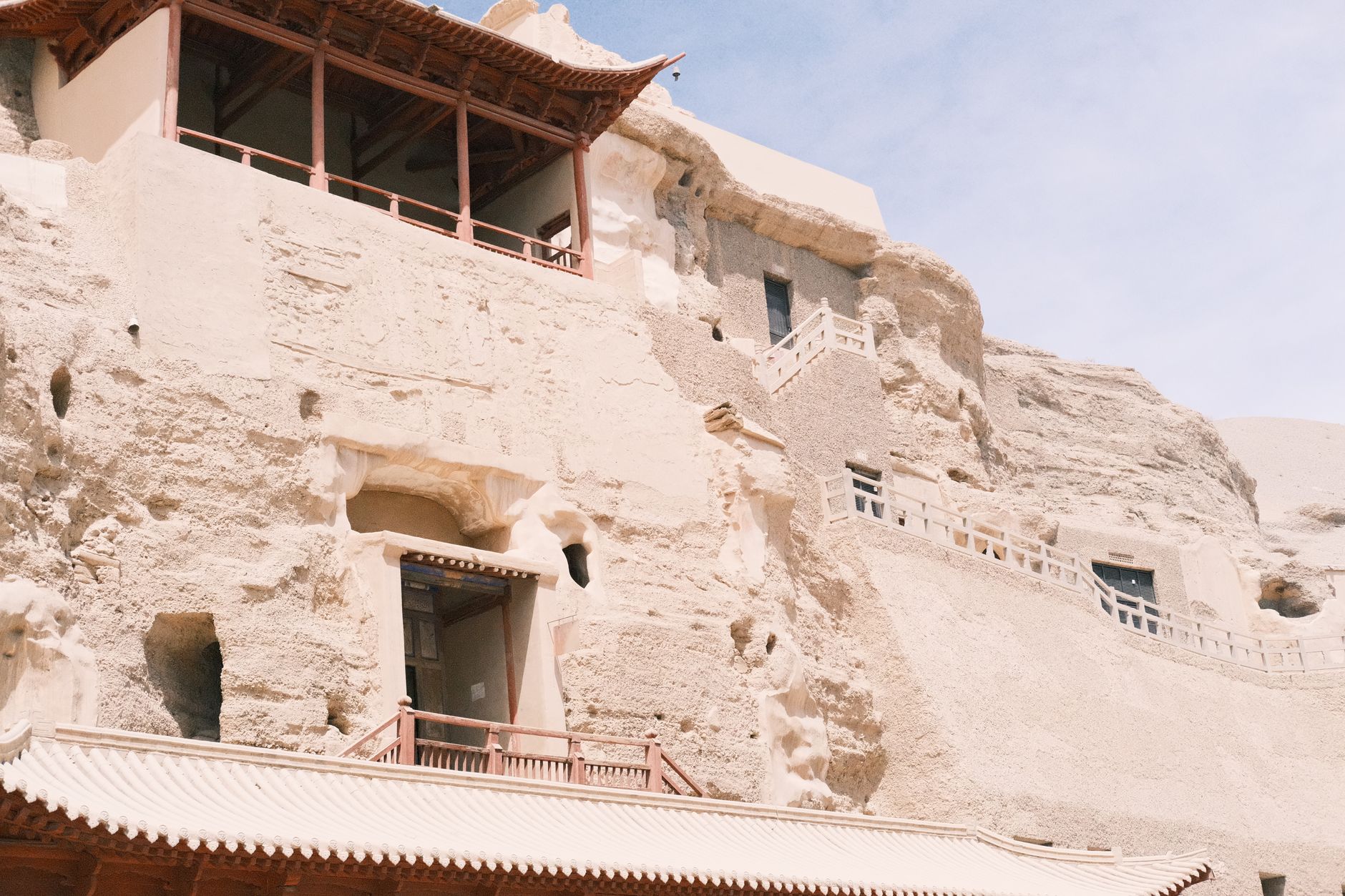
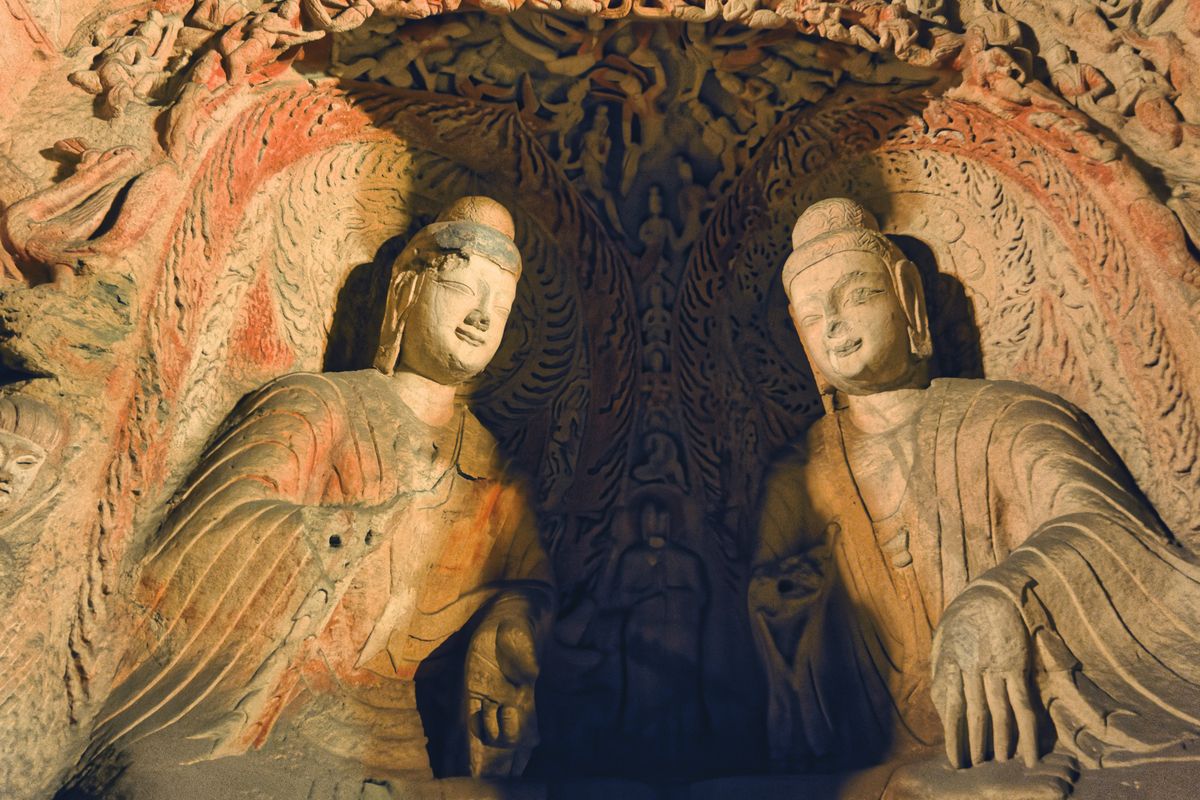
Sixteen kilometres west of Datong, a kilometre-long ridge of sandstone holds one of the earliest and grandest concentrations of Buddhist cave art in China. Work began around 460 AD under the Northern Wei, when a monk named Tan Yao persuaded the emperor to sponsor five great caves, each centred on a colossal Buddha modelled in part on the reigning rulers. Over the next sixty years the project grew to more than 250 caves and niches holding over 51,000 statues, and in 2001 UNESCO inscribed the site as a World Heritage listing.
Yungang Grottoes carved Buddha niche
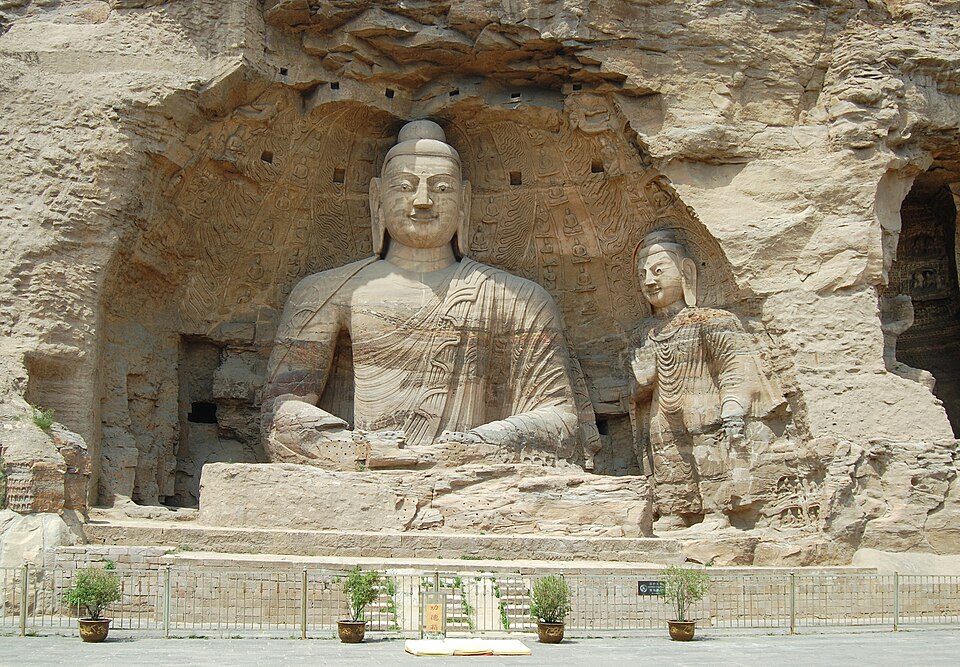
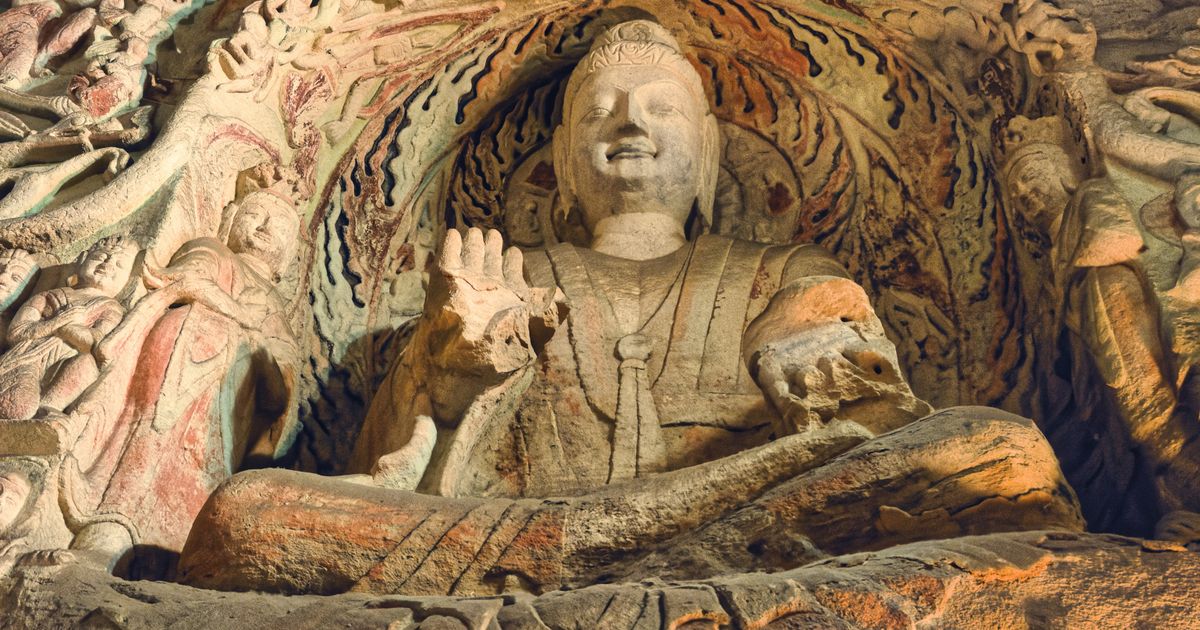
The undisputed star is Cave 20, where a 13.7-metre seated Buddha sits fully exposed after its wooden front collapsed centuries ago. Its serene, broad-shouldered form has become the emblem of Yungang and of Datong itself. Other caves reward slower looking: Caves 5 and 6 are crowded with painted relief, musicians and dancing figures, while the early "Tan Yao" caves (16 to 20) show the heavier, Central Asian-influenced style of the first phase. The blend of Indian, Persian and Han Chinese motifs marks Yungang as a meeting point of cultures along routes that fed into the Silk Road.
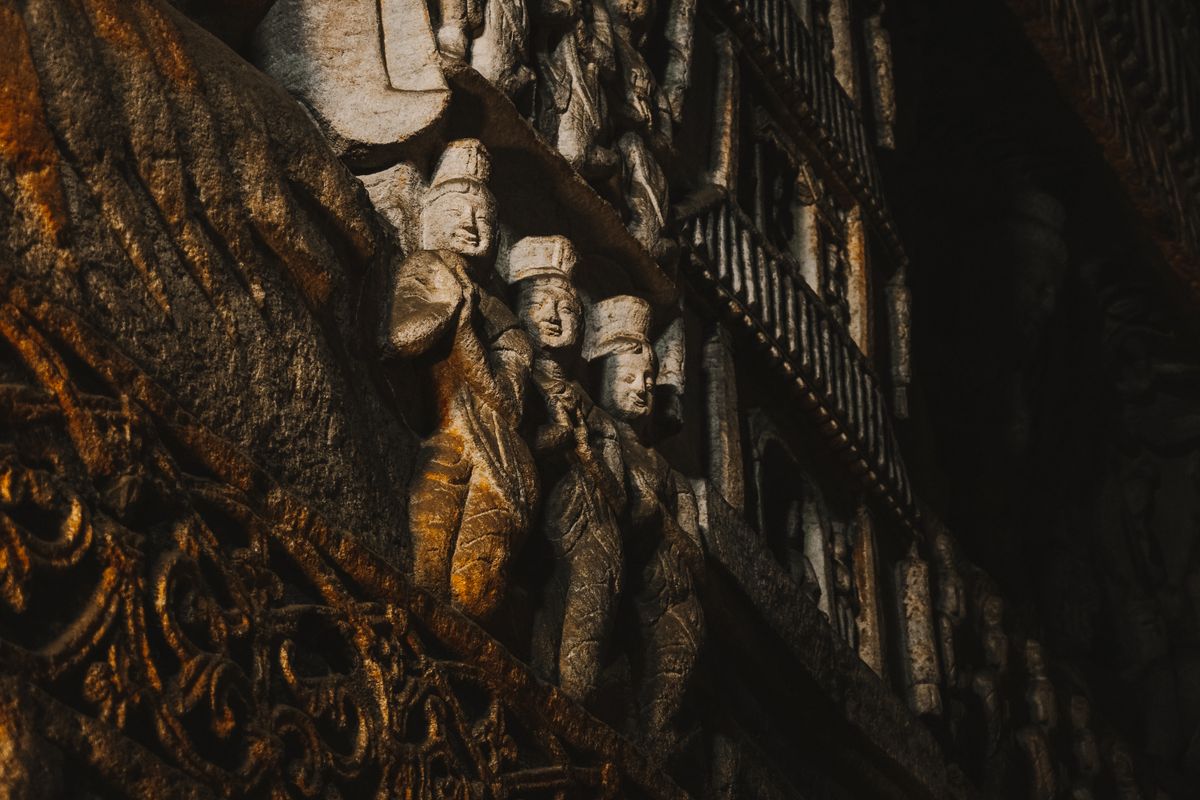
Detail of Yungang Grottoes stone carving
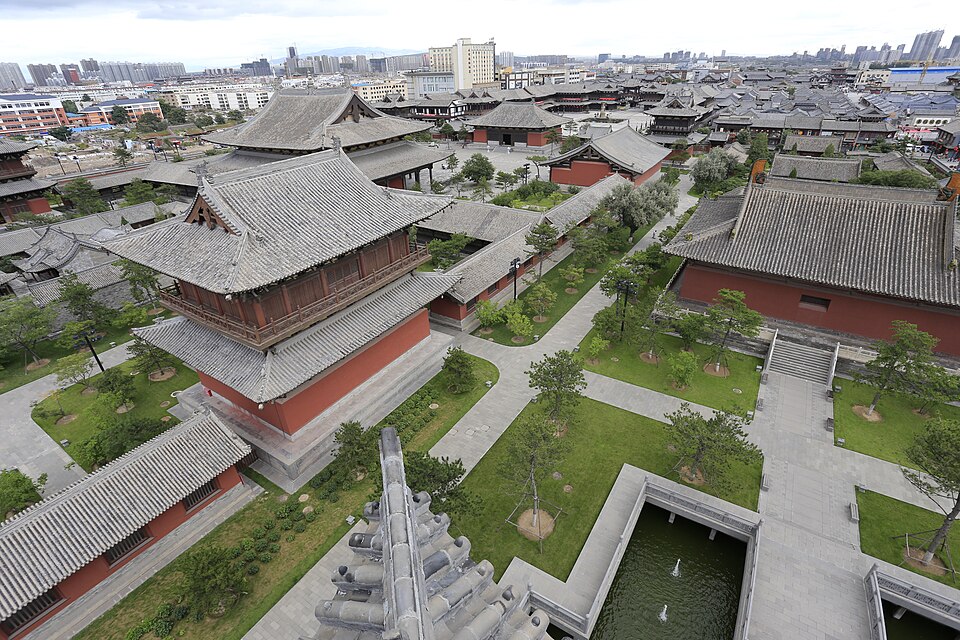
Give yourself at least three hours, more if you want to linger. The caves run roughly east to west, and the best light for the open-air Cave 20 falls in the morning. A landscaped approach with reconstructed temple halls leads to the cliff, so the walk from the gate to the first cave takes a while. Photography without flash is generally allowed in most caves, though a few of the painted interiors are roped off to protect the pigment.
How to See the Caves
The numbered caves repay a methodical visit. After Cave 20's open-air Buddha, the paired Caves 5 and 6 are the most lavish: Cave 6 is a square pillar carved on every face with scenes from the life of the Buddha, layered in painted relief from floor to ceiling. Caves 9 and 10 keep traces of bright mineral pigment in their porches, and the small "Thousand Buddha" niches that tile the walls give a sense of the sheer labour involved. Renting the official audio guide or joining a guided slot helps, since little on-site signage explains which dynasty carved what; Klook also sells a headset tour package that covers the excavation history and the stories behind individual statues.
Tickets and Reservations
Entry carries a moderate admission fee, with free or discounted entry for seniors, young children and a few other concession categories under the site's current rules. Visits since 2025 run on a real-name online reservation system booked for either a morning or afternoon session, so same-day walk-up tickets are no longer sold; you'll need to enter each visitor's passport details and name at booking. Reserve through the site's official WeChat mini-program (Chinese-language only) or, more simply for overseas visitors, through Trip.com, which also offers skip-the-line entry. Book at least a day ahead and keep a screenshot of your confirmation in case the gate scanners are slow.
Best Time and Practicalities
Spring and autumn are the most comfortable, and the open-air caves look best in the dry months before summer crowds peak. The grottoes stay open through winter, when far fewer visitors share the site, but bring warm layers, since the exposed cliff face is cold and there's a lot of standing and slow walking. Set aside half a day in total once you factor in the landscaped approach, the museum near the entrance, and the time it takes to reach Yungang from the city.
Combining Your Visit
Most travellers pair Yungang with the Hanging Temple, even though the two sit on opposite sides of the city, because a hired car (or a Klook day tour built around both) can link them in a single full day, with the Yingxian Wooden Pagoda thrown in. If you'd rather slow down, spend a morning at the grottoes and an afternoon in the old town at the Nine Dragon Wall and Huayan Temple. The visitor centre has wheelchair-accessible paths along the main cliff route, though some of the higher cave interiors involve steps. Cafes and a small bookshop near the entrance make it easy to break up the walk.
Highlights
- UNESCO World Heritage Site with over 51,000 Buddhist statues across 250+ caves
- The 13.7-metre open-air seated Buddha of Cave 20, the icon of Datong
- Painted relief, musicians and dancers packed into Caves 5 and 6
- Early Tan Yao caves showing Central Asian and Indian artistic influence
- A kilometre-long carved sandstone cliff reached through reconstructed temple halls
Travel Tips
Tickets and reservation
Entry carries a moderate fee and now requires a real-name online booking for a morning or afternoon session; same-day gate tickets aren't sold. Open daily 08:30-17:00, with last entry around 16:30.
Go in the morning
Cave 20 is open to the sky and photographs best in morning light. Arriving early also beats tour-group crowds in the popular Caves 5 and 6.
Getting there from the city
Yungang sits 16 km west of central Datong. Bus 3 runs from the old town, or take a taxi, a Trip.com skip-the-line ticket, or a Klook day tour that also covers the Hanging Temple.