Datong 2-Day Itinerary: Yungang Grottoes, Hanging Temple & the Old City (2026)
Most visitors to Datong make the same mistake: they drive straight to the Yungang Grottoes, spend the morning, then rush 65 km across town to squeeze in the Hanging Temple before dark. By 4 pm they are exhausted, have seen neither site properly, and have missed the walled old city entirely. Two days fixes all of that. This itinerary keeps the two headline sites in their own half-days, and leaves room to actually look at the carvings instead of jogging past them.
Datong sits in the far north of Shanxi province, a few hours by train from Beijing, and it punches well above its weight. Travelers come for two world-class sights, the Yungang Grottoes and the Hanging Temple, and stay for a compact walled old town packed with Liao and Jin temples. Long ago this was Pingcheng, capital of the Northern Wei, and that imperial past is written all over the city. Two days is enough to see the best of Datong without rushing, and this itinerary splits them cleanly: the grottoes and the old city on day one, the cliffside monastery and the museum on day two.
Book Trains to Datong – Trip.com
Schedules from Beijing, Taiyuan & beyond
Some links are affiliate links; we may earn a commission at no extra cost to you.
Getting to Datong
High-speed G trains run from Beijing to Datong South (Datongnan) station in about 100 minutes to two hours, and there are fast services from Taiyuan in roughly 90 minutes too. Book a day or two ahead in peak season, as trains sell out. From Datong South it is around 20 minutes by taxi or bus into the old city, where most hotels sit. Datong is over 1,000 metres up, so pack a warm layer even in summer; evenings are cool and winters are genuinely cold.
Some links are affiliate links; we may earn a commission at no extra cost to you.
Day 1: Yungang Grottoes and the old city
Start early at the Yungang Grottoes, about 16 km west of the centre. Carved into a sandstone ridge in the fifth century by the Northern Wei court, the 45 main caves hold more than 50,000 statues, from a colossal seated Buddha you can see from the entrance to walls covered in tiny carved figures. Entry is paid and requires advance online booking in a timed slot; check current prices on the official Yungang website before you go. The site opens 08:30 to 17:00 with last entry at 16:30, and visits run in morning (08:30-12:30) and afternoon (12:30-16:30) sessions. Book through the official WeChat mini-program ("Yungang Research Institute") and aim for the morning slot. Give it three hours.
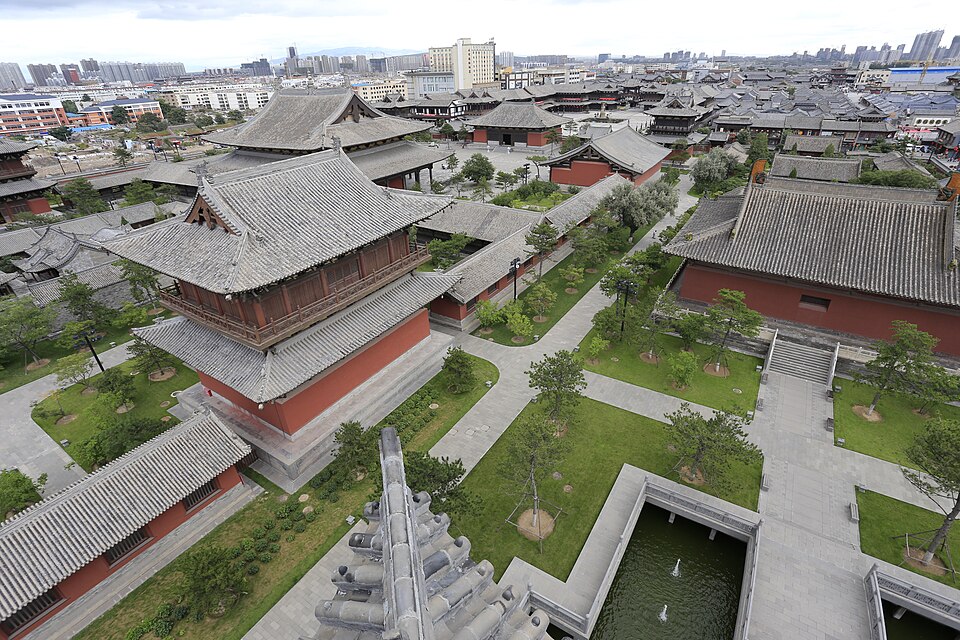
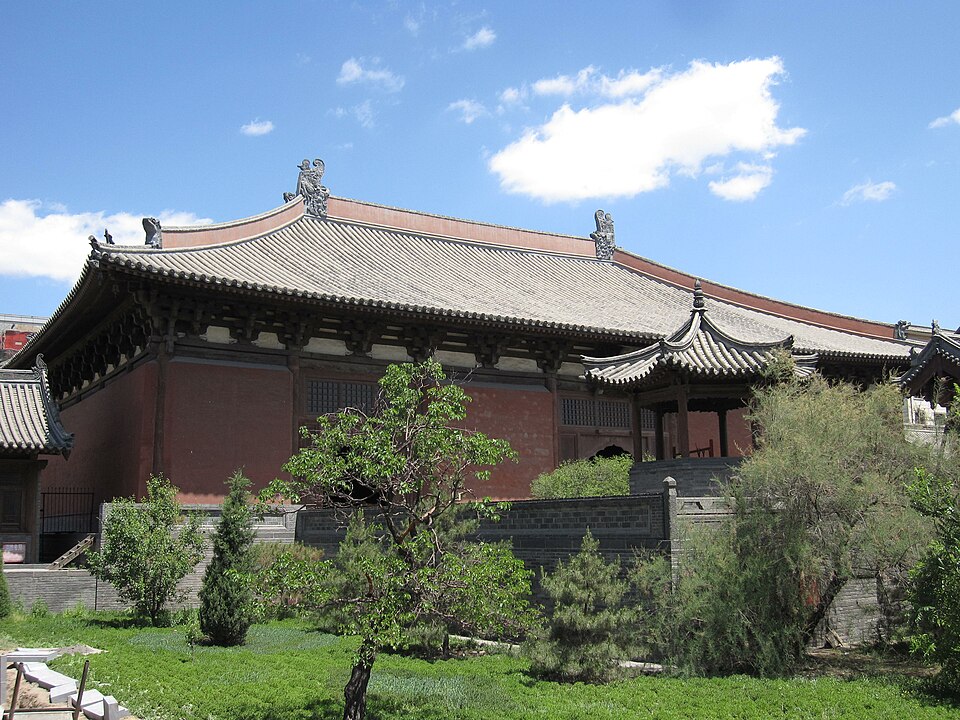
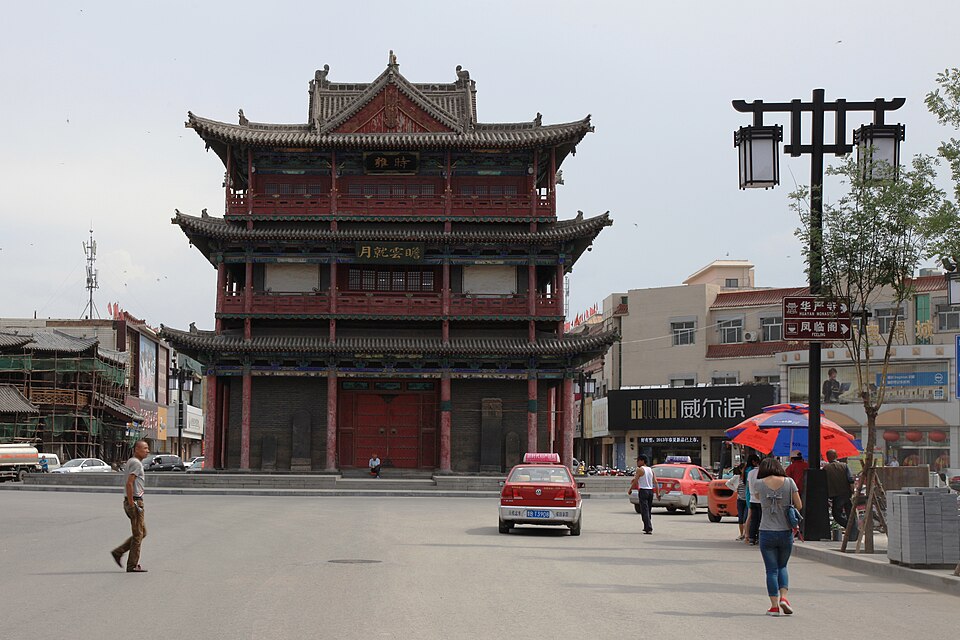
Head back to the old city for the afternoon. The temples here cluster within easy walking distance. See Huayan Temple, the largest surviving Liao-Jin Buddhist complex in China, then the glazed Nine Dragon Wall, the oldest and largest of its kind. Pass the Drum Tower at the centre of the grid, and finish at Shanhua Temple near the south gate. As the light softens, climb the rebuilt Datong Ancient City Wall for a loop above the rooftops.
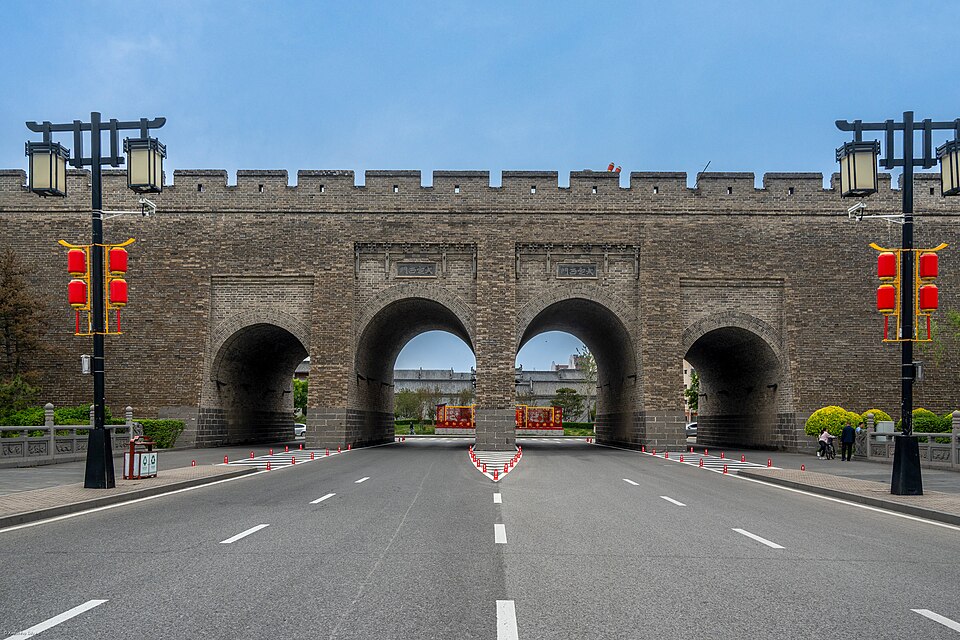
A grand gate in the rebuilt Datong Ancient City Wall
For dinner, the lanes near the Drum Tower are the place to try Datong's knife-cut noodles, sliced straight off the dough into boiling water, and a fried millet cake called you zha gao.
Day 2: Hanging Temple and the museum
Devote the morning to the Hanging Temple, about 65 km southeast near Hunyuan, roughly 90 minutes each way by car or tour bus. Built into a sheer cliff face more than 1,500 years ago, its halls are propped on slim wooden poles above the gorge, and it is the only temple in China to honour Buddhism, Taoism and Confucianism together. It reopened on 1 May 2026 after maintenance. Entry is paid; check current prices, and book the elevated walkway ticket separately if you want the full cliff-face experience. Interior ascent slots are capped at around 80 per day, so go early.
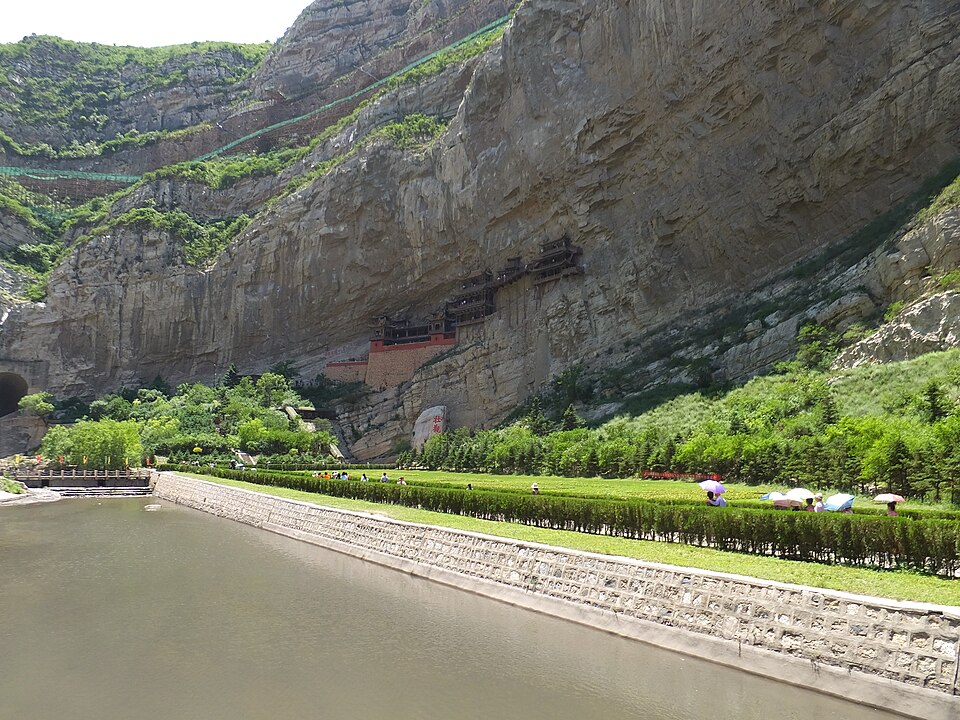
The Hanging Temple clinging to a cliff above the gorge near Datong
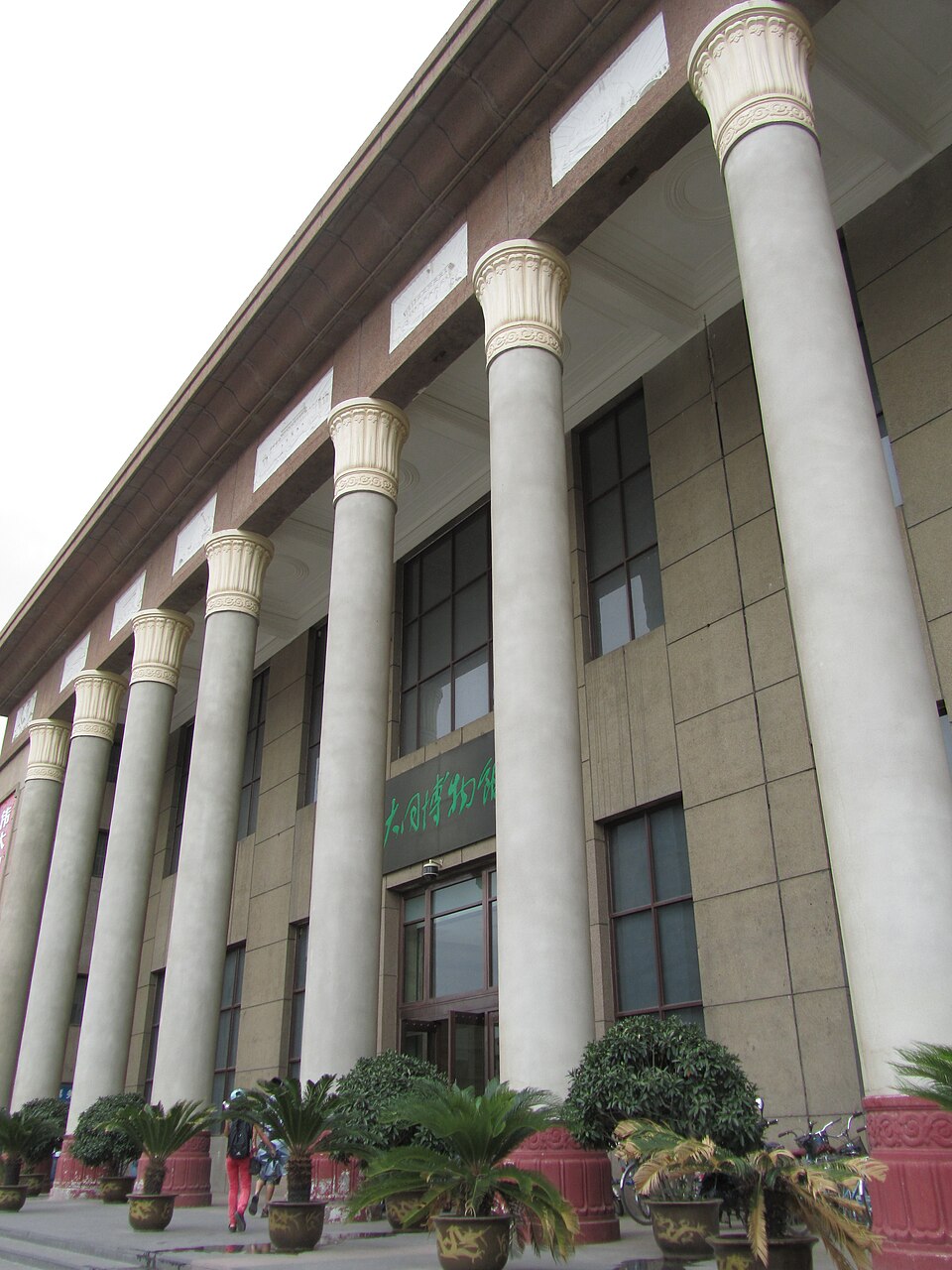
Many drivers combine the temple with the nearby Yingxian Wooden Pagoda, the oldest and tallest all-wood pagoda in the world, if you have the time. Back in town, spend the afternoon at the Datong Museum, which is free but closed on Mondays and needs a reservation. Its Northern Wei galleries tie the whole trip together, with tomb figures and carvings from the era that built Yungang.
Where to stay and how to get around
Base yourself inside or just outside the old city walls, which keeps day one entirely on foot. For Yungang and the Hanging Temple, the simplest options are the tourist shuttle buses from the city, a half-day taxi charter, or a small-group tour; public buses reach Yungang but not the Hanging Temple easily. Spring and autumn bring the most comfortable weather, summer is busy and pleasant, and winter is striking but bitter.
Frequently asked questions
How many days do you need in Datong? Two full days cover the headline sights: Yungang, the Hanging Temple, the old-city temples and the museum. A third day lets you add the Yingxian Wooden Pagoda or Mount Heng at a slower pace.
How do you get from Beijing to Datong? Take a high-speed G train from Beijing to Datong South station, which takes about 100 minutes to two hours. Book ahead in peak season, then taxi or bus into the old city.
Can you see Yungang and the Hanging Temple on the same day? It is possible but rushed, because they lie on opposite sides of the city. Splitting them across two days, as above, is far more relaxed and lets you enjoy the old city too.
Is the Hanging Temple safe to visit? Yes. The walkways are maintained and railed, and visitor numbers are limited. They can feel narrow and high, so it is less ideal if you strongly dislike heights, but most people manage fine.
When is the best time to visit Datong? Late spring through early autumn is the most comfortable. Datong is high and cold, so winter visits need serious warm clothing, though snow on the temples is a memorable sight.
Common mistakes
- Trying to squeeze the Yungang Grottoes and the Hanging Temple into the same day. They sit on opposite sides of the city, so cramming them means a rushed, road-heavy day; split them as above.
- Turning up at Yungang without an advance booking. Entry runs in timed morning and afternoon sessions and walk-ups may miss the slot they want; book through the official WeChat mini-program ("Yungang Research Institute") and aim for the morning slot.
- Visiting the Datong Museum on a Monday. It is free but closed on Mondays and needs a reservation, so it is easy to find the doors shut after a long drive back.
- Packing only for summer heat. Datong sits above 1,000 metres, so evenings are cool even in July and winters are bitterly cold; bring a warm layer year-round.
- Assuming public buses reach the Hanging Temple. Buses serve Yungang, but the Hanging Temple is far easier by tourist shuttle, half-day taxi charter or a small-group tour.
Who this is for
This itinerary suits first-time visitors who want Datong's two world-class sights plus the old-city temples at a relaxed pace, history lovers drawn to the Northern Wei era, and travelers coming in by high-speed train from Beijing or Taiyuan with a tight weekend.
Skip or adapt it if you have only one day (you will have to choose between Yungang and the Hanging Temple), if you strongly dislike heights (the Hanging Temple's elevated walkways feel narrow and high), or if you want a slower, deeper trip -- in that case add a third day for the Yingxian Wooden Pagoda or Mount Heng.
Sources
- Yungang Grottoes – UNESCO World Heritage · UNESCO
- China Railway 12306 (official ticketing) · China Railway