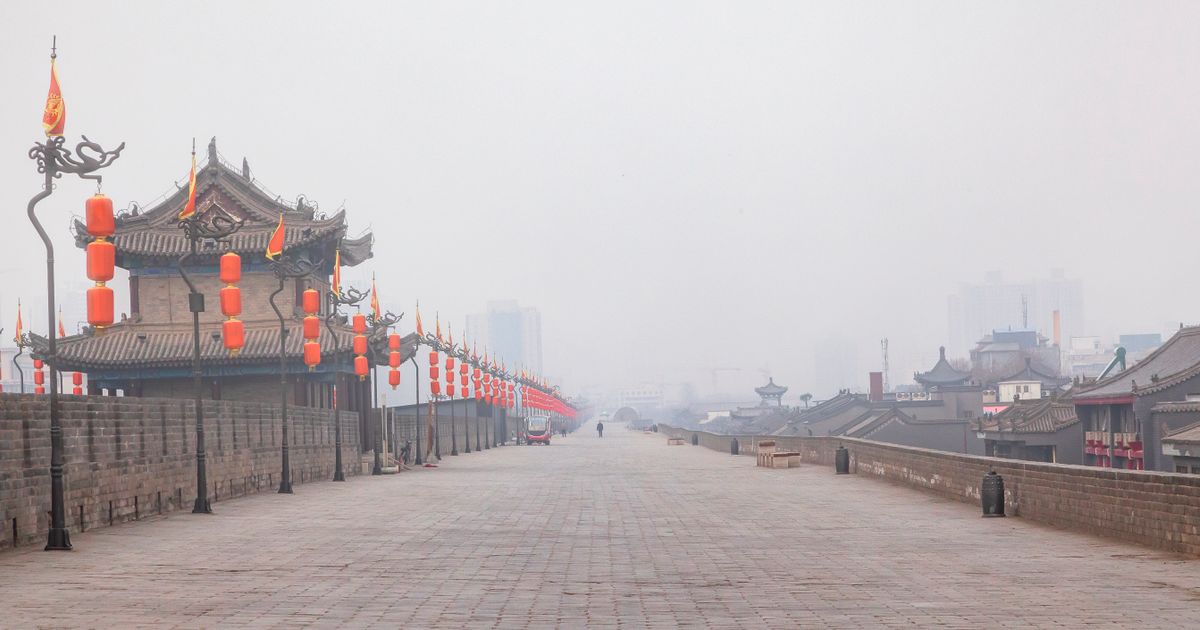
Where to Stay in China: Hotels, Booking & the Police Registration Rule (2026)
Quick answer: Book a licensed, foreigner-friendly hotel (check Trip.com's "Guests Accepted" line, or default to an international chain) and the front desk automatically files your police registration at check-in. Only if you stay in a private home must you register yourself at the local police station within 24 hours of arrival.
A confirmed booking is not the same as a guaranteed room in China. Show up with a printed confirmation and a valid passport, and the front desk can still turn you away, not because anything went wrong with your reservation, but because that property was never connected to the system that lets it register non-mainland guests in the first place. The second surprise is registration itself: every foreigner has to be logged with the local police within 24 hours of arriving at an address. Hotels handle that automatically. Private stays do not. Here is how to book somewhere that will check you in, what the "Guests Accepted" line on a listing means, and how the police registration (temporary residence registration) works in 2026.

A white hotel building with a vertical HOTEL sign on the street facade
Not every hotel can host foreigners
Chinese hotel listings quietly split guests into two groups: domestic guests (neibin, domestic guests, meaning mainland Chinese ID card holders) and foreign guests (waibin, foreign guests, meaning passport holders), and Chinese-language booking sites usually show this designation right on the listing page. A property needs a specific link to the Public Security Bureau's (PSB) registration system, plus in practice English-capable staff, to host the second group. International chains (Marriott, Hilton, InterContinental, Hyatt and similar) and most mid-range and upper-tier domestic brands have it. Small, budget or family-run guesthouses, and plenty of hotels tucked inside residential buildings, often do not, and staff there may simply say no at the door, even against a paid online booking.
In May 2024, the Ministry of Public Security, the Ministry of Commerce and the National Immigration Administration jointly told hotels that lacking the old "foreign-related" (foreign-related) qualification is no longer a legitimate reason to refuse a guest, and more properties do accept foreigners now than a few years ago. Enforcement is still uneven in 2026, though, especially in smaller cities where staff have not always caught up with the change, so confirm before you book rather than after you land.
A few habits make this painless:
- Book on a platform that flags foreigner-eligible properties for you (see below), rather than a domestic app aimed mainly at the local market.
- Look for "accepts foreign guests" on the listing itself, not just in the reviews.
- When in doubt, message the property, or default to an international chain or a well-known domestic brand (Jinjiang, Atour, Hanting and similar tend to be set up for this).
- Always travel with your physical passport. A photo or a copy will not get you checked in.

A hotel reception desk with two staff members assisting at check-in
The police accommodation registration (temporary residence registration)
Chinese law requires every foreigner to register their place of stay with the local police, normally within 24 hours of arrival at that address. This is the temporary accommodation registration, and it covers tourists, not only long-term residents.
Stay in a hotel and there is nothing extra to do. At check-in, the front desk scans your passport and files the registration with the PSB for you. That is one more reason a licensed hotel is the easy option.
Stay anywhere else, a friend's or relative's home, a rented apartment, a home-share, and the job is yours. You generally go in person to the nearest police station within 24 hours, with your passport, your visa or entry stamp, and proof of the address. A growing number of cities also take this online: a national pilot lets foreigners file through the National Immigration Administration's service platform, the "12367" app, or mini-programs inside WeChat and Alipay, with the same legal standing as filing in person. Coverage still varies by city, so check locally before you rely on it.
Why it matters beyond the paperwork
The registration slip often gets asked for again later, for visa extensions, residence permits and other immigration steps. Skip it and you risk a warning or, in more serious cases, a fine that can run into four figures of RMB. Change cities or move address, and you generally need to register again at the new location.
Hotel stay vs private stay: who registers, what to bring
| Hotel / hostel (licensed) | Private home / rental / home-share | |
|---|---|---|
| Who registers you | The hotel, automatically at check-in | You, in person or online |
| Deadline | Done at check-in | Within 24 hours of arrival |
| Where | Front desk | Nearest police station or online platform |
| What to bring | Physical passport (+ visa) | Passport, visa/entry stamp, proof of address |
| If you skip it | N/A, handled for you | Warning, or a fine in serious cases |
A quick arrival checklist:
- Carry your physical passport at all times.
- Confirm the listing accepts foreign guests before you book, not after you arrive.
- Keep the registration slip the hotel gives you (or your online confirmation).
- Staying privately? Register within 24 hours. Set a phone reminder the moment you land.
Booking platforms and where to stay
- Trip.com carries the deepest China inventory in English, with a simple way to check this exact problem: open a hotel's page, scroll to Policies, and read the Guests Accepted line. "Guests from all countries/regions are welcome" means the property can legally register you; anything narrower, keep scrolling. It is the safest default for 2026.
- Booking.com and Agoda also list Chinese hotels in English for comparison shopping, though their China inventory runs thinner than Trip.com's, and neither surfaces the guest-nationality policy as clearly.
- Domestic apps like the Chinese-language Ctrip or Meituan show many of the same properties to a mostly local audience, and usually label each one domestic guests or foreign guests right on the listing. Handy to know if a friend sends you a link from one of these: a hotel flagged domestic-guests-only there does not always carry that flag over once the same property shows up on an English-facing site, so check the policy yourself rather than assume either way.
- Airbnb suspended its domestic mainland-China listings in 2022 and now focuses on outbound travelers, so do not count on home-shares the way you might elsewhere. Any China listings that remain are limited, and a private stay still puts the registration burden on you.
- Hostels and serviced apartments are widely available. Licensed hostels register you just like hotels; serviced apartments vary, so confirm before booking.
On neighborhoods: pick somewhere near a metro station in big cities like Beijing, Shanghai, Chengdu or Guangzhou. China's metro networks are extensive, cheap and tourist-friendly, and a room a few minutes' walk from a line saves you more hassle than a slightly cheaper hotel in an awkward spot. Areas around major railway stations are convenient for onward train travel but can run noisy, so weigh convenience against a good night's sleep.
Book a foreigner-friendly hotel on Trip.com
Flags licensed hotels · front desk files your police registration · English
Some links are affiliate links; we may earn a commission at no extra cost to you.
The bottom line
Book a licensed hotel through a platform that flags foreigner-eligible properties, keep your physical passport on you, and let check-in handle the registration for you. The only time this becomes your job is a private stay, where the 24-hour clock starts the moment you arrive. Before you fly, it is also worth setting up Alipay and sorting your connectivity with an eSIM so you can book, pay and navigate from the moment you land.
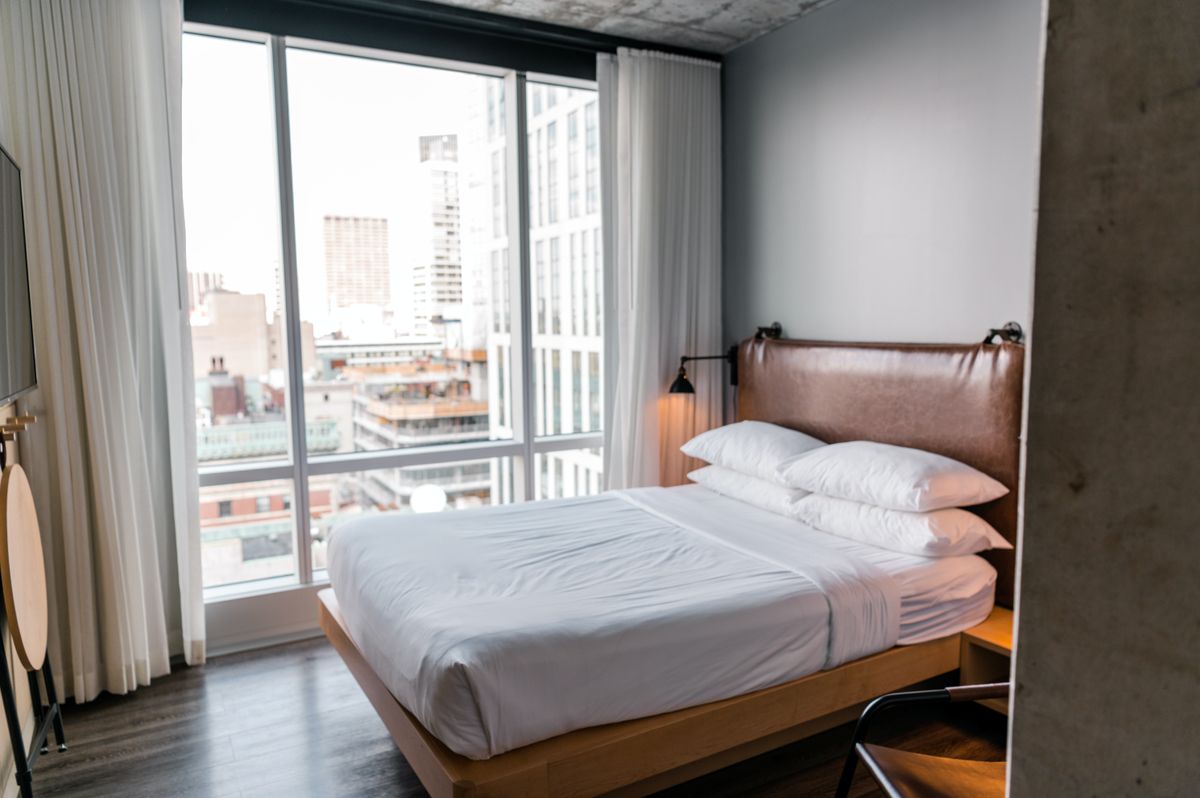
A modern hotel room with a large window overlooking a city skyline
Common mistakes
- Trusting a booking without checking the Guests Accepted line. A confirmed reservation is not proof a hotel can legally register you. Many small, budget or family-run guesthouses lack the PSB link and will say no at the door even after a paid online booking, and a listing flagged domestic-guests-only (domestic guests) on a Chinese-language site does not always show that restriction once the same hotel turns up on an English-facing one.
- Assuming the 24-hour police registration only applies to long-stay residents. It applies to tourists too. Stay in a private home, a rented apartment or a friend's place, and the registration is on you, not your host.
- Treating an Airbnb or home-share like it works elsewhere. Airbnb suspended its domestic mainland-China listings in 2022, so inventory is thin, and a private stay still means doing your own police registration.
- Traveling without your physical passport. A photo or a copy will not check you in, and it will not get you through an in-person registration either.
- Throwing away the registration slip. You may need it later for visa extensions, residence permits or other immigration paperwork, and you will need a fresh one if you change cities or addresses.
Who this is for
This guide is for first-time and independent travelers to mainland China booking their own accommodation, who want to avoid a refusal at check-in or a fine for missing the police registration. It matters most if you are staying in a private home, rental or home-share, where the 24-hour registration is entirely on you.
Skip it if you are on a fully managed group tour or business trip where an agency or employer handles bookings and registration, or you are a long-term resident who already registered on your residence permit and are not changing address.
Frequently Asked Questions
Can foreigners stay in any hotel in China? No. A hotel can only accept foreign guests if it is connected to the Public Security Bureau's (PSB) registration system. International chains and most mid-range and upper-tier domestic hotels qualify, but many small, budget or family-run guesthouses do not and may turn you away even after an online booking. Confirm a property accepts foreign guests before you book, especially outside the biggest cities.
How do I know before booking if a hotel accepts foreign guests? On Trip.com, open the hotel page, scroll to the Policies section and check the Guests Accepted line. "Guests from all countries/regions are welcome" means it can legally register you. Domestic Chinese apps sometimes flag a listing domestic guests (domestic guests only) directly, but that label does not always carry over to English-facing sites, so check the policy rather than assume.
Do foreigners need to register with the police in China? Yes. Chinese law requires every foreigner to register their place of stay with the local police, normally within 24 hours of arriving at that address, and this applies to tourists too. Stay in a licensed hotel and the front desk files this for you automatically at check-in. Stay in a private home, rental or home-share, and the responsibility is yours.
How do I register with the police if I'm not staying in a hotel? You generally go in person to the nearest police station within 24 hours, with your passport, your visa or entry stamp, and proof of the address. A growing number of cities also accept online filing, through the National Immigration Administration's service platform, the "12367" app, or WeChat and Alipay mini-programs, with the same legal standing as filing in person. Coverage still varies by city, so check locally.
Can I use Airbnb in China? Not reliably. Airbnb suspended its domestic mainland-China listings in 2022 and now focuses on outbound travelers, so home-shares are not the dependable option they are elsewhere. Any remaining China listings are limited, and a private stay still puts the police registration on you rather than the host.
Related Guides
Looking for a specific city? These guides break down neighborhoods and price bands one destination at a time:
- Beijing
- Chengdu
- Chongqing
- Guangzhou
- Guilin
- Hangzhou
- Harbin
- Hong Kong
- Huangshan
- Kunming
- Lijiang
- Macau
- Nanjing
- Qingdao
- Sanya
- Shanghai
- Shenzhen
- Suzhou
- Tianjin
- Wuhan
- Xiamen
- Xi'an
- Yangshuo
- Zhangjiajie
Need to be near a specific landmark instead?
Sources
- Exit and Entry Administration Law of the People's Republic of China · Ministry of Foreign Affairs of the People's Republic of China
- Regulations on Filing Accommodation Registration for Foreigners · National Immigration Administration of the People's Republic of China