Chengdu
Kuanzhai Alley (Wide and Narrow Alley)
The name Kuanzhai Alley (Wide and Narrow Alley) sounds like a throwaway description, but it comes from a real 18th-century detail: when the Qing court garrisoned troops here in 1718, officers of different rank were given housing plots of different sizes, and the gate widths that resulted are why one lane ended up wide and its neighbour narrow. That distinction, and the grey-brick courtyard houses built around it, is what a 2003-2008 restoration preserved and reopened as one of central Chengdu's most popular places to eat, drink tea and wander.
A garrison that became a neighbourhood
After Qing troops put down a Zunghar incursion toward Tibet, the Sichuan military governor Nian Gengyao petitioned to keep 1,600 soldiers permanently stationed in Chengdu. They were housed in a rebuilt district known as Shaocheng, settled mostly by Manchu and Mongol bannermen and nicknamed Mancheng, the "Manchu City." By the late 18th century the quarter had grown into a dense grid of 42 lanes branching off a central street, laid out in a shape locals compared to a centipede. Only three of those lanes survive today: Wide Alley, Narrow Alley and Well Alley. After the 1911 revolution ended Qing rule, the city walls came down and warlords and local dignitaries built private mansions here, which is part of why so many of the original courtyard structures were still standing when restoration began in 2003. The rebuilt quarter reopened in 2008, the same year as the Sichuan earthquake, and quickly became a symbol of the city's recovery.
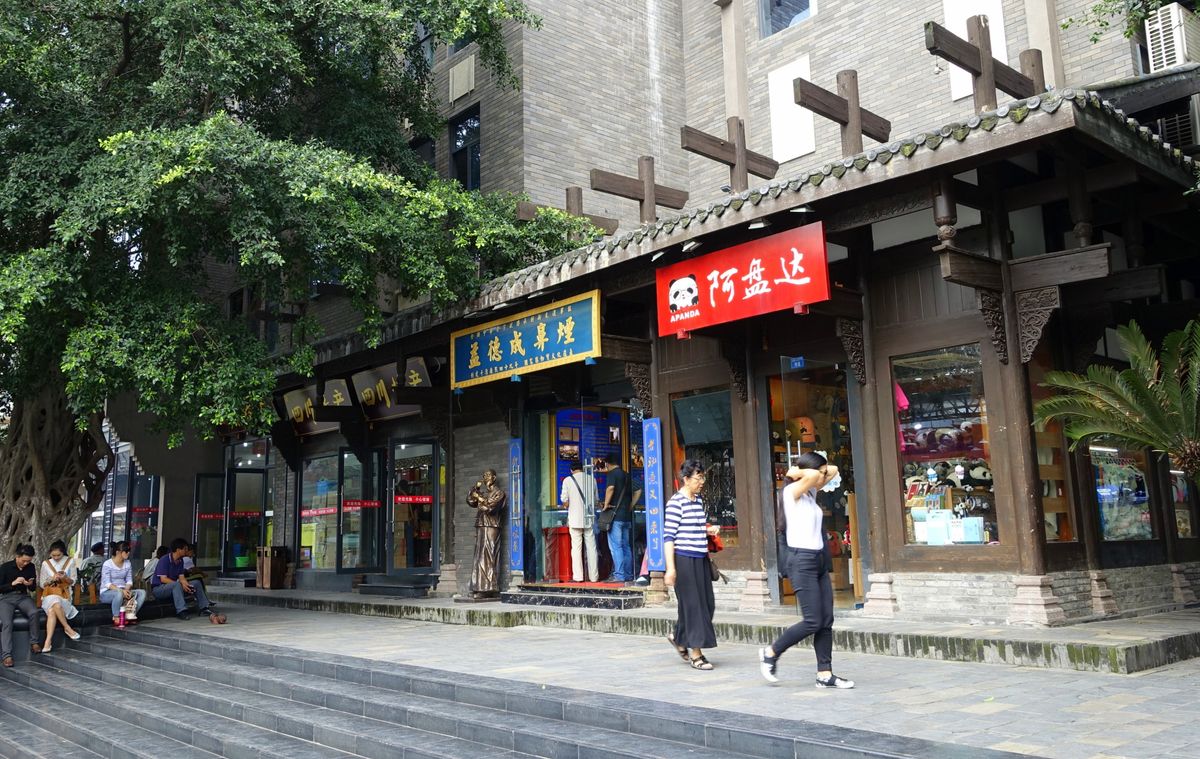
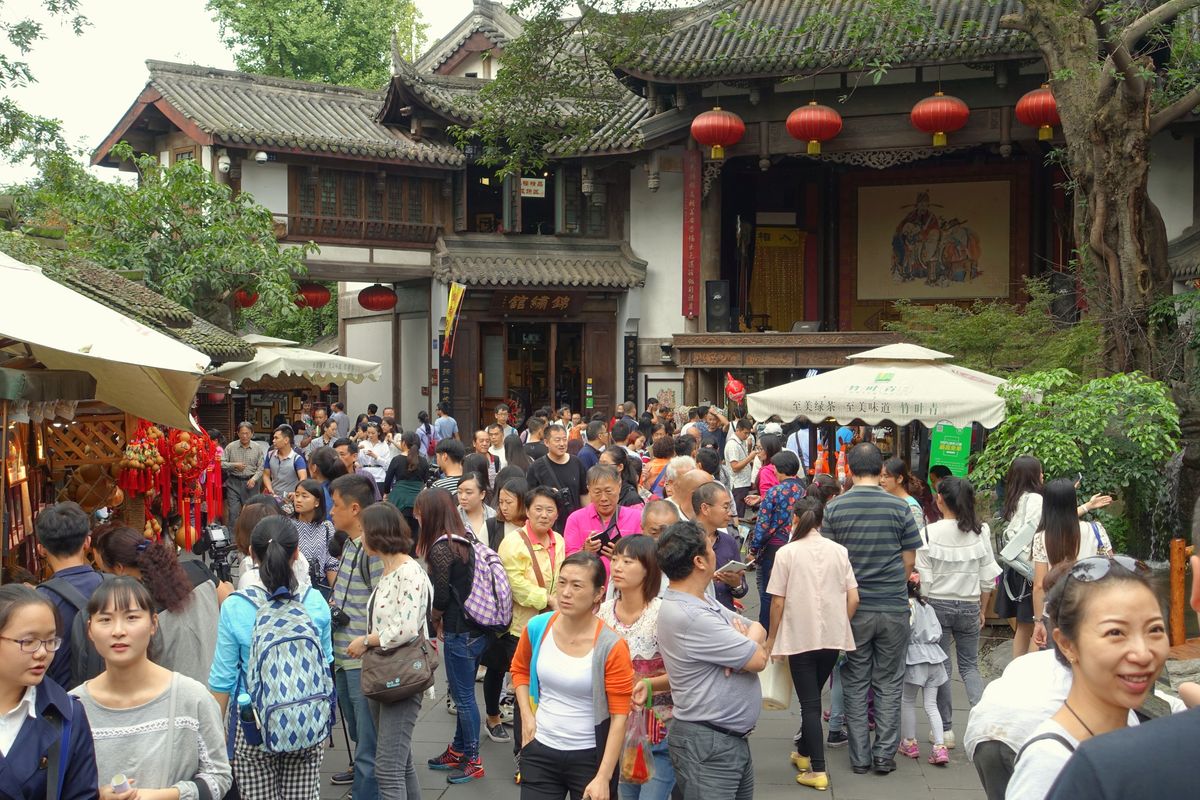
Grey-brick courtyard shopfronts along Kuanzhai Alley, Chengdu
Three lanes, three moods
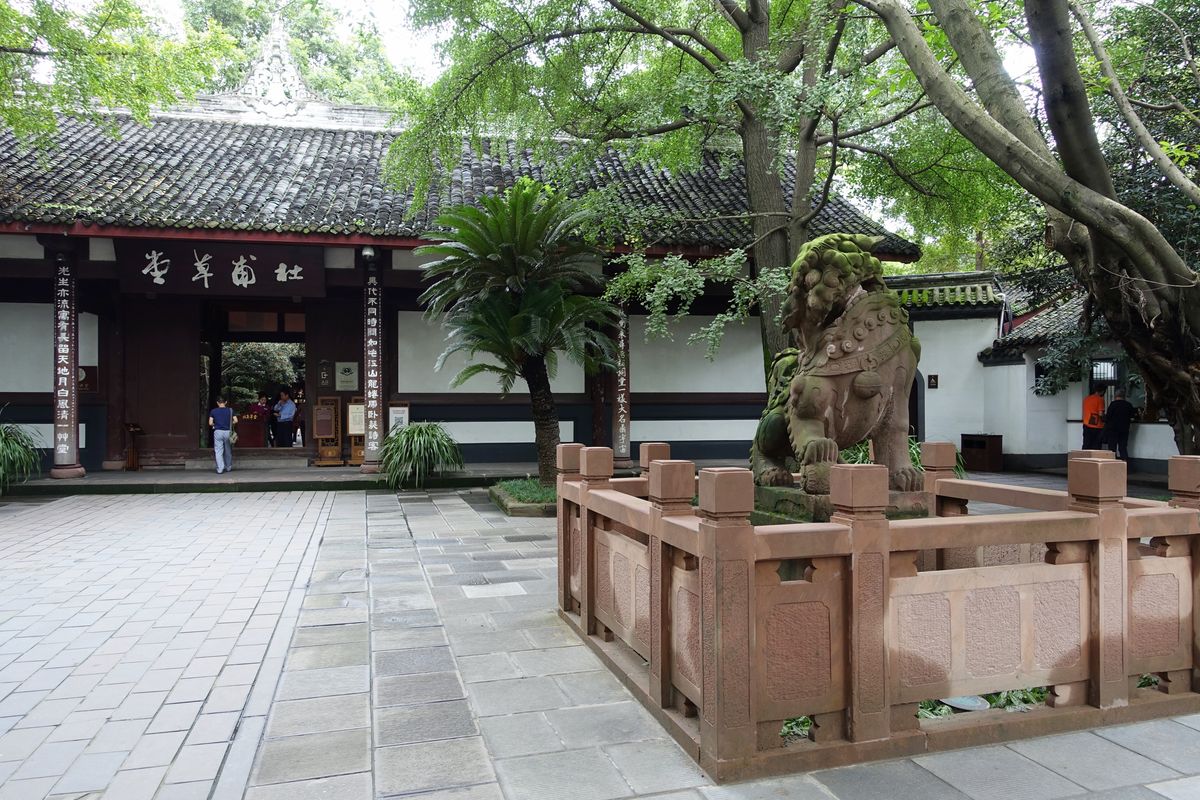
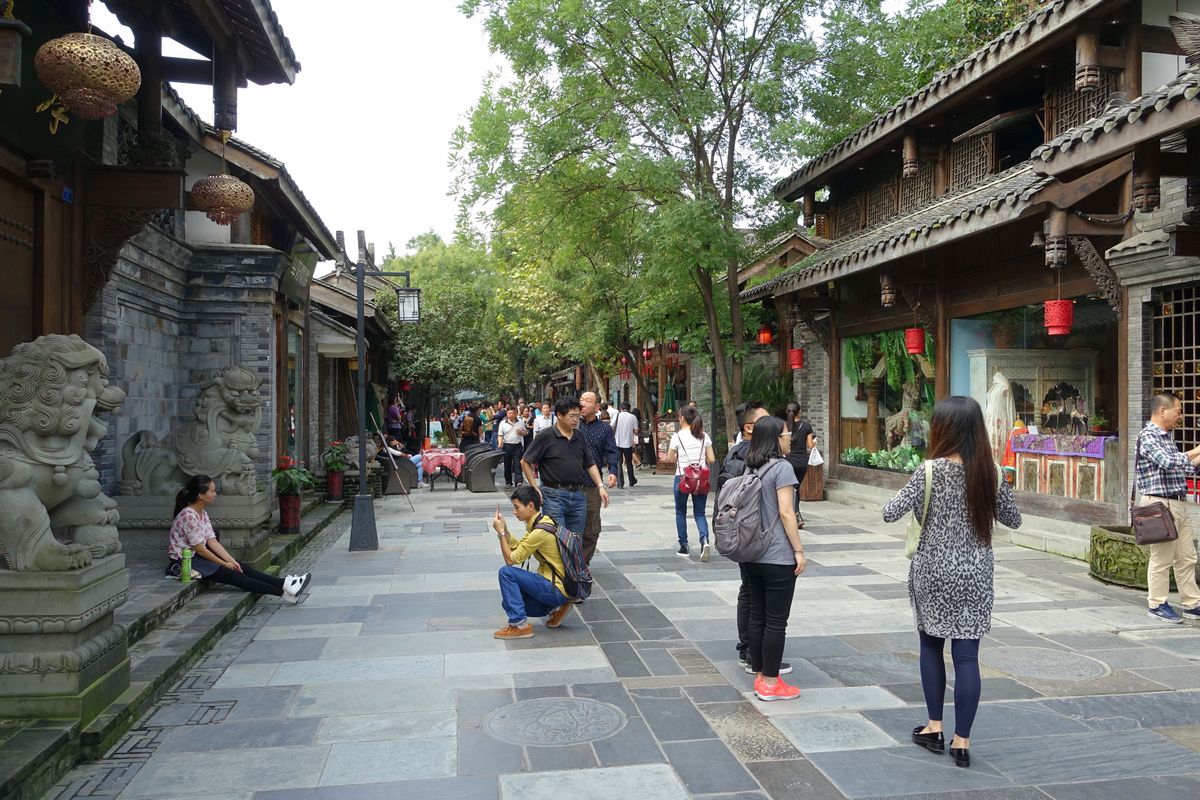
Wide Alley leans toward slow teahouses and courtyard dining, Narrow Alley toward boutiques and cafes, and Well Alley toward bars and street food, so which lane you gravitate to says something about the pace you want. Between the shopfronts, look for carved wooden doorways, stone lions and zhaobi screen walls, the freestanding panels that traditionally shielded a courtyard entrance from evil spirits and passers-by alike. This is a place to graze and browse rather than tick off sights: sip tea in a sunny courtyard and watch an ear-cleaning master at work, sample skewers, dumplings and Sichuan cold dishes from the stalls, or browse craft shops for tea and lacquerware.
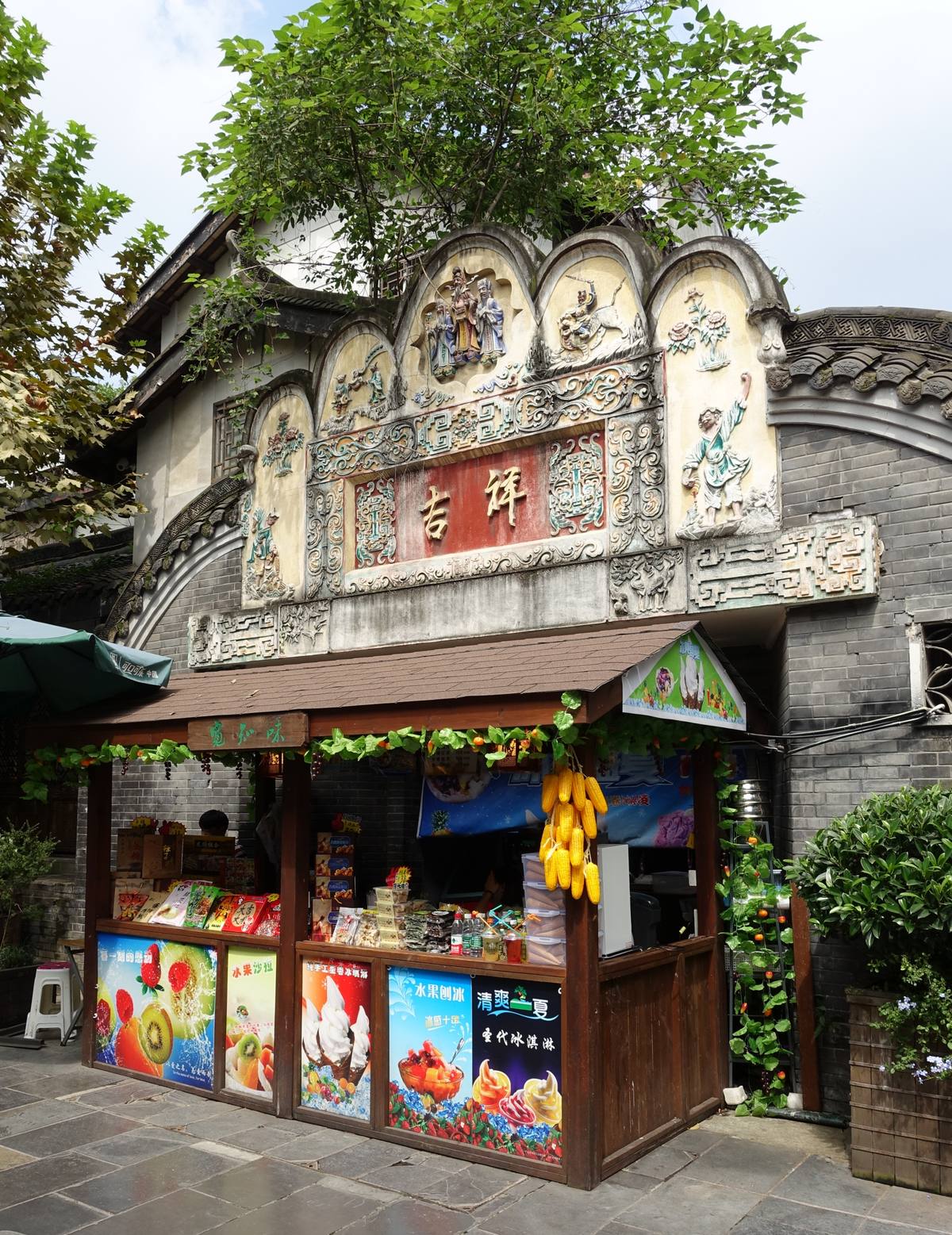
Food stall with a decorated facade in Kuanzhai Alley, Chengdu
Hours and entry
The lanes themselves are public streets, open around the clock with no entry fee. Most shops, teahouses and restaurants run through the day and evening, roughly late morning into the night, and the district is well lit and lively after dark. You only pay for what you eat, drink or buy; courtyard teahouses tend to charge more than a neighbourhood spot elsewhere in the city, which is the trade-off for the setting.
Getting there
Kuanzhai Alley sits in Qingyang District, close to central Chengdu. The most direct route is Metro Line 4 to Kuanzhaixiangzi Station, with an exit that puts you a short walk from the lanes. It is roughly 2km west of Tianfu Square, an easy taxi or bike-share ride if you would rather not take the metro.
When to go
The quarter works year-round. Spring and autumn are the most comfortable seasons for sitting outdoors, the courtyards give useful shade in summer, and misty winter evenings have their own atmosphere under the lane lighting. Weekends and public holidays draw dense crowds; a weekday morning is a different, much calmer experience.
Practical tips
- Visit on a weekday morning if you want photos without a crowd in every frame; weekends and holidays get shoulder to shoulder.
- Step off the three main lanes into the smaller side courtyards, where the prettiest, quietest corners tend to hide.
- Try a proper courtyard teahouse and watch the ear-cleaning masters at work, a genuinely local ritual rather than a tourist add-on.
- Come back after dark once, even if you visited by day: the lit courtyards and lanterns change the mood completely.
Highlights
- A 1718 Qing garrison quarter where rank-based housing sizes gave the lanes their wide-and-narrow names
- Free to enter, with courtyard teahouses, cafes and boutiques across three restored lanes
- Classic grey-brick architecture, carved doorways and zhaobi screen walls
- Street food, bars and craft shopping, each lane with its own character
- Easy metro access on Line 4, right in central Chengdu
Travel Tips
Avoid the crush
Visit on a weekday morning; weekends and holidays are shoulder to shoulder.
Best corners
Duck into the smaller side courtyards off the main lanes for quieter, prettier photos.
Tea with a twist
Try a traditional courtyard teahouse and watch the ear-cleaning masters, a genuinely local ritual.
Go twice if you can
The lanes look and feel different after dark, when the courtyards and lanterns light up.