Chengdu
Wenshu Monastery, Chengdu
Free incense, working monks, a break from Chengdu traffic
Wenshu Monastery (Wenshu Yuan) is Chengdu's largest and best-preserved Buddhist temple, and a rare corner of the city center where monastic life still runs on its own clock. Founded in the Tang dynasty and rebuilt in 1697 during the Qing, it has functioned as a working Chan (Zen) monastery for over a thousand years: maroon-robed monks chant at dawn, incense drifts across stone courtyards, and locals come to pray, drink tea and step out of the traffic just steps from the metro.
At the entrance, staff hand out a few free eco-incense sticks (as of 2026), so there's no need to buy incense from vendors outside the gate. The temple takes its name from Wenshu (Manjushri), the bodhisattva of wisdom, and its five main halls run along a classic north-south axis under old gingko and camphor trees.
What to see
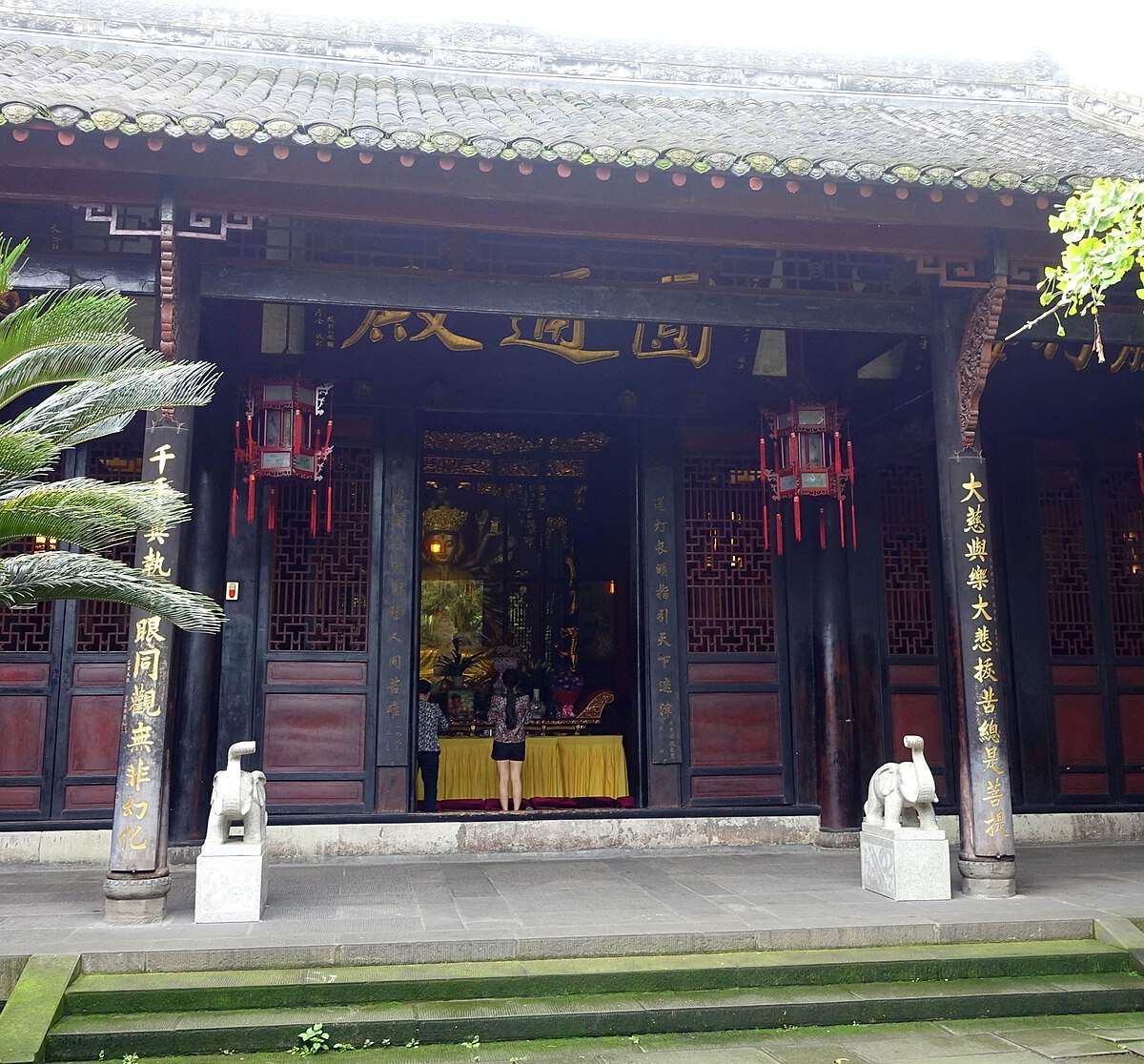
Hall of Wenshu Monastery framed by palms and stone lions
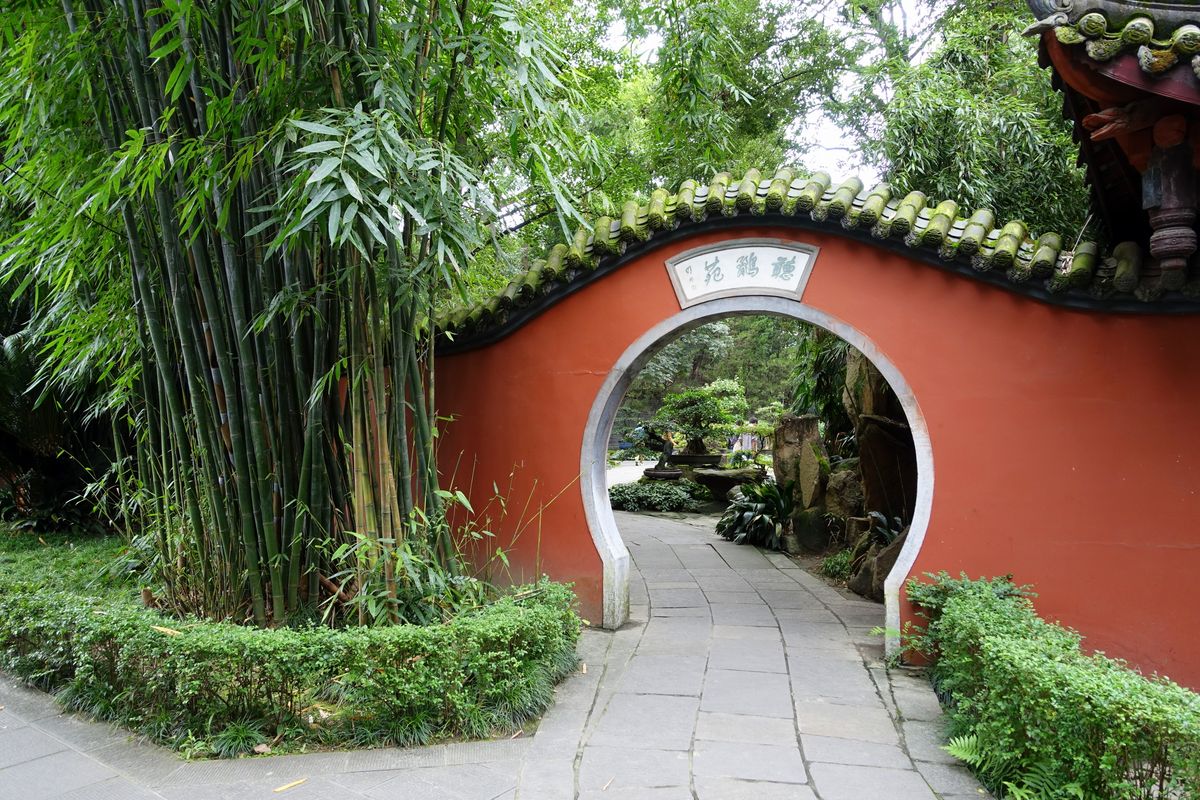
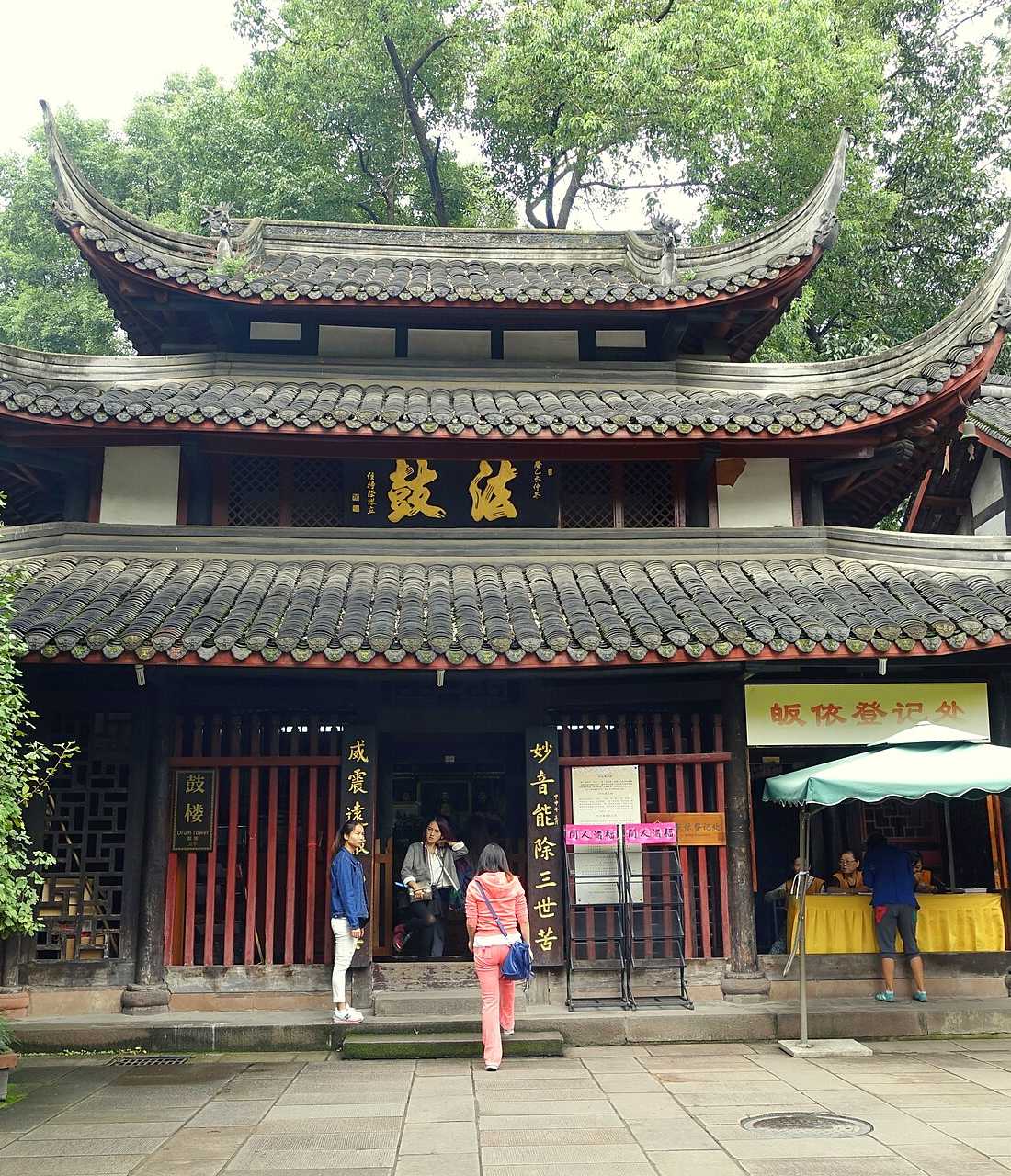
Walk through the Tianwang (Heavenly Kings) Hall into the Mahavira Hall, the spiritual heart of the complex, then continue to the Sutra Preservation Hall, which holds rare scriptures, paintings and calligraphy. The monastery's best-known relic is a parietal-bone fragment said to belong to the Tang-dynasty monk Xuanzang. Look up at the curved eaves of the drum and bell towers, and slow down in the side gardens, where caged songbirds, bonsai and old men playing chess make the centuries feel close.
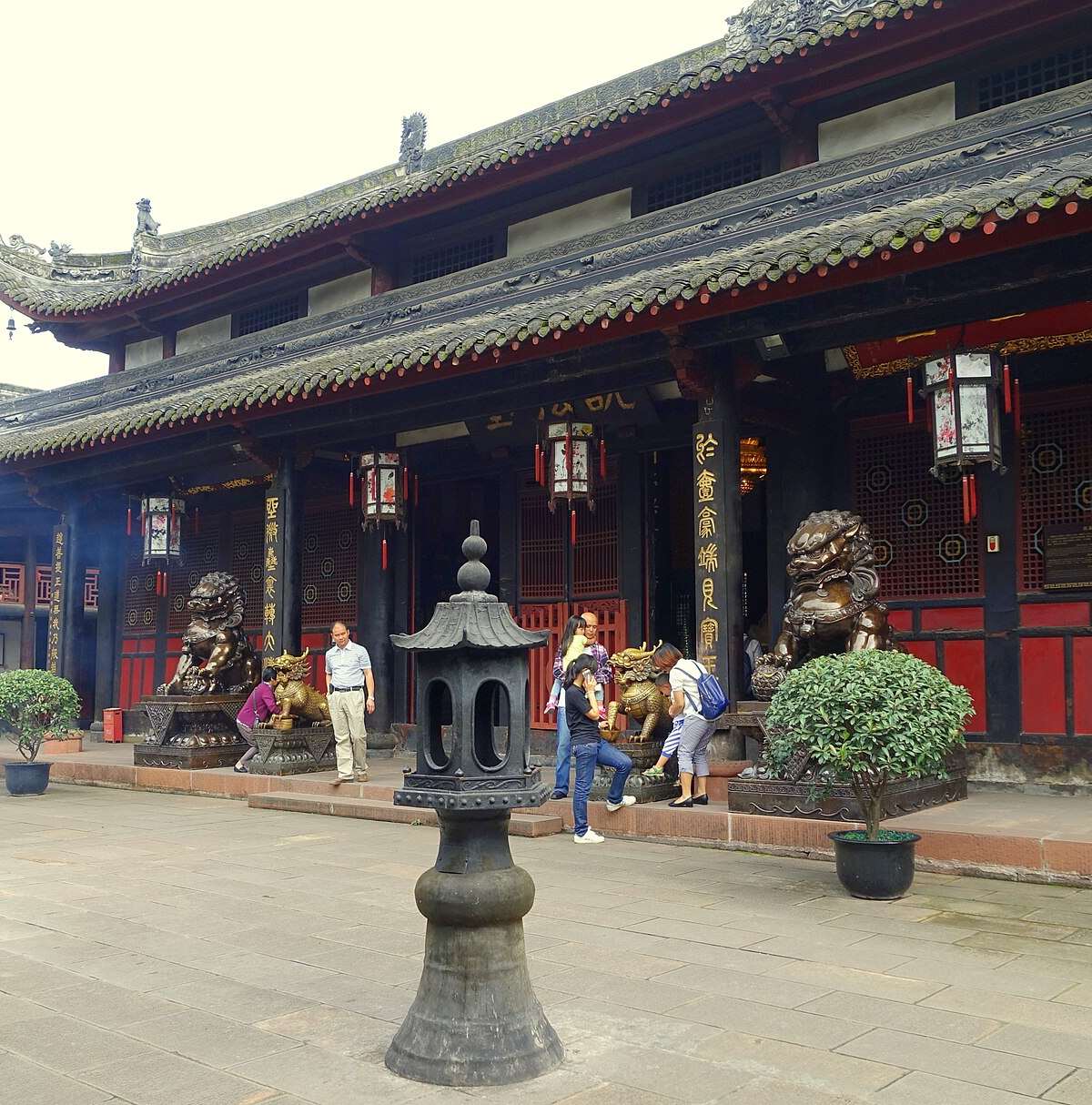
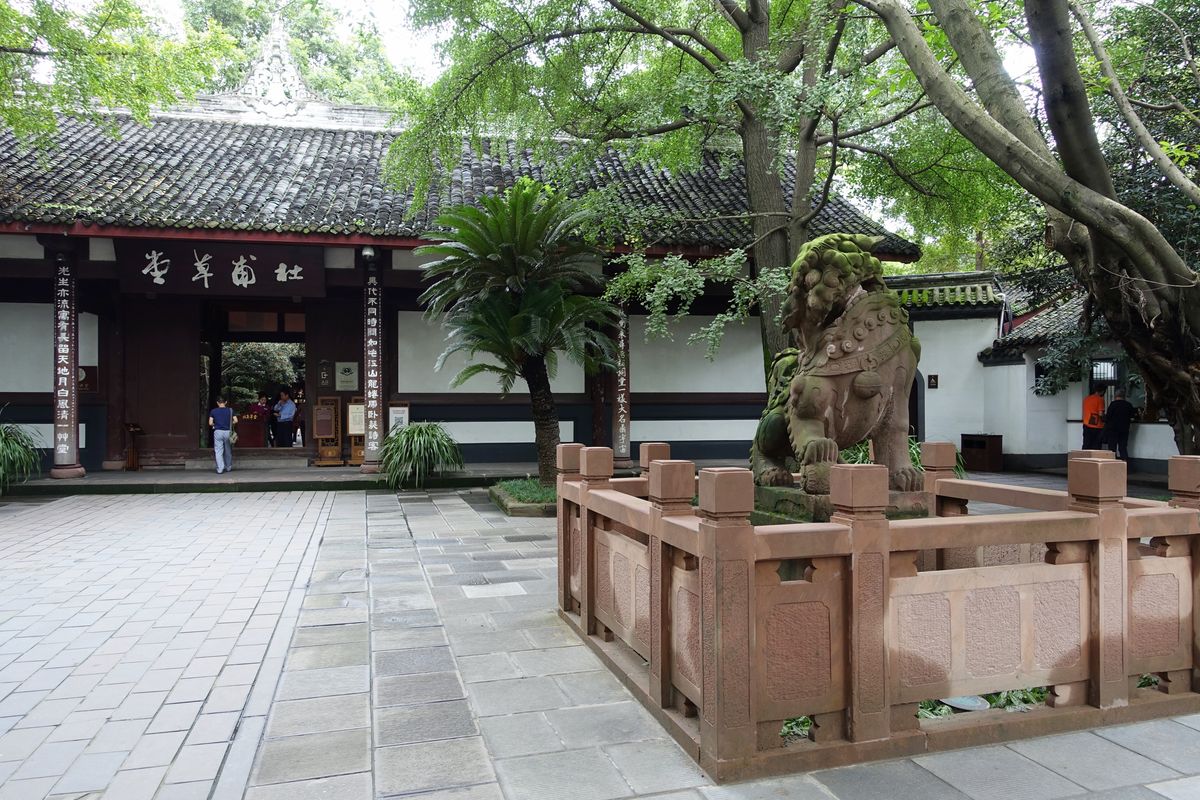
Courtyard with bronze censer and guardian lions
Tea, vegetarian food and the lane outside
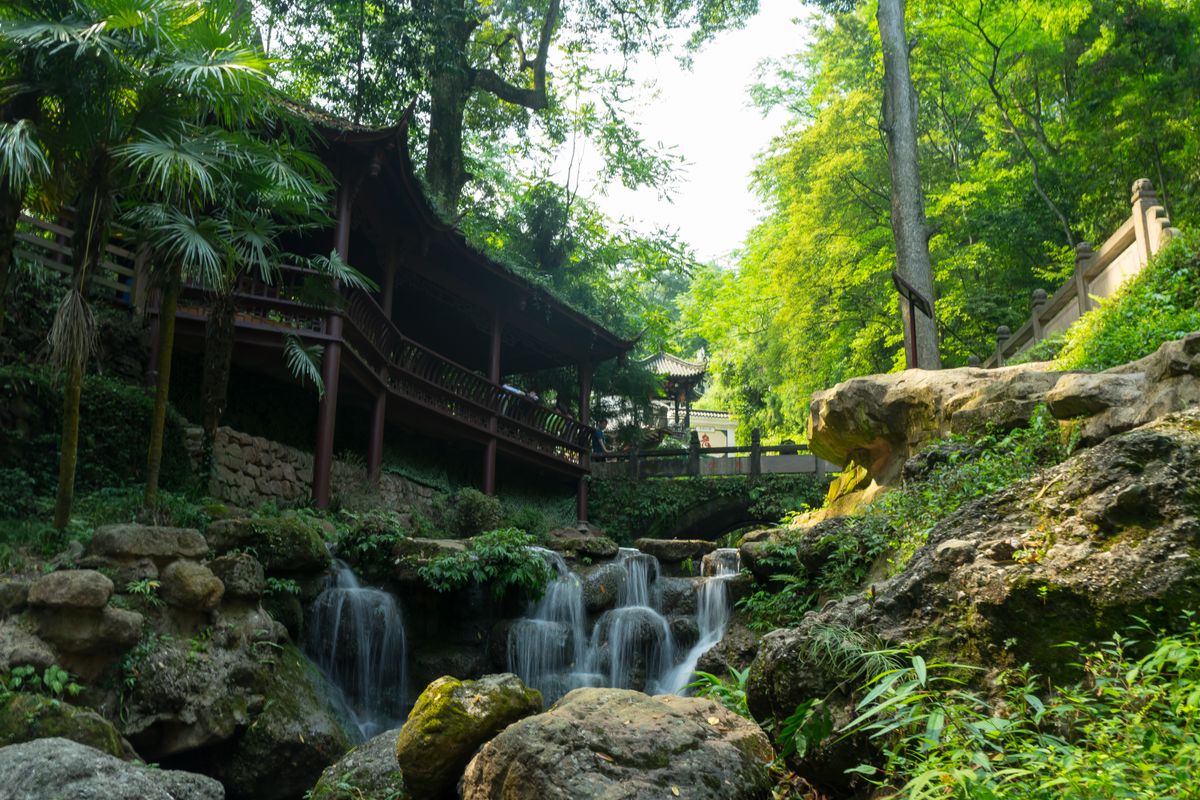
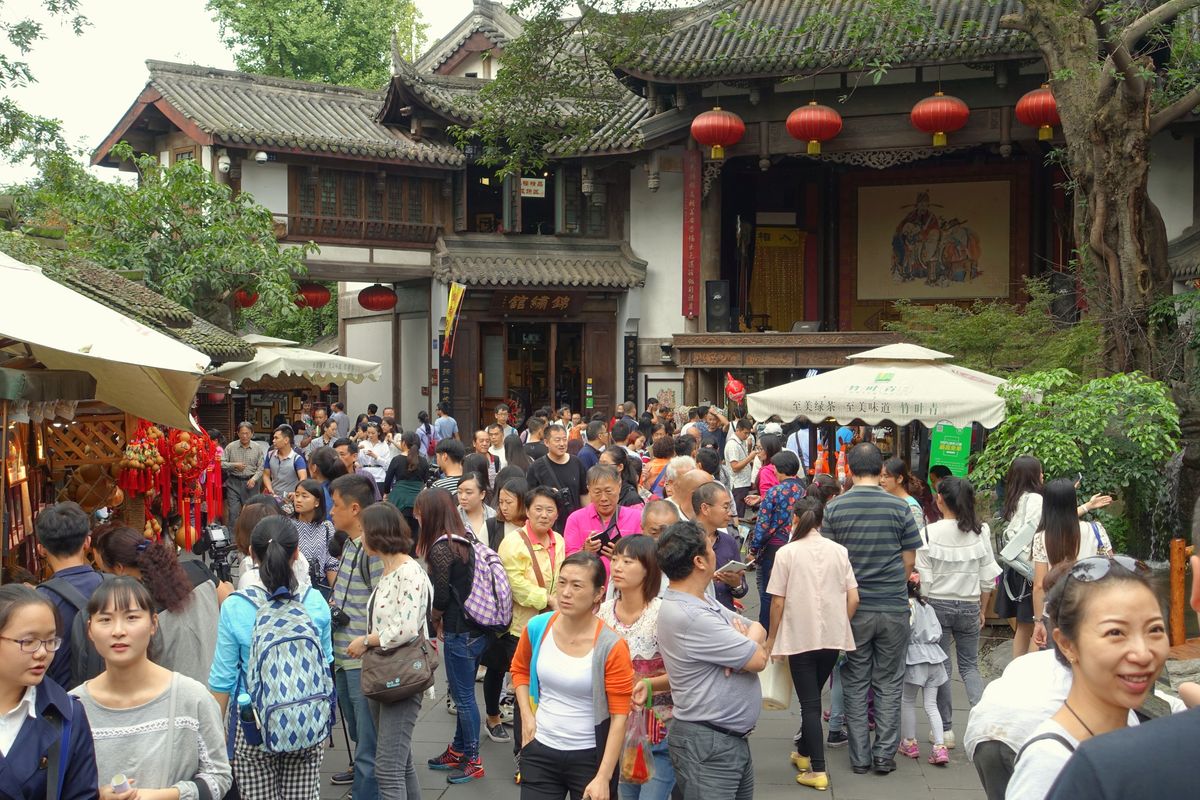
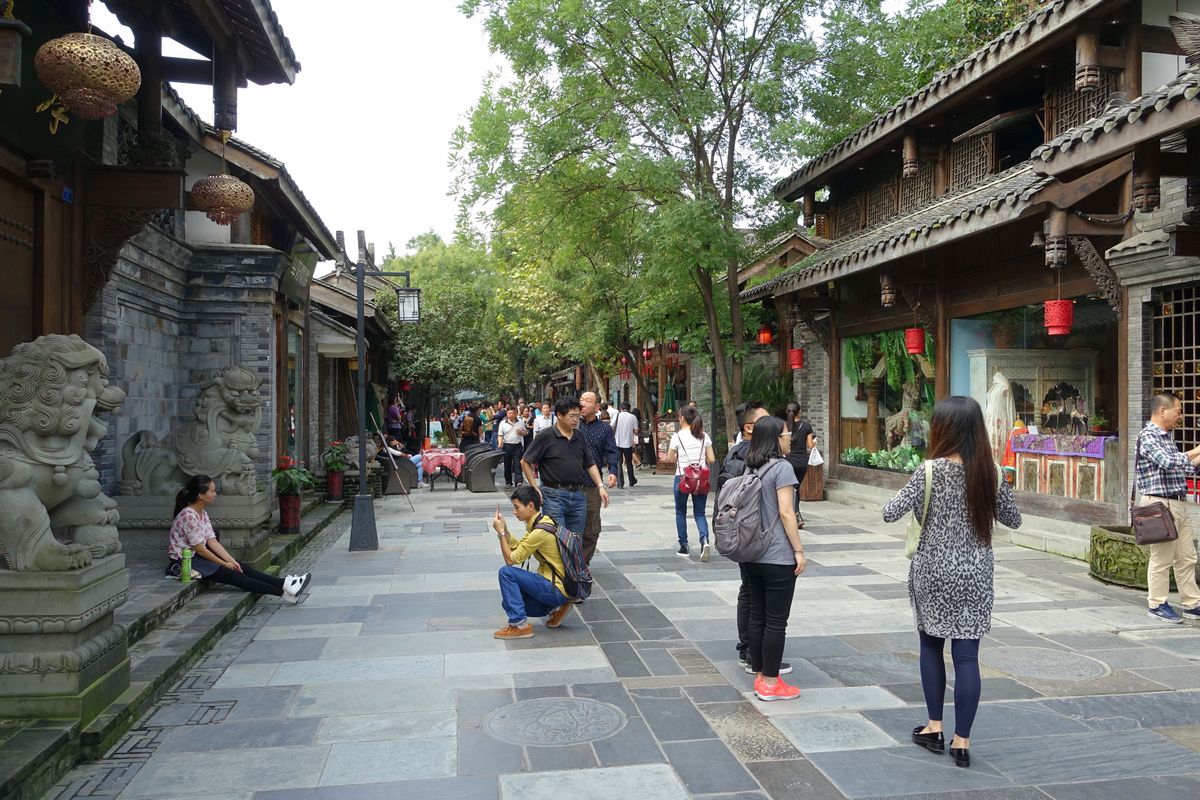
Wenshu's garden teahouse is the reason many visitors stay for hours: green tea is priced like any ordinary Chengdu teahouse, and the pot gets refilled while you sit among bamboo and birdsong. Next door, the monastery's vegetarian restaurant, Xiangzhai Hall, serves Buddhist "su cai" dishes at prices closer to a casual local lunch than a tourist meal. Outside the gates, the restored Wenshu Fang lane is packed with snack stalls, teahouses and Sichuan handicrafts.
Opening hours, entry and getting there
The monastery opens daily from 08:00 to 17:00, with last entry around 16:30 (as of 2026). Entry itself is free, and a donation is welcome but not required at most halls. Around major holidays the temple has at times asked visitors to book a same-day slot through its official WeChat account ("Chengdu Wenshuyuan"), so it's worth checking that account or your hotel front desk before a Spring Festival or National Day visit.
Take Metro Line 1 to Wenshuyuan Station (Exit K) and walk about five minutes, or ride bus 16 or 55. Go early on a weekday morning for the quietest, most photogenic light with chanting monks; spring and autumn are the most comfortable seasons, though the covered halls also make this a solid rainy-day stop.
Highlights
- Chengdu's largest and best-preserved Buddhist temple, a working Chan (Zen) monastery for over 1,000 years
- Five main halls on a classic axis, including the Mahavira Hall and Sutra Preservation Hall
- Relic said to be a parietal-bone fragment of the Tang-dynasty monk Xuanzang
- Free eco-incense handed out at the entrance, no need to buy from outside vendors
- Garden teahouse plus the on-site Xiangzhai Hall vegetarian restaurant
- Free entry via Metro Line 1's Wenshuyuan Station (Exit K)
Travel Tips
Go early
Arrive soon after the 08:00 opening on a weekday for chanting monks, soft light and few crowds.
Take the free incense
Pick up the complimentary eco-incense near the entrance instead of buying from vendors outside the gate.
Check for holiday reservations
Entry is normally free and walk-in, but around Spring Festival or National Day the temple has sometimes required a same-day WeChat reservation, so check ahead.
Stay for tea
Budget an hour for the garden teahouse and a vegetarian lunch at Xiangzhai Hall before exploring Wenshu Fang next door.